
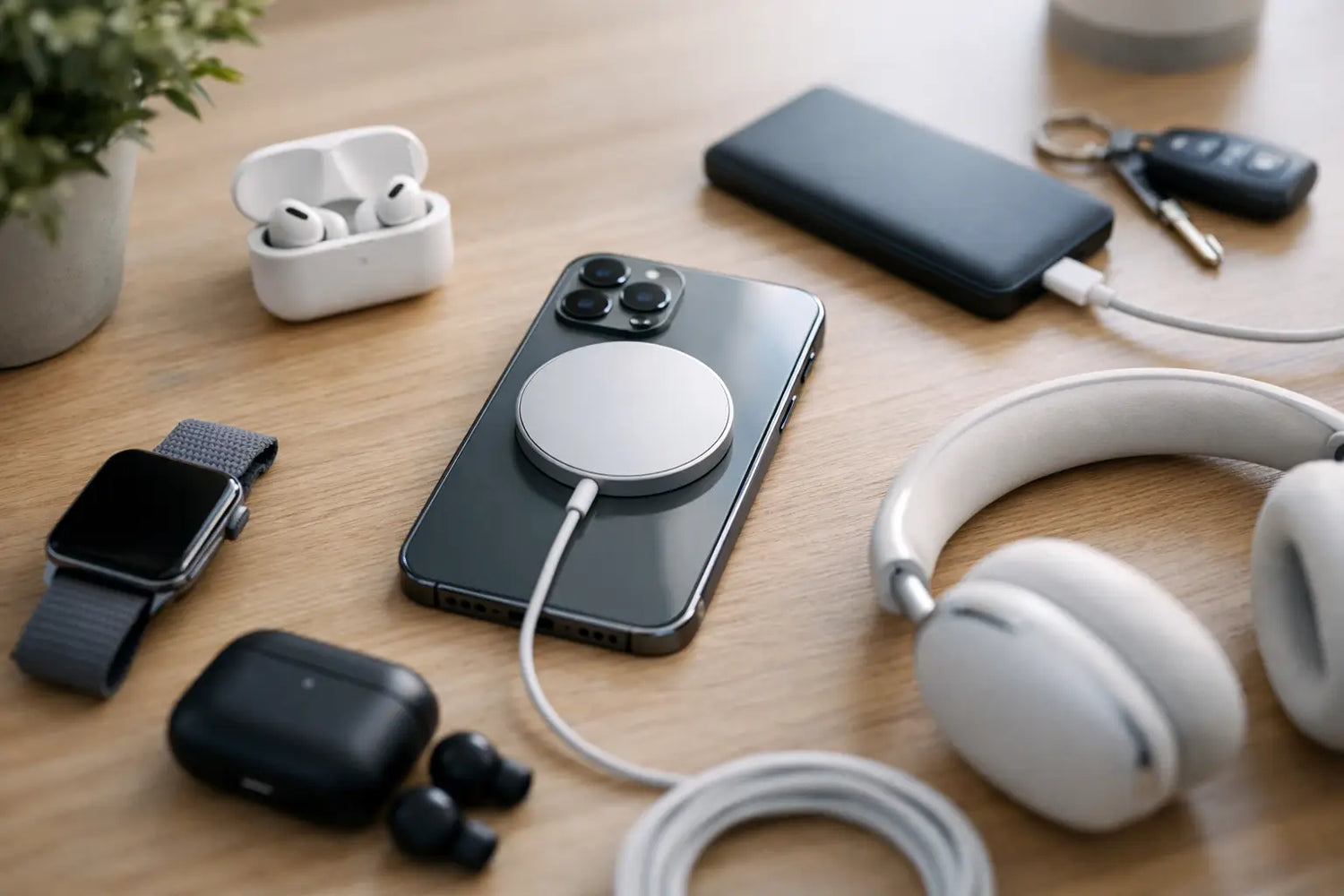
Your iPhone probably goes everywhere with you - pocket, desk, gym bag, nightstand, car cup holder, maybe even that one kitchen counter it absolutely should not live on. That is exactly why knowing how to choose iPhone accessories matters. The right add-ons make your phone more useful, easier to protect, and a lot less annoying to live with. The wrong ones just eat your budget and clutter your setup.
Some accessories are no-brainers. Some are overhyped. And some are amazing for one person and pointless for another. If you want to buy smarter, start with how you actually use your phone, not with whatever looks coolest in a product grid.
How to choose iPhone accessories based on your routine
Before you compare colors, finishes, or extra features, think about your daily habits. If your phone spends half its life in your hand, grip and comfort matter. If you commute, charging and car mounting matter. If you work remotely, stands, power banks, and desk-friendly chargers matter.
This is where a lot of people overspend. They buy accessories for their dream version of themselves instead of their real routine. A rugged case sounds great until it makes your phone feel like a brick. A wallet case seems convenient until you realize you use wireless charging every day. A super-cheap charging cable feels like a win until it frays in a month.
A better approach is simple. Ask yourself where your iPhone gets used most, what annoys you most about using it now, and what would make it faster, safer, or more enjoyable. That narrows the field quickly.
Start with fit and compatibility
This part is less exciting, but it saves the most regret. Not every accessory works with every iPhone model, and close enough is usually not good enough.
Cases need the exact model match so the camera cutout, button placement, and speaker openings line up correctly. Screen protectors also vary by model, especially across phones with different notch or Dynamic Island layouts. Chargers, mounts, and battery packs may depend on whether your iPhone supports MagSafe or uses a specific charging port.
If you skip compatibility checks, you can end up with accessories that technically attach but work poorly. A weak magnetic connection, blocked camera lens, loose fit, or painfully slow charging turns a good-looking purchase into a daily annoyance.
When in doubt, check three things first: your exact iPhone model, whether you use MagSafe, and whether the accessory is designed for your use case rather than just your device.
Cases: protection vs bulk
For most people, the case is the first accessory to get right. It changes how your phone feels every single day. The trick is not buying the toughest case on earth. It is buying the one you will actually keep on your phone.
If you drop your phone often, travel a lot, or have a history of sending electronics flying onto concrete, go for stronger protection with raised edges and shock absorption. If you mostly use your iPhone at home, at work, or in low-risk settings, a slimmer case may be the better move.
Material matters too. Silicone usually gives better grip but can attract lint. Hard plastic feels sleek but may be more slippery. Clear cases show off the phone but can yellow over time. Leather-style finishes can look premium, though they may wear differently depending on heat and handling.
There is also the MagSafe question. If you want magnetic chargers, wallets, battery packs, or stands, choose a case that supports that feature well. A non-compatible case can limit what your phone can do, which is not a fun surprise after checkout.
Screen protectors: worth it, but pick the right type
A good screen protector is one of those boring purchases that becomes very exciting the first time your phone hits tile face-down. The main choice here is usually tempered glass versus thin film.
Tempered glass feels more like the original screen and usually offers better impact resistance. Film protectors are often thinner and lighter, but they do not always feel as premium to swipe across. For most users, tempered glass is the easy winner unless you strongly prefer a barely-there layer.
Privacy screen protectors are another option. They can be useful if you are constantly on public transit, in cafes, or around people who think your messages are community content. The trade-off is a dimmer screen or narrower viewing angles, which some people find annoying.
If display quality matters a lot to you, do not go too cheap here. A low-quality protector can affect touch responsiveness, clarity, or fingerprint resistance.
Chargers and cables: this is not the place to gamble
Charging accessories are where value matters more than low price. The cheapest option is not always a deal if it charges slowly, runs hot, or stops working after a few weeks.
If your iPhone usage is heavy, prioritize fast, reliable charging at the places you use most - bedside, desk, travel bag, and car. A compact wall charger is great for portability. A multi-port charger makes more sense if you charge multiple devices. A magnetic charger can make your setup cleaner and easier if you use MagSafe.
Cable length also matters more than people think. A short cable is neat for a desk or power bank. A longer one is much more practical when the outlet is inconveniently placed, which is basically always.
Wireless charging looks clean and feels modern, but it is not always the fastest option. If speed matters, wired charging may still be your best everyday choice. If convenience matters more, wireless can absolutely earn its spot.
Power banks and battery packs for real life
If you are out all day, travel often, game on your phone, or use navigation nonstop, a backup battery is not extra - it is survival gear.
The best option depends on how portable you need it to be. A slim magnetic battery pack is super convenient and easy to carry, but it may not hold as much power as a larger power bank. A bigger power bank can charge more devices and offer more capacity, but it is less pocket-friendly.
This is one of those classic trade-offs. Small is easy to bring. Large is better in emergencies. If you know you will not carry a heavy backup regularly, choose the one that fits your habits, not the one with the biggest number on the box.
Mounts, stands, and desk accessories
These accessories are all about reducing friction. A good stand makes video calls, streaming, and browsing more comfortable. A car mount helps with navigation and hands-free viewing. A charging stand can clean up your nightstand and make your whole setup feel less chaotic.
Think about placement first. A car mount that blocks your preferred view is not helpful. A desk stand that wobbles every time you tap the screen gets old fast. If you use FaceTime, content streaming, or recipe videos often, adjustability matters more than style.
For people who like a clean setup, this category can quietly improve everyday life more than flashier accessories do. Not glamorous, but very satisfying.
Camera, audio, and lifestyle extras
Once you have the basics covered, the fun accessories start to make sense. Tripods, clip-on lights, phone grips, wallet attachments, and earbuds can all be great additions - if they match what you actually do.
If you create content, a stabilizing grip or mini tripod could be more valuable than another charging gadget. If you are always on calls, audio accessories matter more. If you hate carrying a full wallet, a magnetic card holder might make your day easier.
This is where impulse buying can get dangerous. Trending does not always mean useful. The accessory that looks amazing in a promo image might solve a problem you do not have. Cool points are real, but practical value should still win.
How to choose iPhone accessories without wasting money
A smart buy is not always the cheapest product or the most premium one. It is the accessory that gives you the most daily value for the price.
A simple way to think about it is in layers. Start with protection, then power, then convenience, then extras. That usually means case and screen protector first, charging gear second, and lifestyle add-ons after that. If your budget is limited, that order helps a lot.
Bundles can be worth it if you were already planning to buy the items together. They are not worth it if one of the products is just filler. Ratings help too, but read them with common sense. Thousands of happy buyers mean more than one suspiciously dramatic review claiming a phone case changed their life.
It also helps to avoid buying duplicates too quickly. You probably do not need three stands, four cables, and two battery packs on day one. Build your setup around what gets repeated use.
The best accessory setup is personal
There is no universal perfect list. A student, commuter, remote worker, traveler, gamer, and casual user will all build different iPhone setups, and that is exactly how it should be.
If you want a practical setup, start with a protective case, a quality screen protector, and reliable charging gear. If you want a convenience-focused setup, add a stand, mount, or magnetic accessory that fits your day. If you want your phone to do more, explore the extras after the essentials are handled.
At Timo Market, the fun part is discovering products that make everyday tech feel more useful, more stylish, and less boring. The best place to start is with the accessory that solves the problem you notice every day. Once you fix that one, the rest of your setup gets a whole lot easier.





Commenta
Questo sito è protetto da hCaptcha e applica le Norme sulla privacy e i Termini di servizio di hCaptcha.