
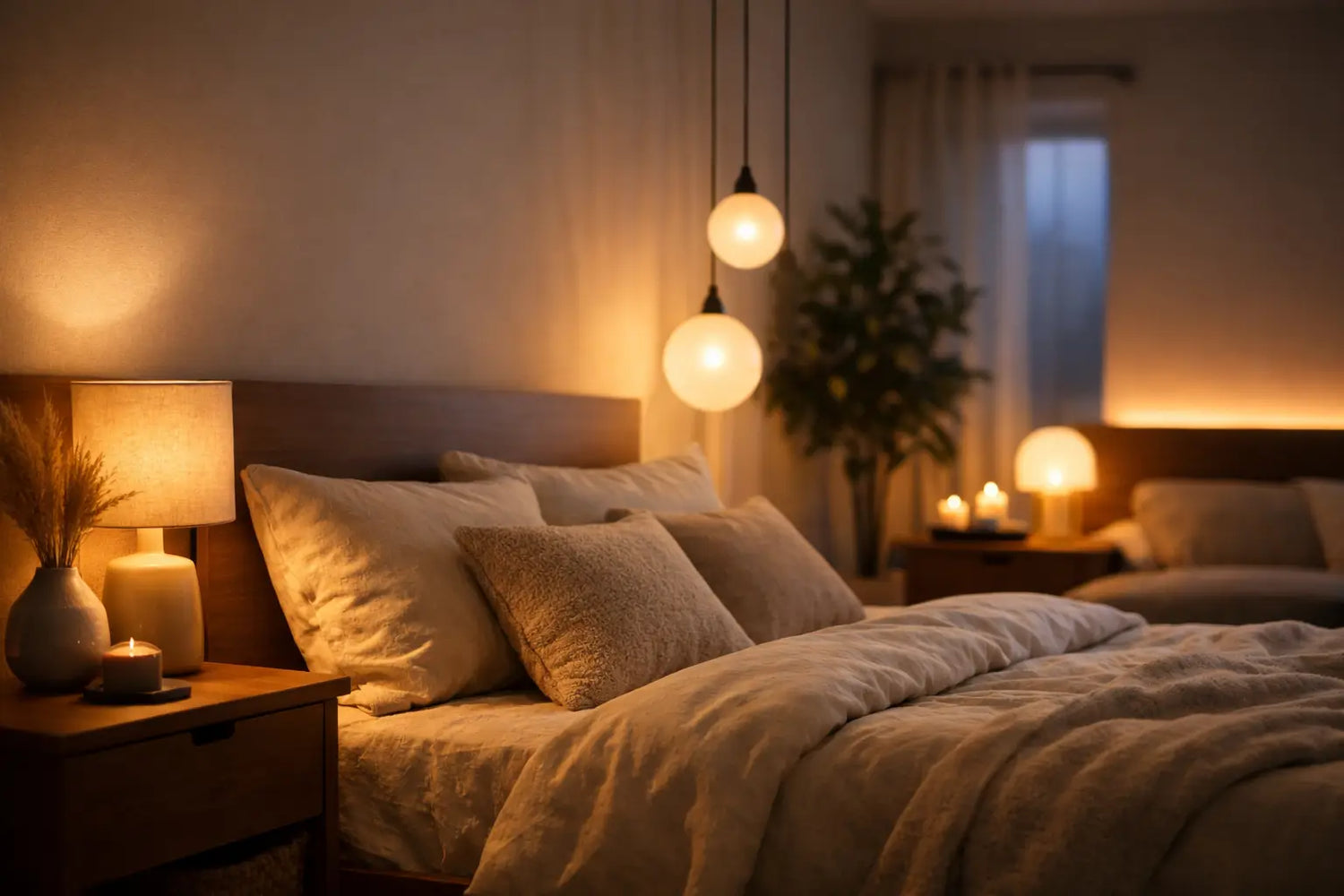
The overhead light is the fast-food version of bedroom lighting: useful when you need it, but not exactly the mood. Learning how to style ambient bedroom lighting means giving your room options - soft light for winding down, focused light for reading, and a little color or glow when your setup deserves main-character energy.
You do not need a full renovation, a designer budget, or an electrical engineering degree. A few well-placed lamps, the right bulbs, and some intentional layering can make a bedroom feel calmer, more personal, and a lot less like the place where laundry goes to retire.
Start With the Mood You Want
Before buying another lamp, decide what you want your bedroom to do for you. For most people, it is not just a sleep space. It might be a late-night scrolling zone, a gaming corner, a getting-ready station, a study spot, or the backdrop for a very serious Saturday morning lie-in.
A calm, cozy room usually benefits from warm white lighting, soft shadows, and low-level lamps. A gaming or entertainment-focused bedroom can handle more color, especially behind a monitor, TV, headboard, or shelf. If you use the room for work or study, keep a brighter task light nearby so you are not trying to read or type by the glow of decorative LEDs.
The best setups do not pick one mood and trap you there. They make it easy to shift the atmosphere depending on the hour.
Use Layers Instead of One Big Light
The secret to ambient bedroom lighting is layering. Think of lighting as a three-part setup: general light for seeing the room, task light for specific activities, and accent light for personality. Your ceiling fixture can cover the first job, but it should not be asked to do all three.
General light keeps the room functional
This is your main source of illumination, such as a ceiling fixture, flush mount, pendant, or floor lamp that brightens a large area. If your overhead light feels harsh, switch to a warmer bulb or add a dimmer-compatible option. The goal is enough visibility to find your socks without making the room feel like a waiting room.
For bedrooms, bulbs around 2700K tend to create a warm, relaxed look. If you prefer a cleaner, slightly brighter feel, 3000K can work well. Cooler white light has its place at a desk or vanity, but it can make bedtime feel strangely businesslike.
Task light handles the close-up stuff
A bedside lamp, wall sconce, clip-on reading light, or small desk lamp gives you control where you need it most. Put one on each side of the bed if two people use the room and have different routines. That way, one person can read while the other is trying to sleep without starting a tiny domestic lighting war.
If your nightstand is small, a compact lamp with a narrow base or a wall-mounted option can free up precious space for your phone, water, and the book you keep meaning to finish.
Accent light creates the vibe
Accent lighting is where a bedroom starts looking styled rather than merely lit. LED strips behind a headboard or desk create a floating glow. A small table lamp on a dresser adds warmth to an overlooked corner. A light bar behind a TV reduces the stark contrast between a bright screen and a dark wall.
Use accent lights to highlight shapes and surfaces, not to blast light directly into your eyes. Hidden or indirect placement usually looks more expensive, even when the upgrade is refreshingly affordable.
How to Style Ambient Bedroom Lighting by Zone
Treat your bedroom as a few small zones rather than one square box. This approach makes a modest room feel more considered and helps prevent the common mistake of putting every light source in the same corner.
Give the bed a soft halo
The bed is the visual anchor, so start there. A pair of bedside lamps creates balance and makes the room feel settled. If matching lamps are not your style, they do not have to be identical, but they should share something in common, such as finish, shade color, or height.
For a more modern look, place LED strips behind the headboard, under the bed frame, or along the back edge of a floating shelf above the bed. Keep the light source hidden from direct view. You want a halo effect, not a visible line of tiny dots competing with your pillowcases.
Warm white is the easiest choice for everyday use. Adjustable RGB lighting is a fun add-on when you want a deep blue movie-night glow, a soft pink look, or a color that fits your gaming setup. Just remember that intense red, blue, and purple can look cool in photos but may not feel restful every night.
Make the desk or gaming corner intentional
A bedroom desk often becomes a visual black hole after sunset: one bright monitor, everything else disappearing around it. Add bias lighting behind the screen, a small lamp to one side, or a light strip under the desk to create depth.
The trade-off is distraction. If you work or study at that desk, choose a setup with adjustable brightness and color. Bright, cool task lighting can help you stay alert during a deadline. Later, switch to a warmer, dimmer setting so your brain gets the message that work is over.
Do not forget dark corners
A lonely chair, dresser, or empty corner can make the whole room feel unfinished. This is where a floor lamp, mushroom lamp, globe lamp, or compact LED lamp earns its keep. Choose a shade that diffuses the bulb instead of exposing it, especially if the lamp will sit in your direct line of sight from bed.
A small light in the corner also makes a room look larger because it reveals the edges of the space. It is a simple styling trick with a surprisingly big payoff.
Choose Bulbs and Colors That Work at Night
A beautiful lamp with the wrong bulb can still ruin the mood. Look for warm white bulbs in the 2200K to 2700K range for the most relaxed evening atmosphere. Lower brightness matters just as much as color temperature. A 40-watt equivalent bulb is often plenty for a bedside lamp, while larger lamps may need more output.
Dimmable bulbs are worth considering because bedrooms have changing needs. You may want bright light while organizing clothes and a soft glow an hour later. Smart bulbs add app and voice control, scheduling, and color options, but they are not mandatory. If apps annoy you, a basic lamp with a warm bulb and an easy-to-reach switch is still a great move.
Try to avoid mixing wildly different bulb colors in one room. A warm lamp beside a crisp blue-white ceiling light can make the space feel accidental. Match your everyday bulbs first, then use colored lighting as a deliberate accent.
Get Placement and Scale Right
Lighting looks best when it sits at different heights. Combine a low bedside lamp, a mid-height dresser lamp, and a taller floor lamp to create visual rhythm. When every light is at the same level, the room can look flat.
Keep bedside lamp shades near eye level when you are sitting up in bed. This helps reduce glare and directs light where you need it. For LED strips, install them facing a wall, floor, or back panel whenever possible. Reflected light is softer, more flattering, and easier to live with.
Scale matters, too. An oversized lamp can make a tiny nightstand feel crowded, while a very small lamp can disappear next to a tall upholstered headboard. Measure your surface before ordering, then leave room for daily essentials. Style should make life easier, not turn charging your phone into a balancing act.
Build a Setup You Will Actually Use
The smartest ambient lighting plan is one that fits your habits. Put switches where you can reach them from bed. Use timers if you regularly fall asleep with lights on. Consider motion-sensor lights under the bed or near the doorway for late-night trips that do not require turning on a bright ceiling fixture.
For renters, plug-in lamps, removable LED strips, and rechargeable lights offer plenty of flexibility without rewiring anything. For a more permanent bedroom refresh, wall sconces and dimmer switches can make a bigger impact, but they may require more planning and permission.
Timo Market shoppers know a good room upgrade should feel exciting from night one. Start with one zone, see how the light changes your space, then build outward. The right glow is not about copying a showroom - it is about making your bedroom feel like the place you actually want to end the day.



Commenta
Questo sito è protetto da hCaptcha e applica le Norme sulla privacy e i Termini di servizio di hCaptcha.