
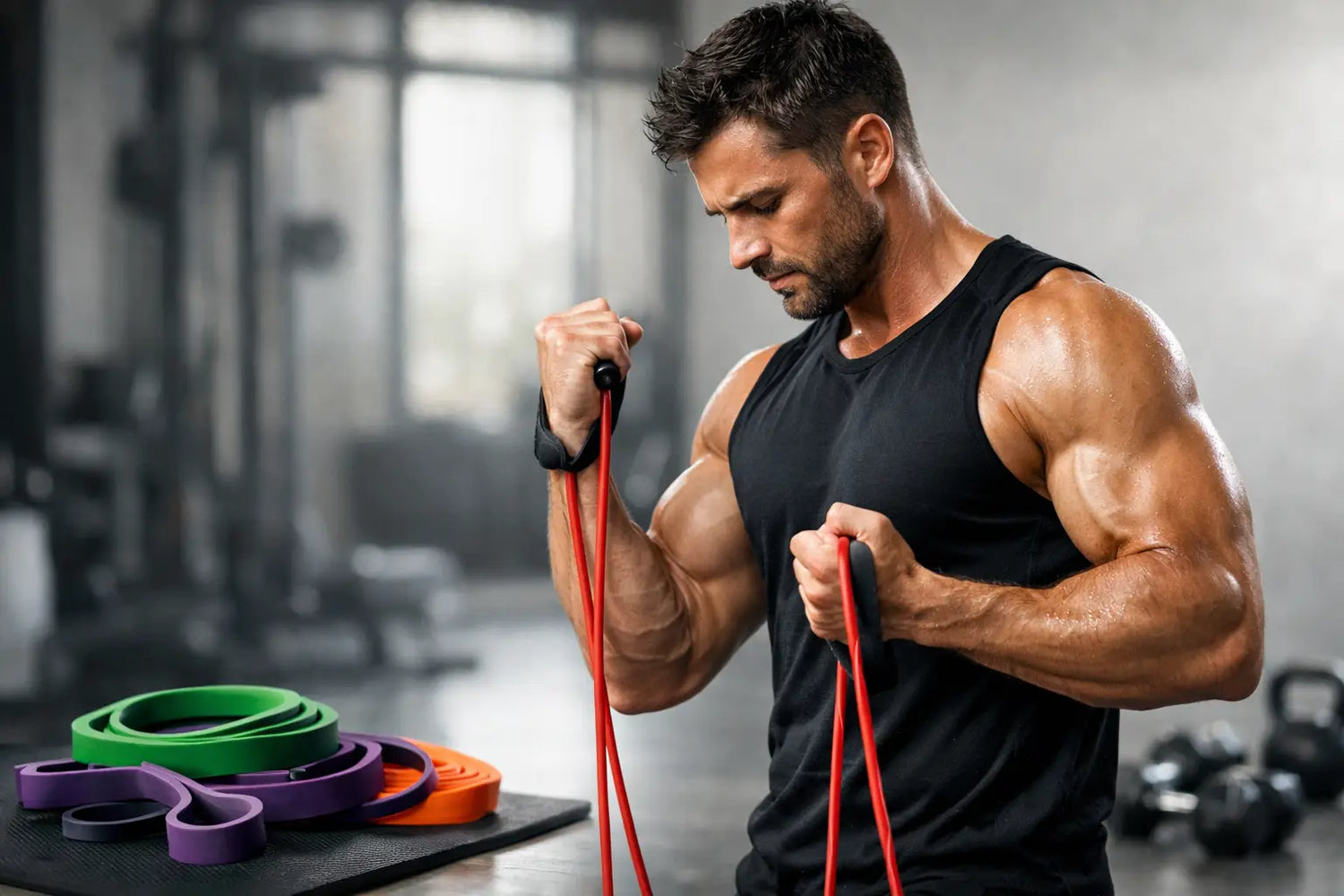
Your apartment is not too small for a serious workout. Your schedule is not too packed. And no, you do not need a garage full of iron to make progress. So, do resistance bands build muscle? Absolutely - if you use them with enough resistance, solid technique, and a plan to keep making the work harder.
Resistance bands are not a magic shortcut, and they will not replace every benefit of heavy barbells for every athlete. But for home workouts, travel days, beginners, and anyone who wants a low-clutter way to train, they can deliver real muscle-building results. The band is compact. The burn is very much not.
Do resistance bands build muscle like weights?
Muscle grows when it gets a reason to adapt. That usually means putting a muscle under challenging tension, working it close enough to fatigue, recovering well, and repeating that process over time. Your muscles do not care whether that tension comes from a dumbbell, a cable machine, a weighted backpack, or a resistance band. They respond to effort.
Bands create resistance as they stretch. This makes an exercise feel easier near the starting position and harder as you reach the end of the movement. Think of a banded chest press: the closer you get to locking out your arms, the more the band fights back. That resistance curve is different from a dumbbell, but different does not mean less effective.
The catch is that you need a band that is challenging enough. A light band used for 30 easy reps may warm up your shoulders, but it is unlikely to send a strong muscle-building signal. A heavier band, or a lighter band used with slower reps and close-to-failure effort, can be a completely different story.
The muscle-building rules still apply
At-home equipment can be convenient, but convenience only works when the training has intent. To build muscle with bands, focus on progressive overload. That simply means asking your muscles to do a little more over time.
With traditional weights, you might add five pounds. With bands, you have more options. Move to a thicker band, combine two bands, take a few steps farther from the anchor point, add reps, slow the lowering phase, or add another set. Each option increases the challenge without requiring a new rack of equipment to appear in your living room.
Aim for most working sets to end with roughly one to three reps left in the tank. If you could easily do 15 more reps, the band is too light or the set is too short. If your form turns into a full-body interpretive dance by rep six, reduce the resistance or adjust the exercise.
For many people, a useful starting range is about 8 to 30 controlled reps per set. Higher reps can still build muscle when the set gets genuinely difficult. This is one reason bands work so well for home training: you can safely chase a deep burn without worrying about getting pinned under a barbell.
Choose movements that make bands work for you
The best band workouts do not try to copy every gym movement exactly. They use the band's strengths: portability, adjustable angles, and resistance that ramps up through the range of motion.
For your upper body, banded rows, chest presses, overhead presses, lat pulldowns, triceps pushdowns, biceps curls, and lateral raises can all be highly effective. Anchor the band securely at the right height, then control every rep. Fast, sloppy reps give the band an easy win. Slow, deliberate reps give your muscles the job.
For lower body, squats, Romanian deadlifts, glute bridges, hip thrusts, leg curls, and lateral walks are excellent choices. Bands are especially useful for glutes because they can keep tension high where many bodyweight movements become too easy. For squats and deadlifts, stronger lifters may eventually find that bands alone are not enough to challenge their legs at their strongest range. In that case, pair bands with unilateral work like split squats, longer sets, pauses, or a loaded backpack.
Anchoring matters more than people expect. A door anchor, sturdy post, or stable piece of equipment can expand your exercise options fast. Never attach a band to something flimsy, sharp, or likely to move. A snapped anchor is not the kind of surprise your workout needs.
A simple band routine that can grow with you
Three full-body sessions per week is enough for many beginners to make noticeable progress. Leave at least a day between sessions when possible, especially if you are new to resistance training.
Start with a banded squat or split squat, then move into a banded chest press, row, hip hinge or Romanian deadlift, overhead press, and a curl or triceps extension. Perform two to four hard sets for each movement. Pick a resistance that makes the last few reps slow and demanding while keeping your form clean.
You do not need to train for two hours. A focused 30- to 45-minute session can do the job. Keep a note on your phone with the band used, anchor position, sets, and reps. Next time, try to beat one small detail: one extra rep, a cleaner pause, a stronger band, or better control. Tiny upgrades stack up.
If you are building a home setup, a set with several resistance levels gives you room to progress across different exercises. One band may be perfect for curls but laughably easy for squats. Having options keeps your workout from hitting a plateau before you do.
Where bands shine - and where they fall short
Resistance bands are a strong choice when space, budget, travel, joint comfort, or workout variety matters. They are easy to store, simple to bring on a trip, and useful for warm-ups, mobility, rehab-style movements, and full strength sessions. They can also make it easier to train at home consistently, and consistency beats the expensive equipment that becomes a fancy clothes rack.
They do have limits. Measuring resistance is less precise than loading a barbell, and band tension can vary between brands. The resistance is also greatest near the end of the movement, which may not suit every exercise or goal. Very advanced lifters often need heavier external loads to keep challenging big compound movements like squats, presses, and deadlifts.
That does not make bands beginner equipment. It makes them equipment with a specific job. Many experienced lifters use them alongside dumbbells or barbells for added tension, accessory work, and training when a gym is not available. If your goal is general muscle gain, strength, and a more capable body, bands can carry far more of the load than their size suggests.
Make your band workouts count
Technique is your multiplier. Keep tension on the band, use a full comfortable range of motion, and avoid rushing the return phase. The lowering portion of a rep is where a lot of useful work happens, so take two or three seconds to return rather than letting the band snap you back.
Nutrition and recovery matter too. Muscles need enough protein, enough overall food to support your goal, and sleep that does not feel like an afterthought. You can train hard with bands every day, but if the same muscles never recover, more effort will not automatically mean more growth.
Check your bands before each workout for cracks, tears, thinning spots, or worn handles. Replace damaged bands. Good training should challenge your muscles, not test your reflexes.
The real advantage of resistance bands is not that they are tiny or trendy. It is that they remove excuses. Keep a set where you can see it, choose a few movements you can progress, and treat each set like it matters. Whether you are building your first home gym or adding a smart, space-saving tool to it, Timo Market-style convenience only becomes transformation when you put it to work.




Commenta
Questo sito è protetto da hCaptcha e applica le Norme sulla privacy e i Termini di servizio di hCaptcha.