
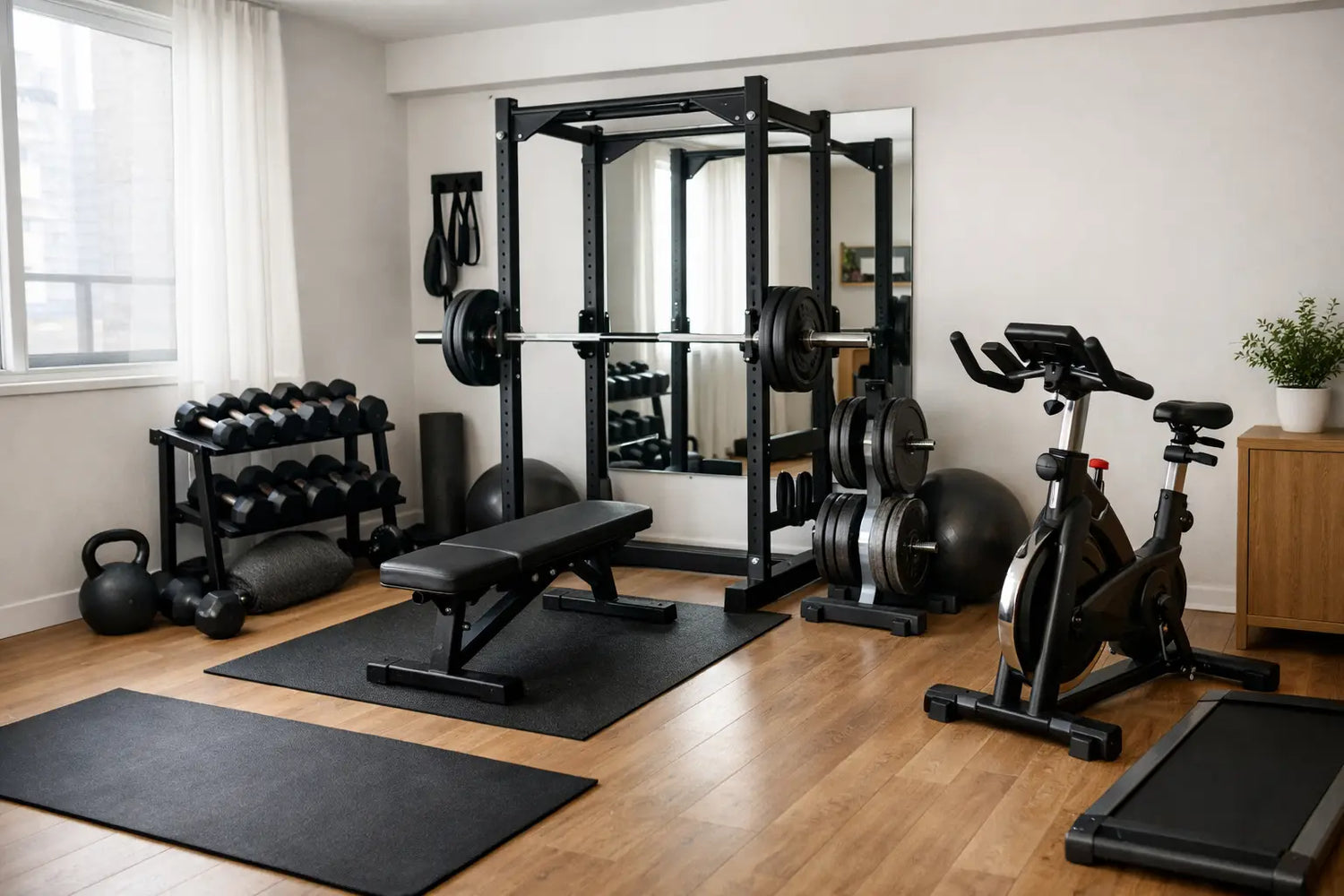
You do not need a spare room, a giant squat rack, or landlord-approved renovation energy to build a workout space at home. A smart small apartment gym setup example is usually just a tight, well-picked mix of equipment that fits your floor plan, your training style, and your tolerance for visual clutter. If your living room also moonlights as your office, dining area, and weekend recharge zone, the goal is not to cram in more stuff. The goal is to make fitness feel easy to start.
That is where most apartment gym plans go wrong. People shop like they are furnishing a commercial gym, then end up with one oversized machine that blocks a window and gets used twice. A better setup feels flexible, stores fast, and gives you enough variety to handle strength, cardio, mobility, and recovery without turning your apartment into a warehouse with yoga vibes.
A realistic small apartment gym setup example
Picture a one-bedroom apartment with a corner of the living room available - roughly 6 by 8 feet. That is enough space for a very workable training zone if every piece earns its spot.
Start with a foldable workout mat as the base. It protects the floor, defines the area, and makes the gym feel intentional instead of random. Add adjustable dumbbells if your budget allows, or a compact dumbbell pair set if you want to keep costs lower. Then bring in resistance bands with different tension levels, a set of loop bands for glute and leg work, and a door anchor so you can expand your exercise options without adding bulk.
For conditioning, a jump rope works if your building and ceiling height cooperate. If not, a compact step platform or even fast-paced bodyweight circuits will cover that role. A collapsible bench is useful, but not mandatory. In a really tight apartment, an ottoman or sturdy low platform can sometimes fill the gap for certain moves, though a real bench is safer and more versatile if you use it often.
Finish the space with one storage solution - usually a narrow rack, rolling cart, or lidded storage bench. This matters more than people think. A gym that disappears in two minutes gets used far more often than one that leaves bands and handles scattered around your floor like your apartment lost a fight.
Why this small apartment gym setup example works
The biggest win is versatility per square foot. Adjustable weights handle presses, rows, squats, lunges, deadlifts, curls, and carries. Bands cover warmups, accessory work, pull patterns, and travel-friendly backups. A mat supports mobility, core training, and low-impact sessions. You get a lot of training range without committing half your home to one purpose.
It also keeps setup friction low. That sounds small, but it is everything. If starting a workout means dragging furniture, clearing cables, and assembling equipment like a part-time engineer, motivation drops fast. When your gym lives in one compact zone and stores neatly, you are much more likely to squeeze in a 20-minute session on a busy Tuesday.
The other reason it works is cost control. In a small space, buying fewer better items usually beats collecting bargain gear that overlaps. One solid pair of adjustable dumbbells can replace a whole row of single weights. A quality resistance band set can open up dozens of movements for a fraction of the cost of bulky machines. That is good for your apartment and your wallet, which is always a strong combo.
What to buy first and what can wait
If you are building from scratch, prioritize the pieces that give you the most exercises immediately. For most people, that means a mat, resistance bands, and some form of weights. Those three categories cover strength, mobility, warmups, and quick conditioning.
After that, it depends on how you like to train. If you love lower-body strength work, adjustable dumbbells deserve to move to the top of the list. If you prefer Pilates-style sessions, core work, and mobility, you may get more value from bands, sliders, and a thicker mat before investing in heavier equipment. If your goal is general fitness and consistency, the best gear is often the gear that makes short workouts feel fun and easy to repeat.
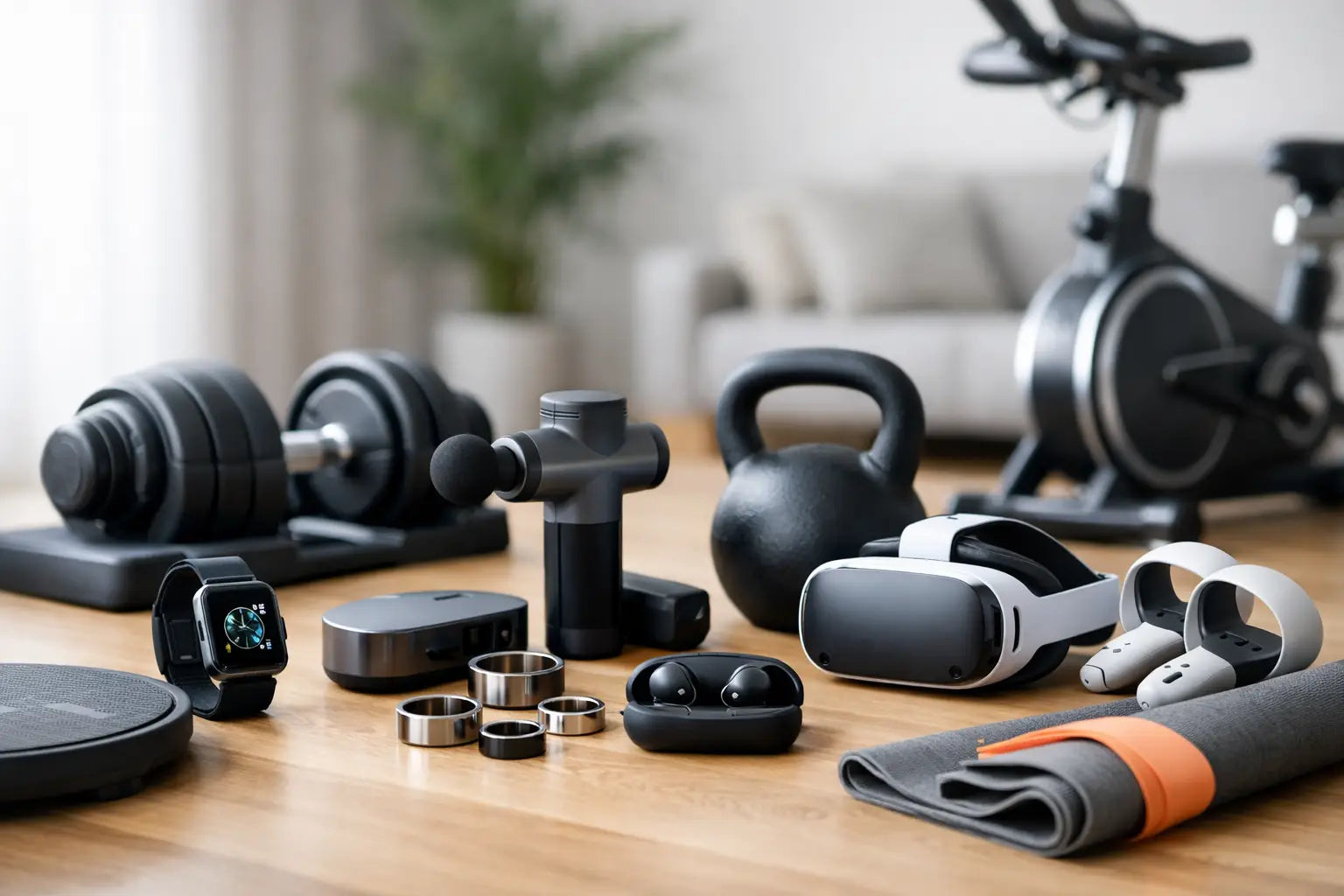
A bench, kettlebell, ankle weights, push-up handles, and compact recovery tools are nice upgrades, not always day-one essentials. The temptation is to buy everything in one cart because it looks motivating. Sometimes that works. More often, it creates clutter and buyer's remorse with free shipping.
Layout matters more than people expect
Even good equipment can feel annoying in the wrong place. In a small apartment, layout is part of the workout plan.
Try to claim a space near natural light if possible. It makes the area feel more open and less like you are exercising in a forgotten hallway. Keep your most-used items within arm's reach and your less-used tools hidden but accessible. If you need to move one chair and unroll one mat to start, that is manageable. If you need to reorganize the room every time, it will get old fast.
Mirrors can help, but they are optional. In a small room, a wall mirror can make the space feel bigger and help with form checks. On the flip side, not everyone wants a full-time reminder that they are doing Bulgarian split squats in the same room where they watch TV. It depends on your style and what makes the space feel motivating instead of chaotic.
The best gear is apartment-friendly, not just fitness-friendly
This is where trade-offs matter. A product can be excellent for training and still be a bad fit for apartment life.
Noise is the first filter. Heavy metal plates, loud cardio machines, and equipment that thumps through the floor can turn a good idea into a neighbor issue. Look for quieter options - coated weights, mats with decent shock absorption, bands, and lower-impact cardio tools. If you live above someone, this is not optional. It is basic diplomacy.
Storage is the second filter. Foldable, stackable, or multi-use gear wins. A bench that folds under a bed is more useful than a better bench that permanently blocks your closet. A compact storage cart can hold bands, handles, gloves, and recovery tools without making the room feel crowded.
Visual clutter is the third filter. This matters because apartment gyms are rarely hidden behind a dedicated door. If your setup lives in your living space, looks count. Clean design, matched colors, and tidy storage make the area feel less like random gear spillover and more like an intentional lifestyle upgrade. That is one reason shoppers like curated finds from stores such as Timo Market - the product has to work, but it also has to fit real life.
How to match the setup to your workout style
Not every small apartment gym setup example should look the same. A strength-focused person and a casual wellness-focused person do not need the same gear.
If you want muscle-building and progressive overload, prioritize adjustable weights, a bench, bands, and maybe a pull-up solution if your door frame allows it. If you want calorie-burning circuits and short daily sessions, a mat, bands, a jump rope or step platform, and one or two moderate weights may be enough. If you care most about flexibility, mobility, and low-impact training, put your budget into a premium mat, bands, yoga blocks, sliders, and recovery tools.
There is also the reality of motivation style. Some people stay consistent when the setup looks minimal and calm. Others need a more exciting environment - LED lighting, a visible timer, a good speaker, or an anime-inspired training outfit that makes the whole routine more fun. If something makes you more likely to use the space, it is not extra. It is strategy.
Common mistakes that waste space and money
The classic mistake is buying a huge machine for one type of workout. Unless you are absolutely committed to that machine, it is usually too limiting for apartment living. A treadmill, rowing machine, or bike can make sense, but only if you use it constantly and have a real plan for where it lives.
Another mistake is ignoring floor protection. Apartment flooring is not gym flooring, and your downstairs neighbor did not sign up for impact training. A decent mat setup protects the floor, reduces noise, and makes the whole space feel more finished.
The third mistake is overestimating how much setup work you will tolerate. People imagine they will happily rearrange a room every morning forever. Then reality shows up. Simpler systems win because they survive real schedules, low-energy days, and crowded apartments.
Make the space easy to keep using
The smartest apartment gym is the one that keeps calling you back. That usually means leaving just enough visible to act as a reminder, without turning the room into a storage zone. Keep the mat folded nearby. Store bands in one basket. Charge your smartwatch in the same area. Let the setup nudge you.
You can also rotate accessories instead of expanding endlessly. Swap in sliders one month, a kettlebell the next, or a recovery tool when training gets intense. That keeps things fresh without blowing up your square footage.
A small workout space does not need to look dramatic to change your routine. It just needs to fit your life well enough that using it feels easier than skipping it. Build around that, and even a tiny corner can start pulling serious weight.


Commenta
Questo sito è protetto da hCaptcha e applica le Norme sulla privacy e i Termini di servizio di hCaptcha.