
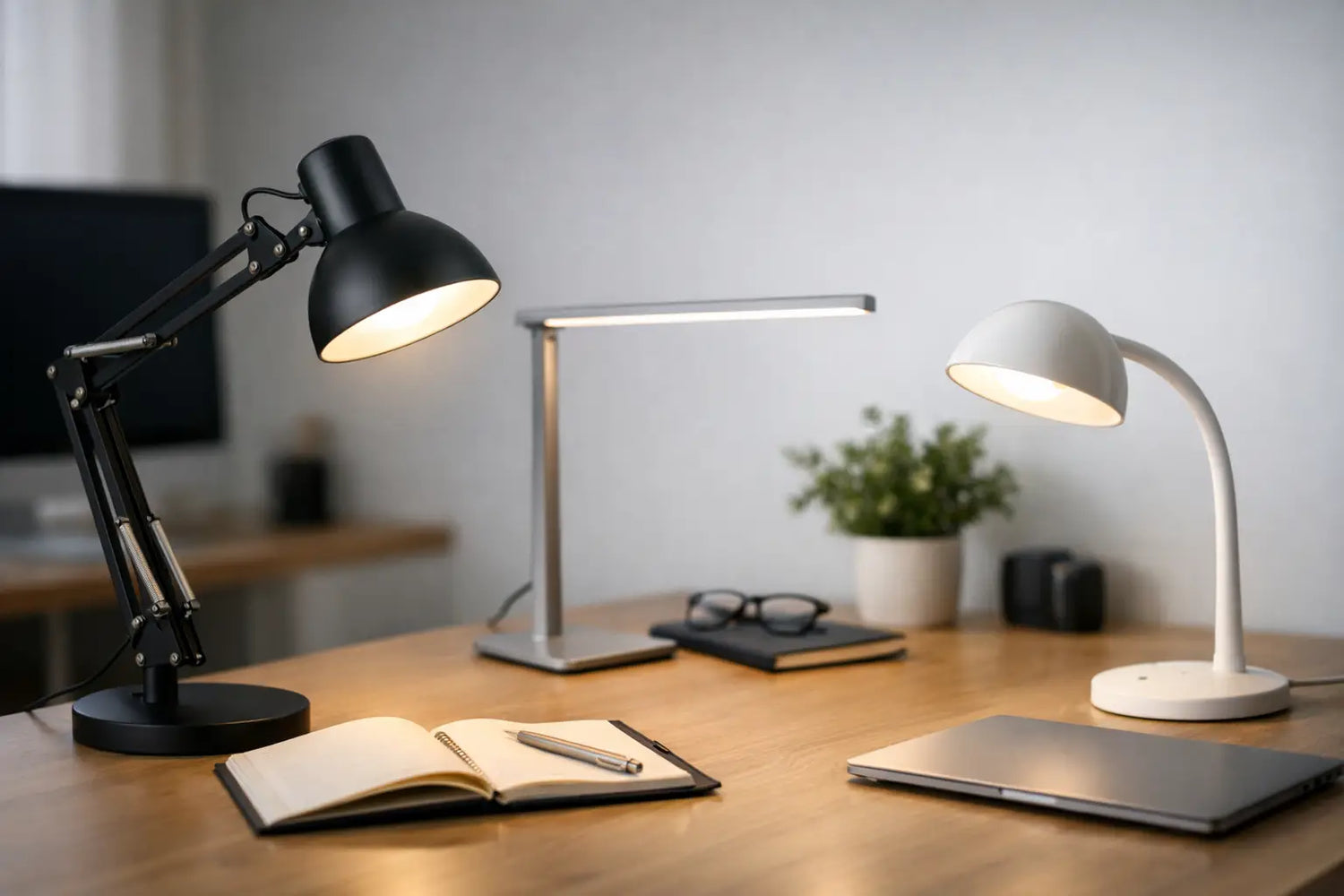
A desk lamp can make a late-night study session feel focused, make your gaming desk look instantly cooler, or stop your eyes from feeling fried after three hours of spreadsheets. That is why this guide to choosing desk lamps starts with what you actually do at your desk, not with whichever lamp has the flashiest product photo. The right light is a small upgrade with a surprisingly big effect.
Start with the job your desk lamp needs to do
Before comparing colors, clamps, and touch controls, decide what the lamp is there for. A lamp for handwritten notes needs more direct, even illumination than one that mostly creates a cozy glow beside a monitor. A gaming setup may benefit from adjustable ambient lighting, while a compact dorm desk may need a lamp that also charges a phone and takes up almost no room.
Think about your normal use. Are you reading printed pages, drawing, working on a laptop, assembling small hobby pieces, filming content, or scrolling in bed? One lamp can handle several tasks, but it needs enough control to switch modes without turning your workspace into an interrogation room.
For most people, an LED desk lamp with adjustable brightness and color temperature is the easy win. LEDs use less energy, stay relatively cool, and usually last far longer than old-school bulbs. Less heat near your hands and fewer bulb replacements? That is the kind of practical upgrade worth getting excited about.
Guide to choosing desk lamps by brightness
Brightness is measured in lumens, but you do not need to turn your shopping trip into a science project. You just need enough light for the task, plus dimming control for everything else.
For relaxed keyboard work, a lower-to-medium setting is often comfortable. For reading, writing, sketching, or detailed work, look for a brighter lamp that can concentrate light on the desk surface. Around 400 to 800 lumens is a useful range for many task lamps, though the actual result depends on the lamp’s design, shade, and distance from your desk.
Do not assume brighter is automatically better. A super-bright lamp pointed directly at glossy paper, a white desktop, or a shiny screen can create glare. If you work at night, the best setup is usually a dimmable task light paired with some softer room lighting. Your eyes have to work harder when your desk is bright but the rest of the room is basically a cave.
A lamp with multiple brightness levels gives you room to adapt. Use higher brightness for focused tasks, then dial it down for winding down, video calls, or casual browsing. It is one feature you will notice every single day.
Watch for glare, flicker, and shadows
A good desk lamp should light the work, not bounce a distracting reflection into your face. Choose a model with a diffuser, shade, or broad light bar if you want softer, more evenly spread light. Exposed bulbs can look great in a decorative setup, but they are not always the best choice for long study sessions.
Placement matters too. Right-handed writers generally do best with the lamp on the left, so their hand does not throw a shadow across the page. Left-handed writers should reverse that. If your monitor is part of the setup, position the lamp so it does not reflect off the screen.
Flicker is another quiet deal-breaker. Low-quality LEDs may flicker in a way that is hard to see but annoying over time, especially on camera or during long sessions. Product descriptions that mention eye-care lighting, flicker-free performance, or a quality LED light source can be helpful signs, though comfort still comes down to real-world use.
Pick a color temperature for your routine
Color temperature changes the mood and function of a lamp. It is measured in Kelvin, and the number is simpler than it sounds: lower numbers look warmer and yellower, while higher numbers look cooler and whiter.
Warm light, roughly 2700K to 3000K, feels relaxed and cozy. It is great for a bedside desk, evening reading, or creating a softer vibe in a room with ambient lighting. Neutral white light, around 3500K to 4500K, is a flexible middle ground for everyday work, school, and general use. Cooler daylight-style light, roughly 5000K and above, can feel crisp and alert, which some people prefer for detailed work or daytime productivity.
The trade-off is personal. Cool light can help a desk feel clean and energized, but it may feel harsh late at night. Warm light is easier on a wind-down routine, but it may not give you the clear, focused feel you want for sketching or sorting tiny parts. If your schedule changes from work mode to game mode to “why am I still awake?” mode, choose a lamp with adjustable color temperatures.
Make sure the lamp fits the desk, not just the aesthetic
A beautiful lamp that eats half your workspace is not an upgrade. Measure your available desk area before buying, especially if you have a monitor stand, speakers, a keyboard, storage trays, or a laptop dock fighting for space.
Traditional base lamps are easy to move and need no installation. They work well on wider desks and bedside tables, but the base takes up valuable real estate. Clamp lamps are excellent for small desks because they attach to the edge and free up the surface below. Just check the maximum clamp thickness and make sure your desk has a suitable edge.
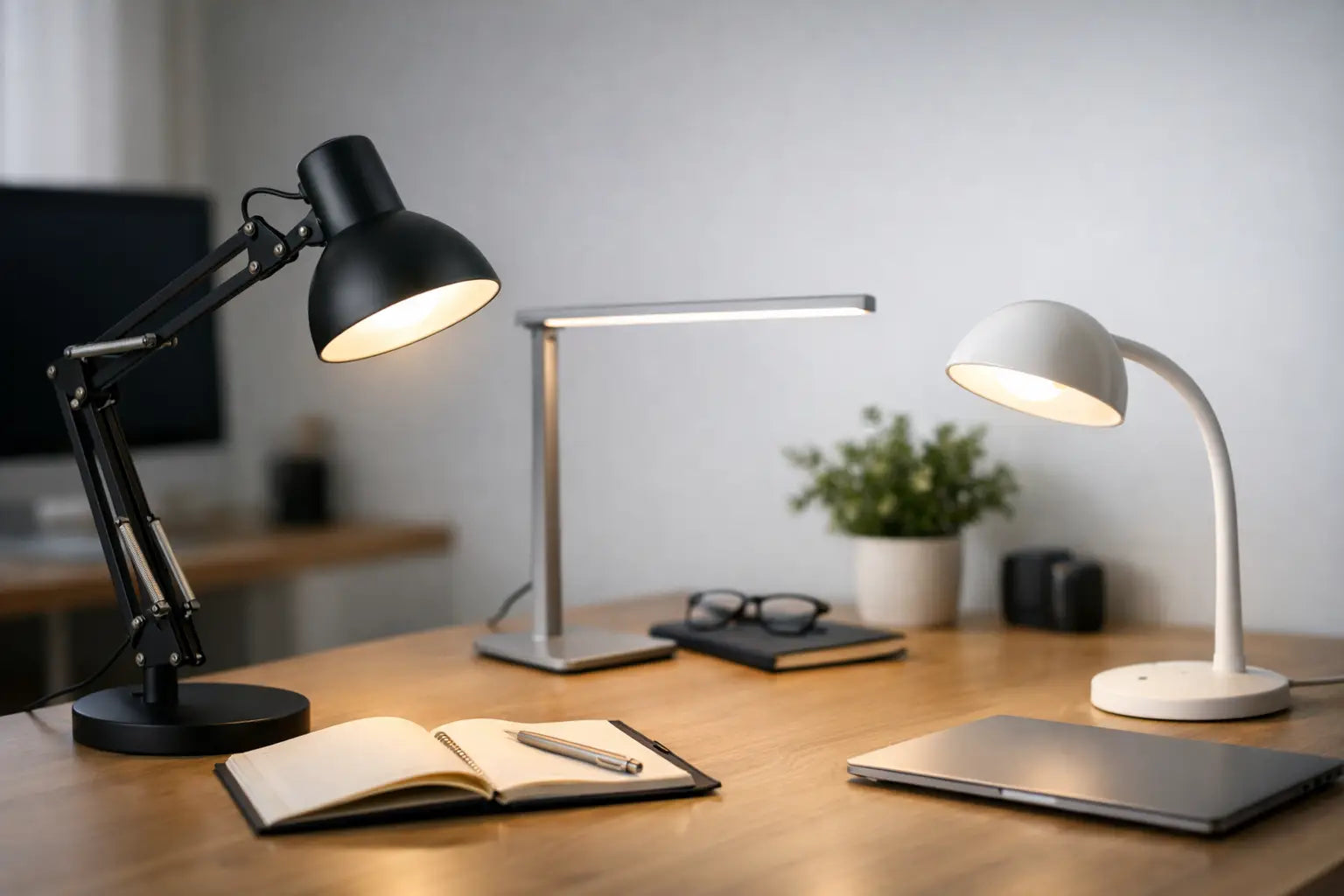
An adjustable arm is another feature that earns its keep. Gooseneck lamps are flexible and usually affordable, though they can sag if the arm is weak or the light head is heavy. Swing-arm or jointed designs offer more stable positioning for reading, crafting, and workstations. Light bars are a smart choice for monitor-centered setups because they can spread light across the desk without shining directly into the screen.
If you move between rooms, study in shared spaces, or need a quick light source during travel, a rechargeable cordless lamp can be handy. Just remember that battery-powered convenience comes with charging. For an all-day work desk, plug-in power is usually the less annoying option.
Choose features you will actually use
Desk lamps now come with touch controls, USB ports, wireless charging pads, timers, memory settings, clocks, pen holders, and more. Some of these are genuinely useful. Some are just there trying very hard to impress you.
A USB charging port is great if outlets are scarce, especially on a nightstand or dorm desk. Wireless charging can keep a compatible phone within reach, but only if the charging pad is positioned where you will not constantly knock it with your elbow. Touch controls look clean and are easy to use, although physical buttons can be more reliable when you are half asleep.
Memory settings are an underrated feature. A lamp that remembers your preferred brightness and color temperature saves a tiny bit of effort every time you switch it on. Tiny effort savings add up when you use something daily.
For gaming rooms, streaming corners, or personality-packed setups, RGB or ambient color modes can be a lot of fun. They are not a replacement for proper task lighting, though. Think of colored light as the background music, while a bright adjustable white light is the part that gets the work done.
Match the style to your space
Your desk lamp is visible all the time, so it should feel like it belongs there. Minimal black or white lamps pair easily with clean workstations. Wood accents and warm metal finishes work well in softer bedroom or study spaces. Colorful LED lamps, modern shapes, and glowing ambient designs can bring extra energy to a gaming or creator setup.
Still, do not let style beat usability. A sculptural lamp may look incredible in a setup photo, but a narrow beam, awkward switch, or non-adjustable head gets old fast. The best-looking choice is often the one that also makes your space easier to use.
At Timo Market, that sweet spot is the fun part: practical lighting that helps your workspace feel more like your space. Whether you want a focused study corner, a cleaner work-from-home desk, or a gaming setup with more personality, choose features that support the way you live rather than features you will forget after day two.
A quick final check before you buy
Take one last look at the basics: how much desk space you have, where the nearest outlet is, how bright you need the light to be, and whether you want warm, cool, or adjustable white light. Then consider the extras that fit your routine, such as charging, a clamp mount, flexible positioning, or colorful ambient modes.
The best desk lamp does not need to be the biggest, brightest, or packed with every possible gadget. It should make the moment you sit down feel easier, clearer, and a little more put together. Light up your space, then get on with the good stuff.

Laisser un commentaire
Ce site est protégé par hCaptcha, et la Politique de confidentialité et les Conditions de service de hCaptcha s’appliquent.