
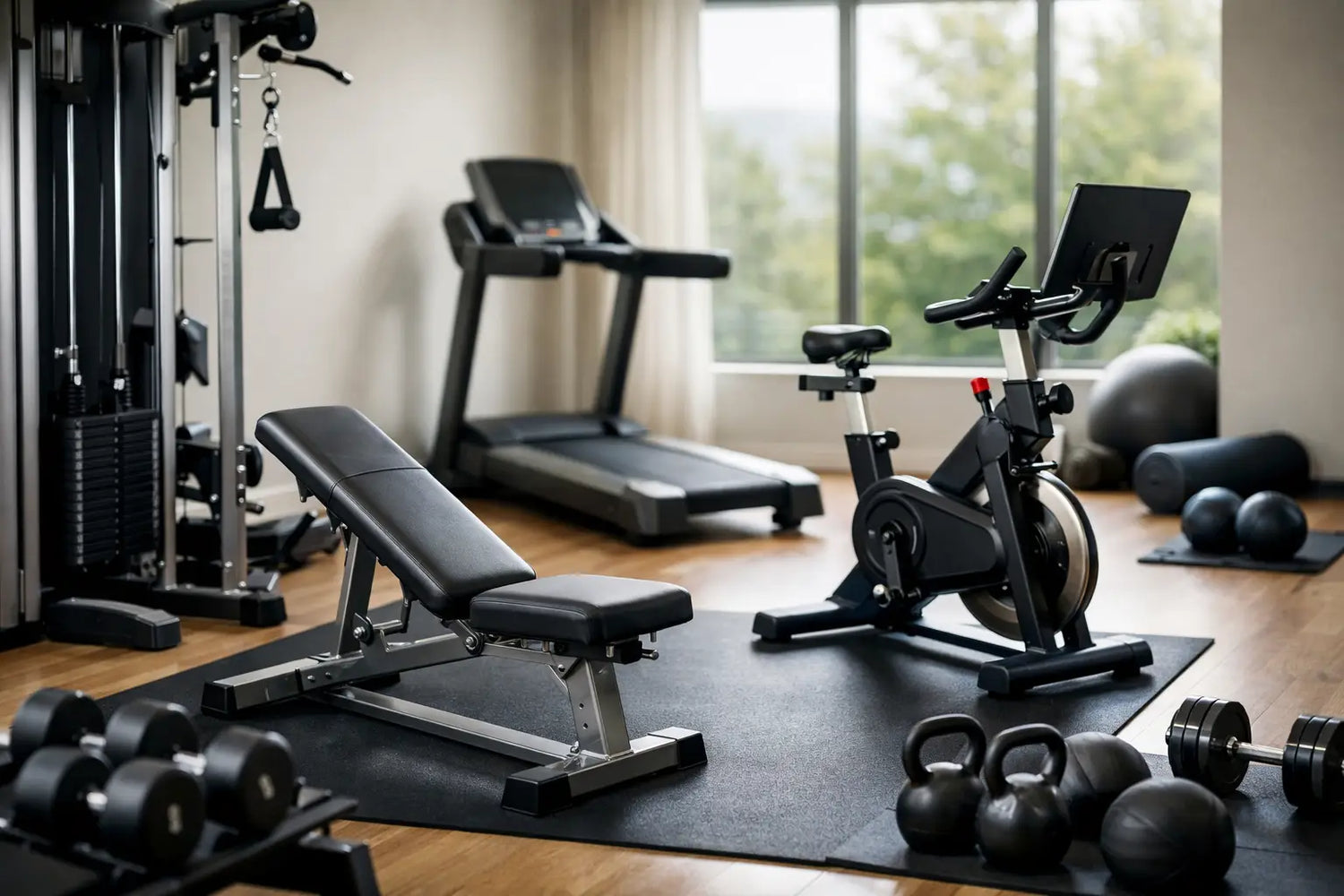
A home workout setup should make it easier to move, not turn your bedroom into a crowded warehouse of good intentions. The best fitness equipment is not necessarily the biggest, flashiest, or most expensive option. It is the gear that matches how you actually train, fits where you live, and still feels easy to use on a busy Tuesday night.
That may sound less exciting than buying a machine with 47 settings and a dramatic product photo. But consistency beats complexity every time. A compact setup you use four days a week will do far more for your strength, energy, and confidence than a giant treadmill that becomes an extremely pricey clothes rack.
Start With the Workout You Want to Repeat
Before comparing features, get specific about your goal. Are you trying to build strength, stay active between work calls, improve mobility, add cardio, or create a little stress-relief corner at home? Different goals call for different tools, and buying for someone else's routine is a fast way to waste both money and square footage.
For strength training, resistance is the priority. Adjustable dumbbells, resistance bands, kettlebells, a workout bench, and a doorway pull-up bar can cover a surprising amount of ground. You can squat, press, row, hinge, carry, lunge, and train your core without filling an entire room.
For cardio, think about the experience you enjoy enough to come back to. A walking pad can be a smart pick for people who want movement while watching a show or catching up on a podcast. A jump rope is low-cost and high-energy, but it needs ceiling clearance and neighbors who will not hate your evening workouts. Exercise bikes and rowing machines offer a more structured session, though they demand more room and usually a larger budget.
For mobility and recovery, simple gear goes a long way. A supportive yoga mat, foam roller, massage ball, and stretch straps help make movement feel better before and after training. They are also easy to store, easy to travel with, and much more likely to get used than an intimidating machine purchased during a motivation spike.
The sweet spot for most home gyms is equipment that supports more than one kind of session. That keeps your routine flexible when your schedule, energy, or fitness level changes.
Measure First, Then Shop Fitness Equipment
Here is the unglamorous truth: dimensions matter. Measure the available floor area, but also consider ceiling height, door swings, storage space, and the clearance needed to use the product safely. A compact machine can still require a wide operating area when pedals, handles, or moving parts are in motion.
Think beyond the product's footprint. If you live in an apartment, consider noise and vibration. A heavy jump session may be great cardio, but it is not always the best match for a second-floor unit. Mats can help reduce sound and protect flooring, while resistance bands, dumbbells, and controlled strength work tend to be more neighbor-friendly.
Storage changes the equation too. Foldable benches, stackable weights, compact pedal exercisers, and equipment that slides under a bed can make small-space training much more realistic. If putting your setup away takes 15 minutes, you will probably skip it when life gets hectic. If it takes 30 seconds, the workout suddenly feels possible.
Build a Setup in Layers, Not One Big Checkout
You do not need to buy everything at once. Start with a foundation, use it for a few weeks, then add the piece that solves a real gap in your routine. This approach is kinder to your budget and better for finding out what you genuinely enjoy.
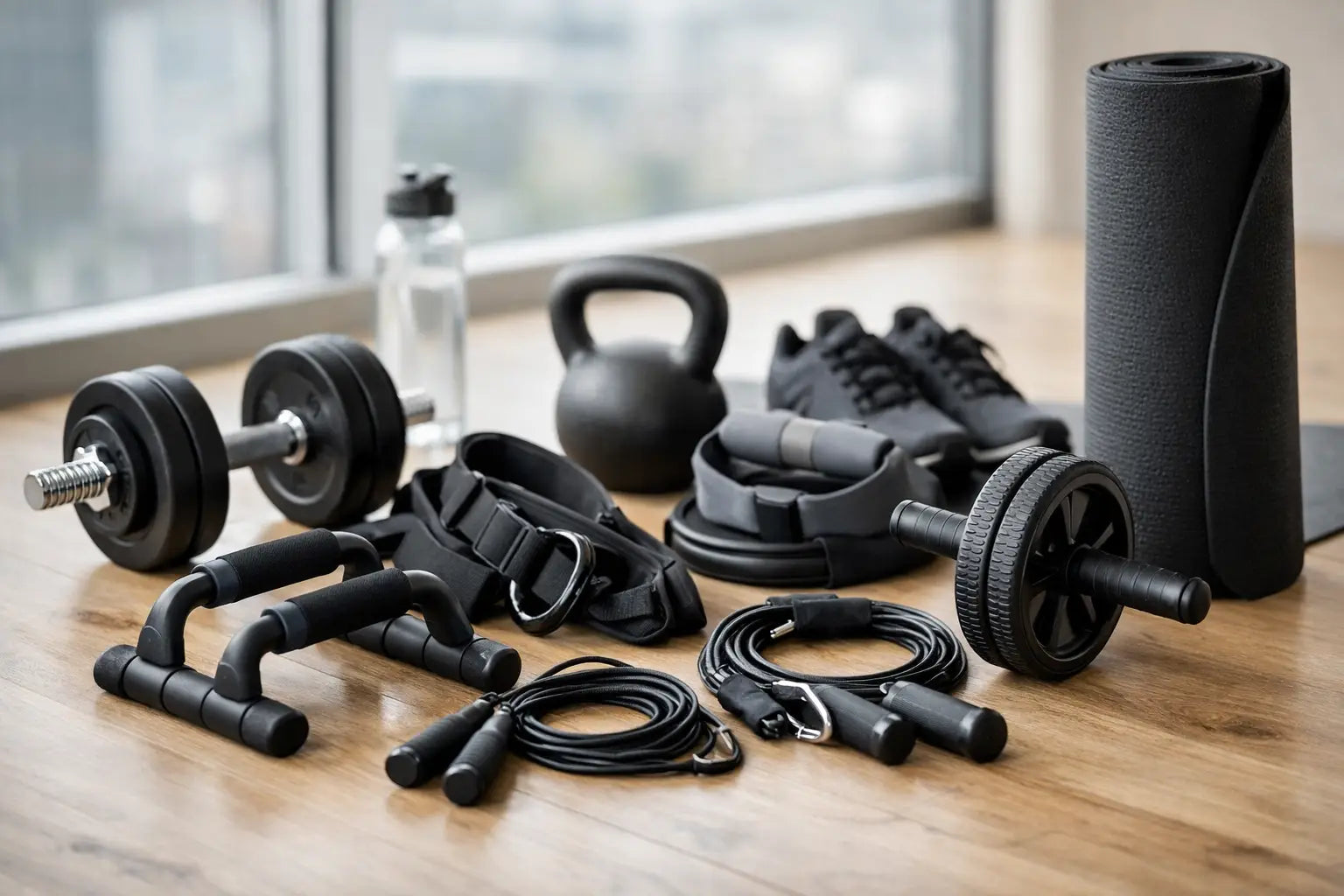
A practical starter setup often includes a quality exercise mat, resistance bands with multiple tension levels, and one form of progressive resistance such as adjustable dumbbells or a kettlebell. Add a bench if you want more exercise options and have the room. From there, choose cardio equipment based on your preferred style of movement rather than what looks most intense.
A few categories are especially useful because they offer variety without demanding a dedicated gym room:
- Resistance bands are lightweight, portable, and great for warm-ups, strength sessions, and travel workouts.
- Adjustable dumbbells can replace multiple pairs of fixed weights while helping you increase resistance over time.
- Kettlebells work well for swings, squats, carries, presses, and full-body conditioning.
- Workout benches expand what you can do with dumbbells and bodyweight exercises, from presses to split squats.
- Walking pads or compact bikes offer approachable cardio for people who prefer steady movement over high-impact sessions.
Look for Progress, Not a Perfect Beginner Weight
Good fitness equipment should give you room to grow. That does not mean you need to start heavy or buy professional-level gear. It means your setup should not become too easy after two weeks.
For strength gear, progressive resistance is key. Bands with multiple levels, adjustable weights, or a set of dumbbells that lets you gradually increase the load all make it easier to keep challenging your muscles. If you only have one light weight, you can still make progress by slowing the movement, adding repetitions, or increasing sets. Eventually, though, more resistance becomes useful.
Comfort and control matter just as much as numbers on a label. Handles should feel secure, grips should not dig into your hands, and moving parts should operate smoothly. A less expensive product can be a great value if it feels stable and suits your routine. On the other hand, a bargain is not really a bargain if it wobbles, pinches, or makes you avoid using it.
Pay attention to weight limits, material details, assembly requirements, and whether replacement parts are available. These practical details are not the fun part of shopping, but they are often what separate a quick win from a frustrating return.
Make Your Home Gym Easy to Say Yes To
Your environment has a sneaky amount of influence on your habits. If your mat is rolled up behind a pile of boxes and your bands are tangled in a drawer, your brain will find a very convincing reason to skip the session. Keep the gear you use most visible and accessible.
A small basket for bands, gloves, and recovery tools can instantly make a room feel more organized. A dedicated mat spot signals that this is a place where you move. If your equipment lives in a shared space, choose pieces that look clean and store neatly rather than making the room feel like a commercial gym exploded in it.
You can also make the workout more fun. Put a speaker nearby, set up a fan, use ambient lighting, or save a few favorite playlists for training time. The goal is not to create a perfect influencer gym. The goal is to make your setup feel like an upgrade to your day.
When Bigger Equipment Is Worth It
Larger machines can be a smart buy when they remove friction from an activity you already love. If you regularly walk for exercise but weather, safety, or time gets in the way, a treadmill or walking pad may earn its place quickly. If cycling is your favorite low-impact cardio, a stationary bike can turn a good intention into a reliable habit.
Just be honest about the commitment. Bigger fitness equipment usually means more maintenance, more delivery considerations, and less flexibility if you move. Check the assembled dimensions, power needs, floor protection requirements, and whether it can be folded or relocated. For some homes, a compact setup is not a compromise. It is the smarter long-term choice.
A product does not need to transform your whole life overnight to be worth buying. Sometimes the best upgrade is simply the one that helps you take a walk, finish a quick strength session, stretch after work, or move a little more than you did yesterday. Choose the gear that makes that next workout feel easy to start, and let the results build from there.

Laisser un commentaire
Ce site est protégé par hCaptcha, et la Politique de confidentialité et les Conditions de service de hCaptcha s’appliquent.