
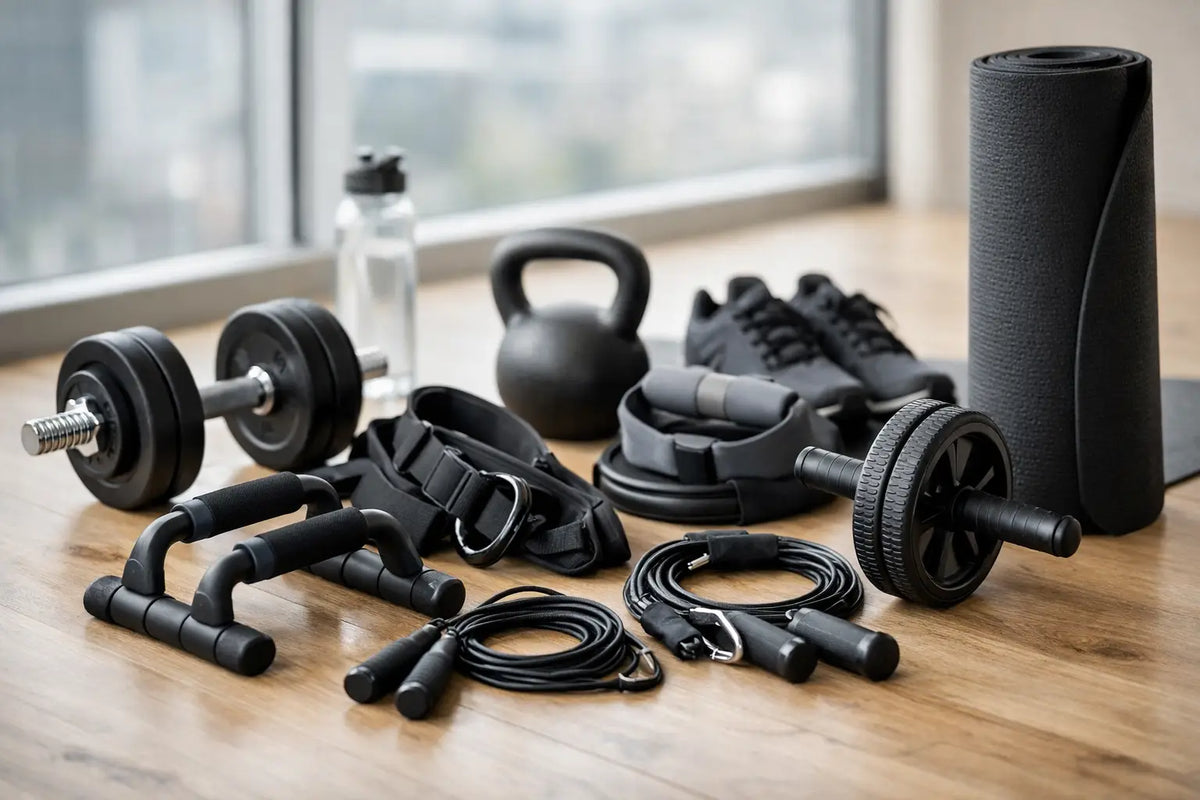
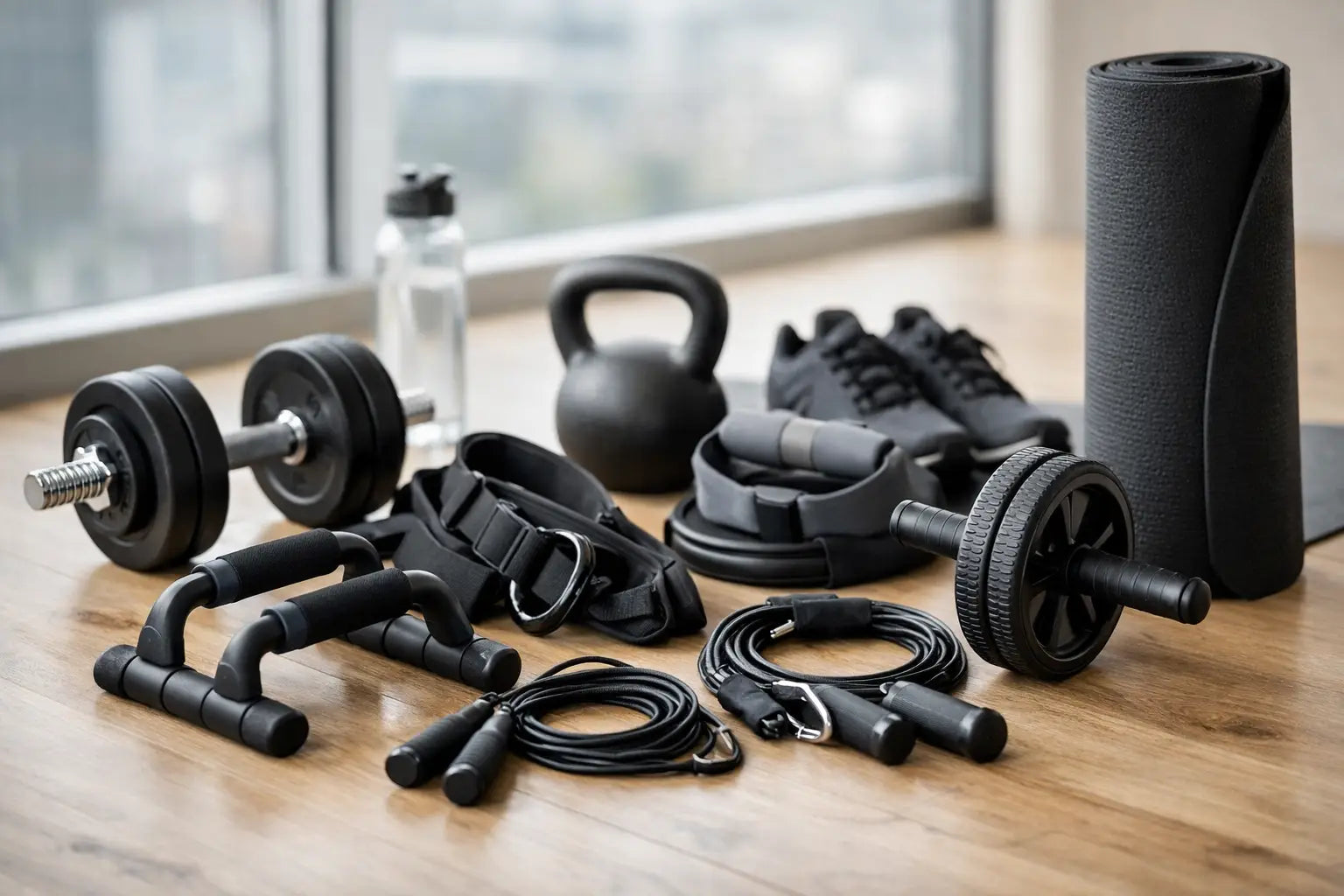
A workout does not need a spare bedroom, a wall of mirrors, or a monthly membership staring at you from your bank statement. This guide to portable gym equipment is for building a setup that fits your space, your schedule, and maybe even the corner of your suitcase. The right gear makes it easier to train between meetings, during travel, or whenever your living room floor is suddenly available.
Portable does not mean pointless. A few well-chosen pieces can create serious resistance, raise your heart rate, and help you keep your routine moving without turning your home into a warehouse.
Start With the Workout You Actually Want to Do
Before adding every trending fitness gadget to your cart, think about the kind of training you will realistically repeat. The best portable gym equipment is not necessarily the most intense-looking item. It is the equipment you will pull out on a busy Tuesday instead of letting it collect dust under the bed.
For strength and muscle-building, adjustable resistance bands, suspension straps, compact dumbbells, and push-up handles give you plenty to work with. For cardio, a jump rope, fitness step, or compact pedal trainer can bring the energy without taking over the room. If mobility, recovery, and low-impact movement are your priorities, a yoga mat, mini bands, sliders, and a massage ball make a smart starting point.
Your available space matters too. Someone in a studio apartment needs gear that stores vertically or folds flat. Someone who travels may value weight and packability over maximum resistance. If you have a garage or spare corner, slightly larger equipment can make sense. There is no prize for buying the biggest item. There is only the payoff of using what you own.
The Portable Gym Equipment Worth Your Space
Resistance bands: small gear, serious range
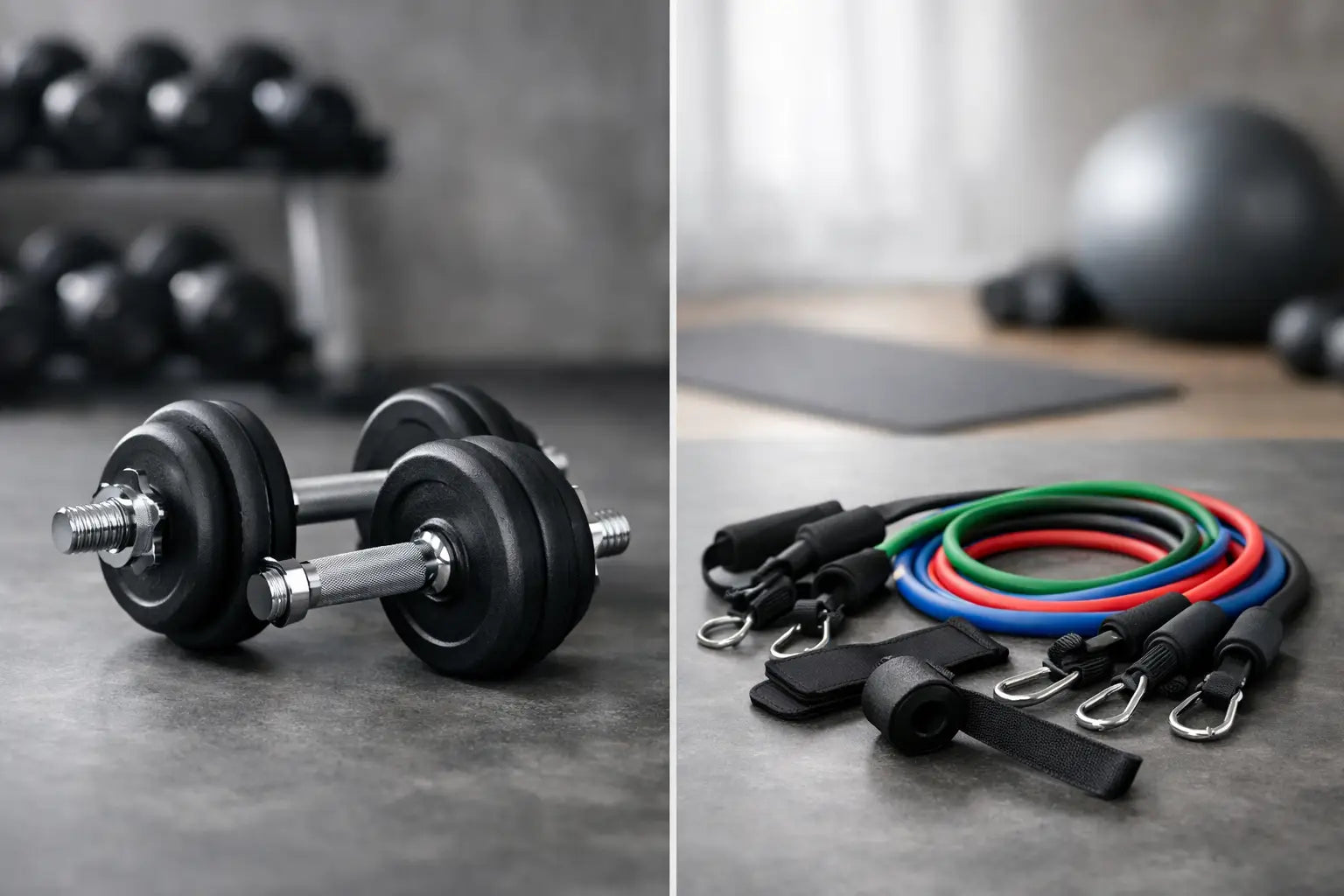
Resistance bands are the MVP of compact training. A set with multiple resistance levels lets you train your upper body, lower body, core, and smaller stabilizing muscles with one lightweight kit. Loop bands are great for squats, glute bridges, lateral walks, and warmups. Tube bands with handles work well for rows, presses, curls, and triceps extensions.
They are especially useful when space is tight because the resistance changes with the stretch, rather than depending on a heavy stack of plates. The trade-off is that bands can feel different from free weights, particularly at the beginning of a movement. Choose durable bands, inspect them for wear, and anchor them only to a secure door or attachment point. A snapped band is not the kind of workout surprise anyone ordered.
A jump rope for fast cardio
A jump rope is one of the easiest ways to make a short workout feel very real, very quickly. It is inexpensive, travel-friendly, and effective for footwork, coordination, and conditioning. Adjustable-length ropes are a strong choice for beginners because proper sizing reduces frustrating trips and tangles.
That said, jumping is not right for every home or every body. Downstairs neighbors may not appreciate a 6 a.m. bounce session, and people managing joint pain may prefer a low-impact option. A compact pedal exerciser, marching intervals, or band circuits can deliver cardio without the repeated impact.
Suspension trainers for full-body training
Suspension straps use your body weight and an elevated anchor point to create exercises that scale from beginner-friendly to impressively difficult. Rows, chest presses, assisted squats, lunges, planks, and hamstring curls are all possible with one set of straps.
The magic is in the angle. Standing more upright makes an exercise easier; moving your feet farther from the anchor makes it harder. This makes suspension training a flexible option for households where more than one person may use the gear. Just make sure the anchor is designed for the load and installed or positioned correctly. Convenience is great. Questionable door hardware is not.
Adjustable dumbbells when you want real load
If your goal is progressive strength training, adjustable dumbbells can be worth the extra cost and storage space. They give you the familiar feel of free weights while taking up far less room than a full rack. A compact pair can cover presses, rows, deadlifts, goblet squats, carries, and more.
Not all adjustable dumbbells are equally portable. Some are ideal for moving from a closet to the living room but are still too bulky for travel. Look at the total weight, adjustment mechanism, handle comfort, and whether the plates rattle during movement. For a truly packable setup, resistance bands usually win. For building strength at home over time, dumbbells may be the better buy.
A mat, sliders, and push-up handles
The unglamorous pieces often get the most use. A supportive exercise mat creates a dedicated workout zone while protecting knees, elbows, and floors. Sliders turn a small patch of carpet or smooth flooring into a challenge for mountain climbers, hamstring curls, lunges, and core work. Push-up handles can make pressing more comfortable by keeping wrists in a more natural position and allowing a deeper range of motion.
These accessories do not replace resistance, but they make bodyweight training more comfortable and varied. That matters when your goal is consistency rather than a one-week motivation burst.
Build a Setup in Tiers, Not All at Once
A portable gym works best when each item earns its spot. Start with a simple base: a mat, a resistance band set, and a jump rope or another cardio option. That combination supports warmups, strength circuits, mobility sessions, and quick sweat sessions with minimal clutter.
When you are ready to level up, add suspension straps or adjustable dumbbells based on your goals. Suspension straps offer more exercise variety at a lower weight. Dumbbells make it easier to track progressive overload, which is useful if you want to increase strength with clear, measurable jumps.
For a more complete small-space setup, consider these additions:
- A door anchor for band exercises, provided your door is sturdy and used correctly
- Mini loop bands for lower-body activation and travel workouts
- Sliders for low-cost core and leg training variety
- A foam roller or massage ball for post-workout mobility
- A compact storage bag or basket so your gear stays visible but tidy
Make Portable Equipment Work Harder
The equipment is only half the equation. Structure gives it purpose. You can get a full-body session from a few tools by pairing a lower-body movement, an upper-body push, an upper-body pull, a core exercise, and a short cardio finisher.
For example, try banded squats, push-ups on handles, band rows, slider mountain climbers, and one minute of jump rope. Repeat the circuit at a pace that challenges you while letting you maintain good form. If you are new to exercise, start with fewer rounds and longer rest. If you are experienced, increase resistance, slow the lowering phase, or use tougher body positions.
Progress does not always mean buying heavier gear. With portable equipment, you can add repetitions, increase time under tension, reduce rest periods, choose a stronger band, or improve your range of motion. Those small upgrades add up.
Watch for the Details That Change the Experience
The cheapest option is not always the best value if it slips, pinches, frays, or feels awkward enough to avoid using. Look for non-slip surfaces on mats and handles, clear resistance labeling on bands, secure stitching on straps, and simple adjustment systems on ropes or weights. Product ratings can be useful, but check what reviewers say about long-term durability and ease of setup, not just how good something looked when it arrived.
Also be honest about noise. Jumping, dropping weights, and fast footwork can be tough in apartments. A thicker mat can reduce vibration, while bands and controlled bodyweight movements keep workouts quieter. Your ideal home gym should fit your life, not start a feud with the people below you.
Finally, use portable gear with the same care you would use at a commercial gym. Warm up, choose an appropriate resistance level, control each repetition, and stop if something causes sharp pain. A compact setup is convenient, but good form is still the main event.
A few pieces of portable equipment can turn a spare corner into a place where progress happens. Pick gear that matches your goals, store it where you can see it, and make the next workout easy enough to begin. Your future self does not need a bigger room. It needs a reason to start.

Laisser un commentaire
Ce site est protégé par hCaptcha, et la Politique de confidentialité et les Conditions de service de hCaptcha s’appliquent.