
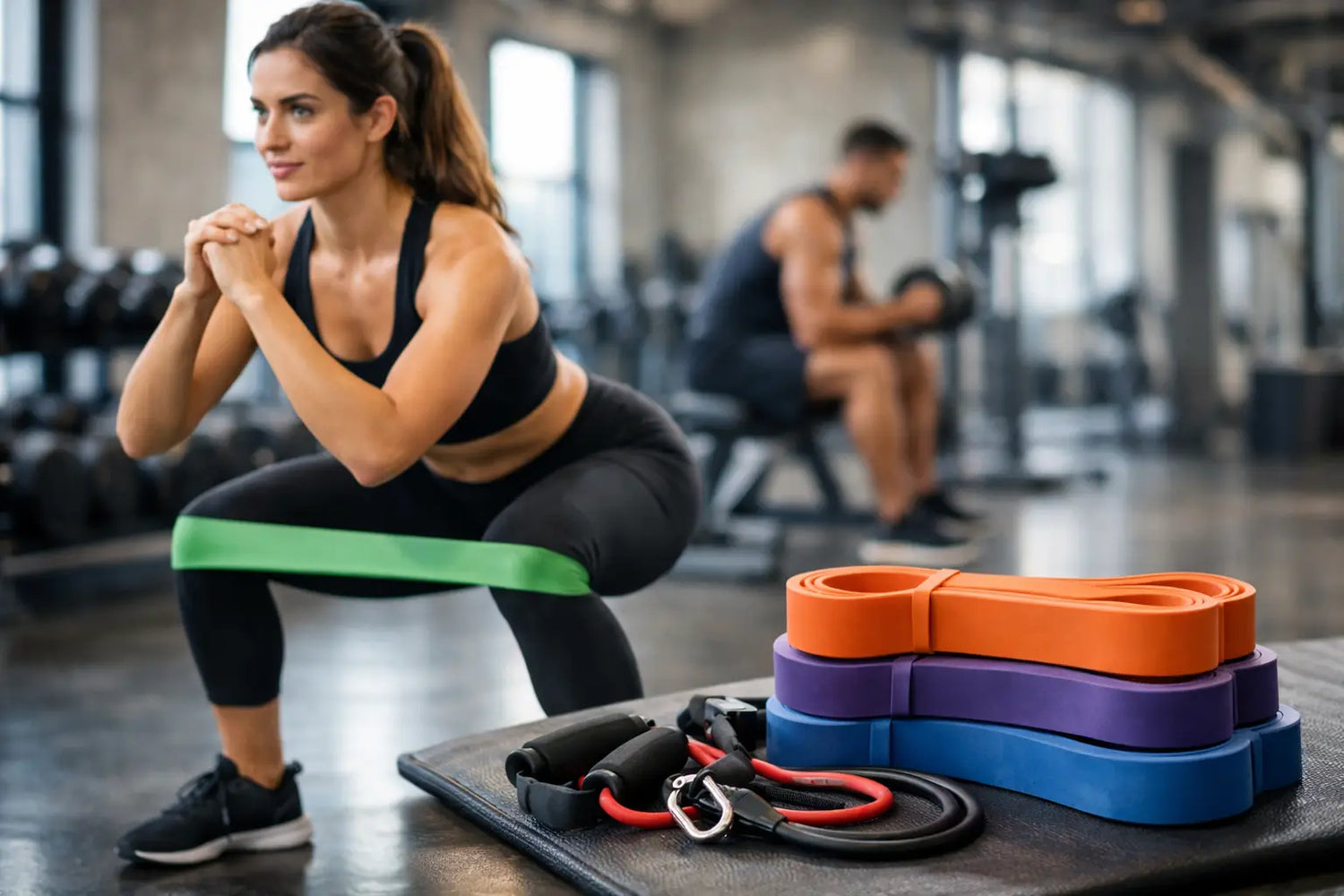
A lot of home workout gear gets hyped up, used twice, then shoved into a closet next to that blender you swore would change your life. Resistance bands are one of the few exceptions. If you’re wondering, are resistance bands effective, the short answer is yes - but only if you use the right band, the right tension, and the right exercises for your goal.
That nuance matters. Resistance bands are not magic, and they are not a perfect replacement for every piece of gym equipment. What they are is affordable, portable, surprisingly versatile, and very capable of helping people build strength, improve mobility, and make workouts easier to stick with at home.
Are resistance bands effective for building strength?
Yes, resistance bands can absolutely build strength. Your muscles respond to tension, not to whether that tension comes from a fancy cable machine, a dumbbell, or a loop of latex trying to turn your glute bridge into a personal insult.
When you push or pull against a band, your muscles have to work through resistance just like they do with free weights. That makes bands useful for rows, presses, squats, deadlift patterns, lateral walks, curls, triceps work, and core training. For beginners and intermediate exercisers, that can be more than enough to create real progress.
The main reason bands work is progressive overload. If the movement gets harder over time, whether by using a thicker band, adding reps, slowing tempo, or improving form, your body adapts. That adaptation can mean stronger legs, better shoulder stability, more upper-body endurance, and more control through full ranges of motion.
Where people get tripped up is assuming bands only count as a “light workout.” That depends on the band. A thin rehab band and a heavy-duty loop band are two very different experiences. One is great for activation and mobility. The other can make a squat burn fast.
What resistance bands do especially well
Bands shine in places where convenience and versatility matter. That’s a big reason they’re so popular for home gyms, travel workouts, and quick training sessions when you don’t want a whole production just to move your body.
One major advantage is joint-friendly resistance. Bands create tension without the same kind of loading pattern you get from heavy barbells. For some people, especially those easing back into exercise, that feels more approachable and less intimidating. You still work hard, but often with less impact.
They’re also excellent for movement quality. Bands can help you learn how to control your shoulders, engage your glutes, and stabilize your core. If you sit a lot, feel stiff, or want to improve how your body moves before chasing heavier strength work, bands are a smart starting point.
Another win is exercise variety. A small set of bands can cover a lot: warmups, strength sessions, stretching, recovery work, and muscle activation. That makes them one of the highest-value pieces of fitness gear for people who want more workout options without turning their living room into a commercial gym.
Are resistance bands effective compared to weights?
This is where the answer becomes more interesting than a simple yes or no. Resistance bands and weights both work. The better question is what you want them to do.
If your goal is general fitness, muscle tone, beginner strength, mobility, or staying active at home, bands can be incredibly effective. For many people, they are effective enough that consistency matters more than the equipment choice. A band workout you actually do three times a week beats a gym membership collecting digital dust.
If your goal is maximum strength, advanced hypertrophy, or very precise load progression, free weights usually have the edge. Dumbbells and barbells make it easier to measure exactly how much you’re lifting and keep adding heavier loads over time. Bands can get challenging, but the progression is not always as clean.
Resistance also feels different. With bands, tension often increases as the band stretches, so the hardest part of the rep may be near the end of the movement. With free weights, the challenge depends more on gravity and body position. That means some exercises feel better with bands, while others feel more natural with weights.
So no, bands are not a total replacement for every training tool. But yes, they are still highly effective for a huge percentage of people, especially those training at home or looking for a lower-cost setup.
Where resistance bands fall short
Bands have limits, and pretending otherwise would be lazy advice.
First, it can be harder to track progress precisely. Going from a 20-pound dumbbell to a 25-pound dumbbell is clear. Going from one band to another is less exact, especially when stretch length changes from exercise to exercise.
Second, some movements are awkward with bands. Heavy leg training, for example, can eventually outgrow what a basic band setup provides. You can make band squats and deadlift variations challenging, but if you’re chasing serious lower-body strength, traditional weights usually offer more room to scale.
Third, setup matters. If a band slips, rolls, or isn’t anchored properly, the exercise feels annoying fast. Good-quality bands help a lot here. Cheap ones can snap, lose elasticity, or make every rep feel sketchier than it should.
That doesn’t make bands ineffective. It just means they work best when you match them to the right goals.
Who gets the most out of resistance bands?
Beginners often get a ton of value from bands because they make strength training feel less overwhelming. You can learn movement patterns, build confidence, and train at home without needing a full rack of gear.
People returning from a break also do well with bands. They’re useful for rebuilding strength gradually and improving mobility without jumping straight into heavy loading.
They’re especially effective for people who want short, efficient workouts. If your schedule is packed, a resistance band session can fit into a lunch break, a small apartment, or a hotel room. That kind of convenience is not a small thing. It’s often the difference between staying consistent and saying, “I’ll start Monday,” for the 19th time.
More experienced lifters can benefit too, but usually as a supplement. Bands are great for warmups, activation drills, burnout sets, accessory work, and travel training when full gym access isn’t available.
How to make resistance bands actually work
The biggest mistake people make is treating bands like an easy option instead of real equipment. If you want real results, use them with intent.
Choose a band that makes the last few reps feel challenging while still letting you keep good form. If you can do 25 reps without much effort, the band is probably too light for strength work. On the flip side, if you can barely move through the range of motion, it’s too heavy.
Control matters too. Bands reward slow, deliberate reps. If you rush through exercises, momentum takes over and the muscles do less work. A simple squat, row, chest press, or glute bridge can become much more effective when you slow the lowering phase and pause where tension is highest.
Exercise selection is also key. Bands work especially well for rows, chest presses, shoulder presses, pull-aparts, biceps curls, triceps extensions, glute kickbacks, lateral walks, and Romanian deadlift patterns. You don’t need 27 fancy moves. A few basics done well will take you much further.
And yes, consistency is the not-so-glamorous secret. The best setup is the one you’ll actually use. That’s why resistance bands keep winning people over. They’re easy to store, easy to grab, and easy to fit into real life.
Are resistance bands effective for weight loss?
On their own, bands do not cause weight loss in some special way. No workout tool gets its own VIP pass around nutrition and overall activity levels.
What bands can do is make exercise more accessible and sustainable, which supports weight loss over time. Strength training helps preserve muscle while you lose fat, and bands give you a practical way to do that at home. They can also make it easier to add more movement into your week without needing a complicated routine.
That matters more than people think. The most effective fitness tool is often the one that removes excuses. If a band workout helps you train more often, recover better, and stay engaged, that’s real value.
So, are resistance bands effective?
Yes - resistance bands are effective for strength, mobility, muscle endurance, activation, and home workouts. They’re not the best tool for every goal, and they won’t replace a full gym for everyone. But for affordable, flexible, low-space training, they punch way above their size.
If you want fitness gear that doesn’t demand a dedicated room, a huge budget, or a complete personality change, resistance bands are a smart buy. Start with a few core exercises, use enough tension to make it count, and let your progress come from showing up more than showing off. That’s usually where the real transformation starts.





Leave a comment
This site is protected by hCaptcha and the hCaptcha Privacy Policy and Terms of Service apply.