
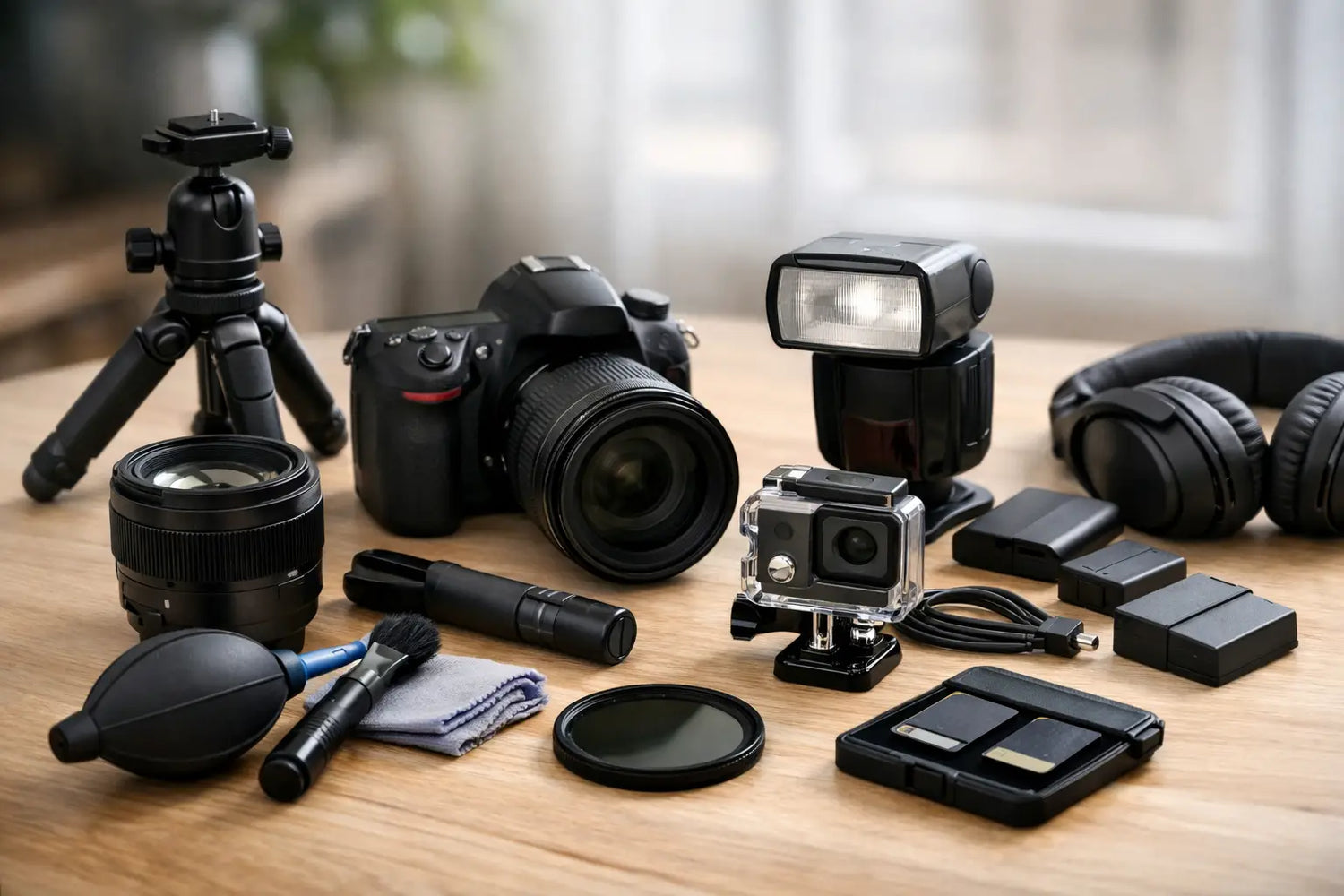
Your new camera is charged, the strap is on, and suddenly every accessory online looks like a must-have. A flashy LED light? Sure. A massive tripod? Maybe. A mysterious filter kit with 24 pieces? Slow down. The best camera accessories for beginners are not the ones that make your bag look professional. They are the ones that make it easier to take your camera out, keep it safe, and get a sharper shot when the moment actually happens.
A smart starter setup should solve real problems: shaky hands, low light, full memory cards, dead batteries, and the tiny panic of realizing your lens cap disappeared somewhere between the car and the park. Start with the essentials, learn what you shoot most, then build from there. Your wallet and your future camera bag will thank you.
Start With Protection You Will Actually Use
The most exciting accessory is rarely the most useful. A camera bag, a protective case, or even a compact padded insert may not make your photos more cinematic, but it can keep one accidental drop from ending your photo hobby early.
Choose protection based on how you plan to carry your camera. If you are taking day trips, commuting, or traveling, a small shoulder bag or sling makes it easy to grab the camera quickly. If you are hiking or carrying multiple lenses, a backpack with adjustable padded dividers gives you more room and better weight distribution. For casual shooters, a padded insert inside a bag you already own can be the budget-friendly move.
Do not buy the biggest bag just because it has room for everything. A huge bag tends to get left at home, which is not exactly helping your photography. Look for enough space for your camera, one extra lens if you have one, batteries, memory cards, and a few small accessories. Bonus points for weather-resistant material, but remember that water-resistant is not the same as waterproof.
A simple screen protector is also worth considering, especially for cameras with touchscreens. It is a small upgrade that helps prevent scratches from keys, zippers, and general life chaos.
The Camera Accessories for Beginners Worth Buying First
If you only buy a few items, prioritize the accessories that prevent missed shots. These are the low-drama heroes of a beginner setup.
A spare battery and a reliable charger
Battery anxiety can turn a fun shoot into a race against a blinking icon. A spare battery is one of the most practical purchases you can make, particularly if you shoot video, use a mirrorless camera, travel, or spend a long afternoon taking photos outdoors.
Whenever possible, use a battery made for your exact camera model or a well-reviewed compatible option from a trusted seller. The cheapest unknown battery may look like a deal until it drains quickly, overheats, or fails when you need it. A dual charger can be handy if you own two batteries, but one dependable charger and one spare battery already cover a lot of ground.
Get into one habit early: charge both batteries before a planned shoot and put the spare in the same pocket of your bag every time. Future you will feel very organized.
A fast, compatible memory card
A camera without storage is basically a very expensive paperweight. Memory cards are easy to overlook, yet they matter more than many trendy add-ons. Your camera manual will list compatible card types and recommended speed classes. That detail matters, especially for burst photography and 4K video.
For photos, a quality card with enough capacity for a full outing is usually a better choice than several tiny cards. For video, prioritize speed as well as capacity. If the card cannot write data quickly enough, your camera may stop recording or limit its video settings.
It is wise to carry a second card, but do not treat it as permanent storage. Transfer photos to a computer, external drive, or cloud backup regularly. Cards can fail, get lost, or take an accidental trip through the washing machine. Technology has a sense of humor sometimes.
A comfortable camera strap
The strap included with many cameras works, but it is often stiff, thin, and more annoying than it needs to be. A better strap makes you more likely to carry your camera, which means more chances to capture something good.
A wide neck strap spreads weight across your shoulder and is great for lighter setups. A cross-body sling strap offers faster access and can feel more secure while walking. Wrist straps are compact and popular for small cameras, but they are not ideal for heavier bodies and long lenses.
Comfort is personal, so think about your camera’s weight and how you shoot. A stylish strap is fun, but secure attachment points matter more than matching your outfit.
A lens cleaning kit
Every new photographer eventually takes a photo with a weird blurry spot, then discovers a fingerprint or dust on the front of the lens. A basic cleaning kit keeps that problem from becoming a whole thing.
You only need a hand blower, a soft lens brush, microfiber cloths, and lens-cleaning solution designed for optics. Blow loose dust away first, then gently wipe if needed. Avoid using your shirt, tissues, or random paper towels. They can leave fibers behind or scratch coatings over time.
Clean carefully, not constantly. A little dust rarely ruins an image, and aggressive cleaning creates more risk than a few harmless specks.
Add Stability Before Buying More Lenses
A tripod can make an immediate difference when you photograph landscapes, city lights, products, food, self-portraits, streaming setups, or anything in lower light. It lets you use slower shutter speeds without hand shake, keeps framing consistent, and gives you the freedom to step into your own photos.
The trade-off is portability. A tall, heavy tripod is stable, but it can be a pain to carry. A tiny tabletop tripod is convenient, but it will not safely support every camera or work on uneven ground. For most beginners, a lightweight tripod with a stable ball head and a height that works for their usual shooting is the sweet spot.
Check the tripod’s load rating, but do not take that number as a magical promise. Your camera should feel secure when mounted, and the head should not slowly droop under the lens weight. A remote shutter release or your camera’s self-timer pairs nicely with a tripod because pressing the shutter button can still introduce a slight shake.
If you mainly shoot handheld street photos, family events, or quick travel moments, buy the spare battery and memory card first. A tripod is valuable, but it depends on your style.
Light Is a Bigger Upgrade Than Most Beginners Expect
Photography is literally built around light, so improving it can do more for your images than piling on effects later. You do not need a studio full of gear to get started. A small LED light, a compact on-camera flash, or a simple reflector can help you shape a scene and avoid dark, muddy images.
For portraits or product shots at home, a dimmable LED light gives you control over brightness. Look for adjustable color temperature if you want to match daylight from a window or create a warmer indoor look. A diffuser softens harsh light, which is especially helpful for faces and shiny objects.
An external flash is powerful, but it has a learning curve. Pointing it straight at someone often creates flat light and strong shadows. Bouncing the flash off a neutral wall or ceiling can look far more natural, but only if the surface and room allow it. If that sounds like more gear than you want right now, start with window light. It is free, flattering, and does not need charging.
Filters: Buy One With a Purpose
Filters can be useful, but giant bargain packs are a classic beginner trap. You do not need ten colored filters to learn photography. You need to understand why you would put one in front of your lens.
A clear protective filter can guard the front element in dusty, sandy, or high-contact situations, though some photographers prefer using only a lens hood for protection. A circular polarizer is excellent for reducing reflections on water and glass, deepening blue skies, and making foliage look richer. A neutral-density filter is helpful when you want slower shutter speeds in bright light, such as smoothing moving water or shooting video with more natural motion.
Buy filters in the correct diameter for your lens. The size is usually marked with a small circle symbol and a number on the lens barrel. Cheap filters can reduce sharpness or add strange color casts, so one decent filter is often better than a drawer full of questionable extras.
Build Your Kit Around the Photos You Want to Take
Your ideal accessories change with your interests. A beginner shooting travel photos may get the most value from a compact bag, spare battery, memory card, and lightweight tripod. Someone creating videos for social media may prioritize an LED light, microphone, tripod, and phone mount. A product seller or hobby crafter might love a tabletop tripod, simple backdrop, and soft lighting.
This is why buying everything at once is rarely the best deal, even when a bundle looks tempting. Use your camera for a few weeks. Notice what interrupts you. Are your photos shaky at night? Do you run out of battery? Is your camera uncomfortable to carry? Let those frustrations tell you what to buy next.
Skip These Purchases for Now
You can safely hold off on expensive specialty lenses, elaborate flash systems, oversized gimbals, and novelty accessories that promise instant professional results. They can all be useful later, but none of them replaces practice with focus, exposure, composition, and light.
Also be cautious with accessories that claim to fit every camera. Universal can be convenient, but a loose plate, poor-fitting case, or weak mount is not a bargain if it puts your gear at risk. Always confirm compatibility with your camera model, lens size, and total weight.
The fun part of building a camera kit is that it grows with you. Start with the accessories that keep you shooting comfortably and consistently, then let your favorite kinds of photos guide the next upgrade. The best gear is the gear that gets you out the door, camera in hand, ready when something worth remembering shows up.


Laisser un commentaire
Ce site est protégé par hCaptcha, et la Politique de confidentialité et les Conditions de service de hCaptcha s’appliquent.