
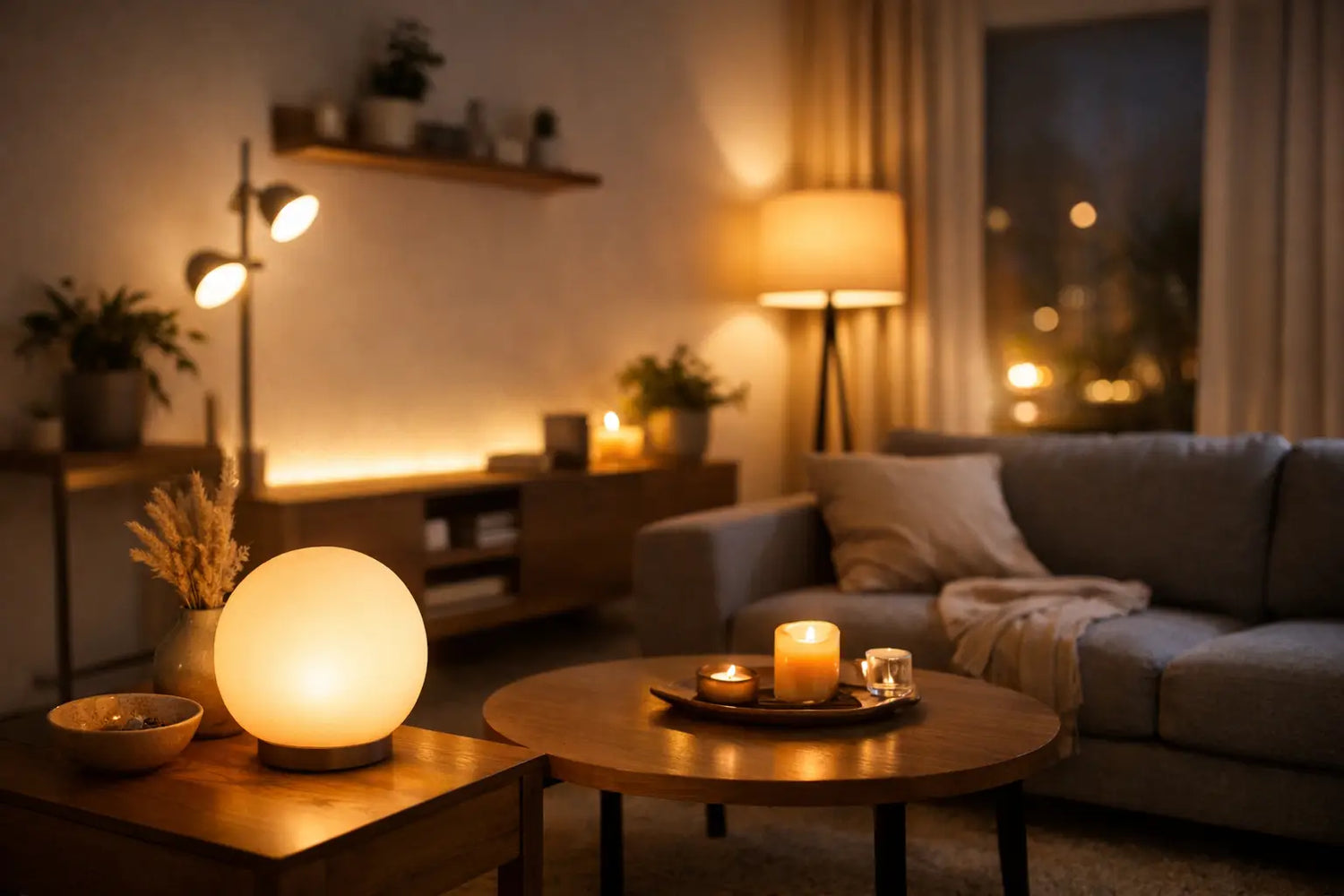
Walk into a room with one harsh ceiling bulb and it feels like a waiting room. Walk into the same room with a warm floor lamp, a soft LED strip behind the TV, and a dim glow on a shelf, and suddenly it feels finished. That shift is exactly why so many people search for how to create ambient lighting - it is one of the fastest, most affordable ways to make your space look better without a full makeover.
Ambient lighting is the base layer of light in a room. It is not the focused beam you use to read and not the spotlight you use to show off wall art. It is the overall glow that makes a space feel comfortable, balanced, and easy to be in. If your room feels flat, too bright, too dark, or just kind of off, the fix is often your lighting plan, not your furniture.
How to create ambient lighting without overthinking it
The easiest way to think about ambient lighting is this: you want soft, useful light that spreads through the room instead of hitting one spot like an interrogation scene. Most rooms fail because they rely on a single overhead fixture. That setup technically lights the room, but it rarely makes it feel good.
A better approach is to build light in layers. Start with one main source, then add smaller lights around the room to soften shadows and create depth. You do not need an interior design budget for this. A lamp in the corner, a strip light behind furniture, or a compact light on a desk can completely change the mood.
The trick is not adding the brightest products you can find. It is choosing lighting that feels intentional. Warm tones usually feel more relaxing, while cooler tones feel sharper and more functional. Neither is wrong, but they create very different energy.
Start with the room's job
Before buying anything, look at how you actually use the room. A bedroom needs a calmer, lower-light setup than a kitchen. A gaming room can handle more color and contrast. A living room usually needs the most flexibility because it might be used for movies, hanging out, reading, scrolling, or pretending you are going to be productive.
This matters because good ambient lighting is not one-size-fits-all. If you want a cozy bedroom, bright white lighting will probably fight you. If you want a fresh, clean workspace, very dim amber lighting may look nice but make the room less practical.
Think about mood first, then function. If a room needs to do both, use adjustable lighting so you can shift the vibe instead of locking yourself into one setting.
Use warm light where you want comfort
If your goal is a room that feels inviting, warm white bulbs are usually the safe bet. They soften the space and make furniture, fabrics, and skin tones look better. For bedrooms, living rooms, and entertainment setups, warm lighting usually wins.
Cool white light has its place. It can make bathrooms, kitchens, and task-heavy areas feel cleaner and brighter. But in a room where you want to relax, too much cool light can feel sterile. Not every trendy setup online translates well in real life once the camera filters are gone.
If you are unsure, go with adjustable color temperature. That gives you room to experiment without rebuying everything later.
Place light at different heights
One of the biggest upgrades you can make is getting light off the ceiling and spreading it around the room. When every light source is overhead, shadows get stronger and the room can feel flat. When light comes from different heights, the space looks more dynamic and more expensive.
Table lamps work well on side tables, dressers, and desks. Floor lamps help fill empty corners and can visually lift a room. LED strip lights can create a hidden glow behind a bed frame, TV, shelf, or desk. Small accent lamps are great for nightstands and compact spaces where a full-size fixture would feel bulky.
This is where ambient lighting starts to look intentional instead of random. You are not just adding brightness. You are shaping the room.
Hide the source when possible
A lot of great ambient lighting works because you see the glow, not the bulb. Hidden or indirect light feels softer on the eyes and gives rooms that smooth, modern look people usually associate with more custom setups.
LED strips are especially good for this. Put them behind a headboard, under shelves, under a couch base, behind a mirror, or along the back edge of a desk. The reflected light creates atmosphere without blasting your retinas. That is a big reason they work so well in bedrooms, media rooms, and gaming setups.
You can do the same thing with lamps by aiming them at a wall or into a corner instead of straight into the room. The reflected light spreads out and feels less intense.
Add dimmers or choose adjustable lights
Brightness matters as much as color. Even a warm bulb can feel harsh if it is too bright for the space. That is why dimmable lighting is one of the smartest upgrades you can make.
A dimmer lets you shift from practical to cozy in seconds. Bright for cleaning, softer for relaxing, lower still for movie night. If you cannot install a dimmer switch, use lamps or smart bulbs with built-in brightness controls. You get most of the same flexibility with less effort.
This is especially useful in rooms that serve multiple purposes. The perfect lighting for gaming, working, and winding down is probably not the same, and that is fine. Adjustable light solves that problem fast.
Pick one visual zone to highlight
When people try to create atmosphere, they sometimes scatter lights everywhere and end up with a room that feels busy. Ambient lighting works better when it has a focal point. That could be the TV wall, the bed, a shelving unit, a vanity, or a reading corner.
Build your best lighting around that area first. Maybe it is a floor lamp near your couch and a strip light behind your media setup. Maybe it is matching bedside lamps with a warm glow behind the headboard. Once one zone looks right, you can decide whether the rest of the room needs more.
This saves money and usually looks cleaner. More lights do not always mean better lighting.
Keep cords, glare, and clutter under control
Nothing ruins a nice setup faster than messy wires and bulbs shining directly into your face. Ambient lighting should feel easy, not annoying.
Use furniture to hide strips and cables where possible. Avoid placing bare bright bulbs at eye level unless the fixture is meant to be seen. Frosted shades, diffused LEDs, and indirect placement make a huge difference. If a light looks cool in product photos but creates glare in real life, that is not a win.
Also pay attention to reflection. Mirrors, glossy desks, and TV screens can bounce light in weird ways. Sometimes moving a lamp a few inches fixes the whole problem.
How to create ambient lighting on a budget
You do not need a full smart home setup to get a better room. If you are working with a smaller budget, start with the changes that give the biggest visual payoff.
A warm floor lamp in a dark corner can make a room feel fuller immediately. LED strip lights behind a TV or desk add atmosphere for relatively low cost. A small bedside or accent lamp can make a bedroom feel way more intentional than relying on overhead light alone. If you choose adjustable brightness or color, even better.
It is smarter to buy two or three lights that solve a real problem than five random ones because they were on sale. Cheap lighting can still look good, but only if it works together.
Best ambient lighting ideas by room
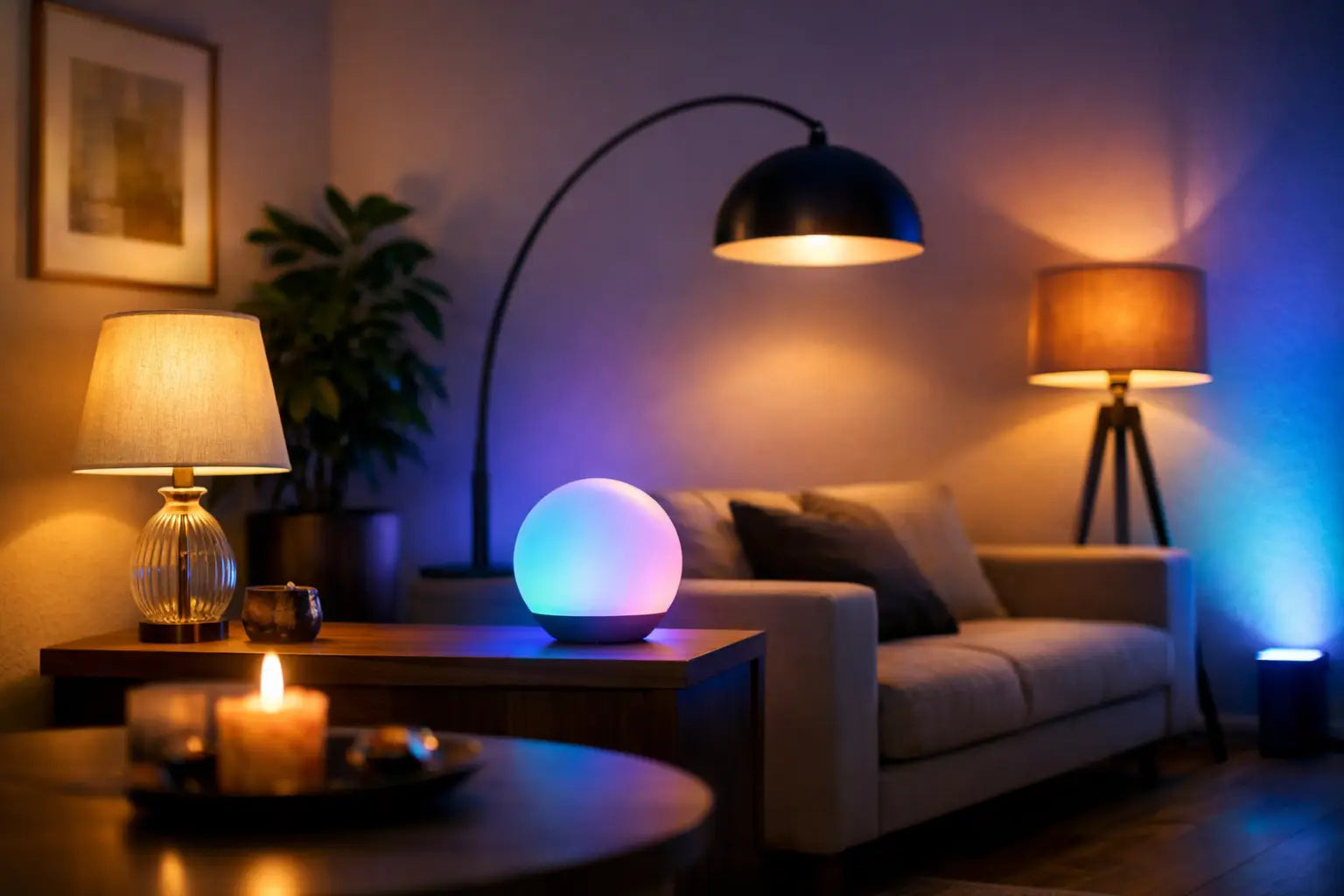
In the bedroom, keep things soft and low. Bedside lamps, under-bed glow, or a warm backlight behind the headboard all work well. In the living room, combine a floor lamp with indirect accent lighting near the TV or shelves. In a gaming setup, ambient lighting can be more playful, with LED strips and color-changing options adding personality without making the room feel chaotic.
For small apartments, wall-adjacent lighting is often your best friend because it adds depth without taking over floor space. In workspaces, use ambient lighting to soften the room, then pair it with brighter task lighting where you actually need to focus.
The room always decides the plan. What looks amazing in a streamer setup might feel ridiculous in a quiet reading nook, and what feels perfect in a bedroom may be too dim for a home office.
The goal is feeling, not just visibility
The best ambient lighting setups make a room feel better before you even notice why. That is the real answer to how to create ambient lighting. Start with the mood you want, add light in layers, keep it soft, and adjust until the room feels right for real life - not just for photos. If one small lighting upgrade can make you want to spend more time in your space, that is money well spent.




Commenta
Questo sito è protetto da hCaptcha e applica le Norme sulla privacy e i Termini di servizio di hCaptcha.