
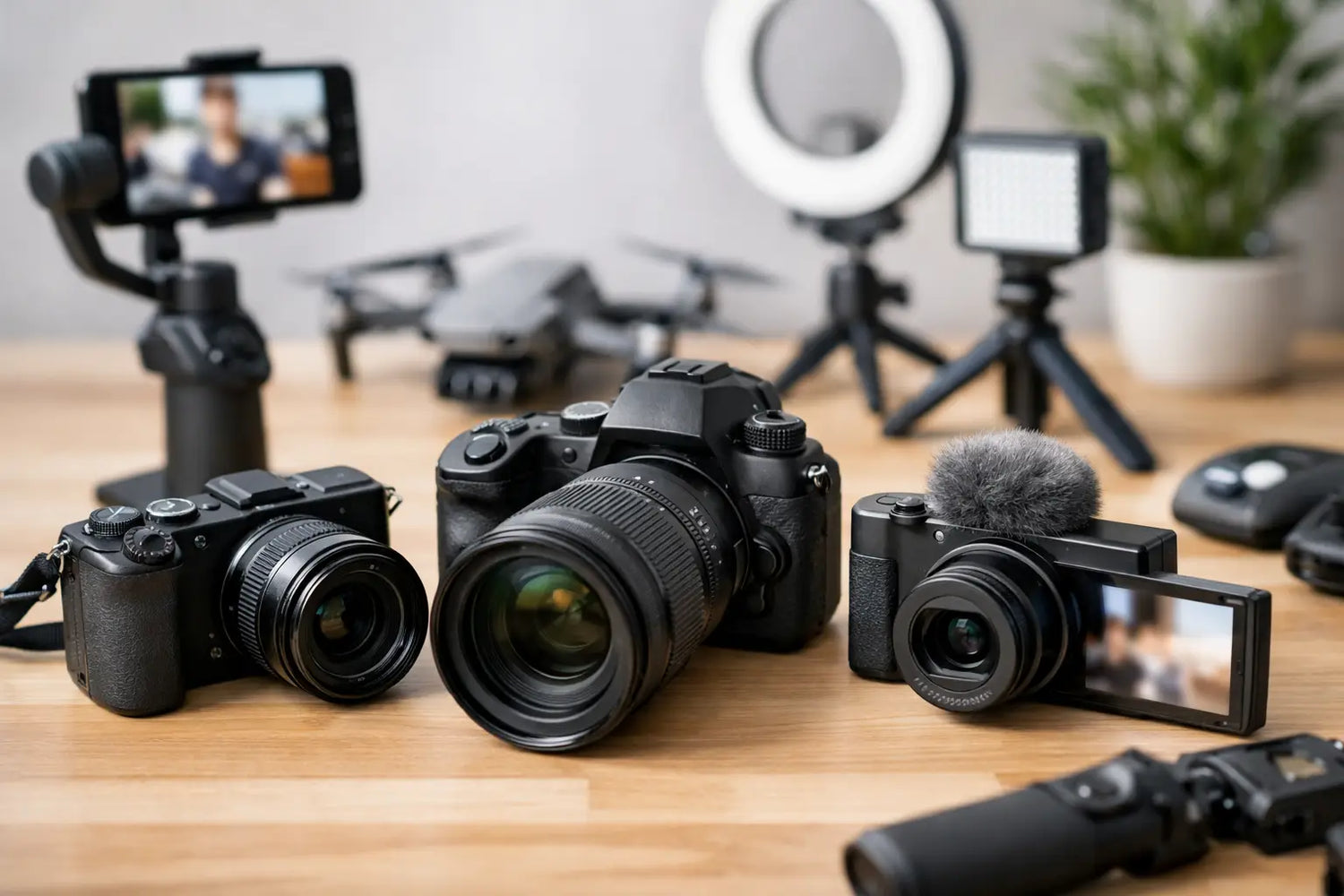
Your phone can absolutely make great content. But the moment you start filming in bad light, walking and talking, or trying to capture fast movement without turning your footage into a blurry mess, the gear starts to matter. That’s where this look at the top cameras for content creators: vlogging & action gear reviewed gets useful - not for flexing specs, but for finding a camera that actually fits how you shoot.
For most creators, the best camera is not the most expensive one. It’s the one you’ll carry, trust, and use often enough to post consistently. A massive body with ten-bit this and full-frame that sounds great until it’s too heavy for daily vlogs or too complicated for quick clips before work, at the gym, or on a weekend trip.
How to Choose Top Cameras for Content Creators
If you make lifestyle videos, talking-head clips, travel reels, tutorials, or action-heavy content, your needs are a little different from a traditional photographer’s. You care about reliable autofocus, good stabilization, clean audio options, battery life that won’t quit halfway through a shoot, and a flip screen that saves you from guessing whether you’re even in frame.
Action creators usually need something even more specific. You want durability, strong stabilization, a wide field of view, and a setup that can survive motion, weather, and less-than-gentle handling. A polished studio camera is great, but it won’t always help when you’re biking, hiking, skating, skiing, or filming quick POV clips on the move.
That’s why this category really splits into two lanes: vlogging cameras and action cameras. Some models blur the line, but most are clearly better at one job than the other.
Top cameras for content creators: vlogging & action gear reviewed
Sony ZV-1 - Best for easy solo vlogging
If you want a camera that feels like it was designed for creators first and everyone else second, the Sony ZV-1 still earns its spot. It’s compact, quick to start, and has autofocus that does a lot of the heavy lifting for solo shooting. The flip-out screen, product showcase mode, and good built-in video features make it especially friendly for YouTube, TikTok, and Instagram creators who want to film without building a whole rig.
Its biggest win is convenience. You can toss it in a bag, pull it out fast, and get sharp footage with pleasing background blur without learning a full camera system. That makes it a smart pick for beauty, tech, lifestyle, and daily vlog content.
The trade-off is flexibility. Since the lens is built in, you can’t swap glass later when your style changes. Battery life is also decent, not magical. If you film all day, you’ll want extras.
Canon PowerShot V10 - Best for beginners who want simple
Not everyone wants to become a camera nerd. Some people just want something smaller than a mirrorless setup and better than a phone. The Canon PowerShot V10 fits that lane nicely.
Its design is creator-friendly in a very literal way. It has a built-in stand, a straightforward interface, and a compact body that feels less intimidating than a traditional camera. For creators who want desk videos, casual vlogs, or quick social clips, that simplicity is the feature.
You do give up some performance compared with stronger premium options, especially in tougher lighting or more demanding shooting conditions. But if your main goal is posting more often and spending less time fiddling with settings, simple can be a very smart buy.
Sony ZV-E10 - Best value if you want interchangeable lenses
This is where things get interesting for creators who know they want room to grow. The Sony ZV-E10 gives you many of the creator-focused benefits people like in the ZV line, but with interchangeable lenses.
That matters because lenses shape your look as much as the camera body does. A wider lens can make handheld vlogs easier. A sharper prime lens can improve indoor talking-head footage. A zoom can give you more flexibility if you’re shooting different styles of content in the same week.
The ZV-E10 is a sweet spot camera. It’s approachable enough for newer creators but expandable enough to stay useful as your content gets more polished. The catch is that once you enter the lens world, your budget can grow legs and start sprinting. Great if you want versatility. Less great if you were hoping for a one-and-done purchase.
DJI Osmo Pocket 3 - Best for smooth everyday content
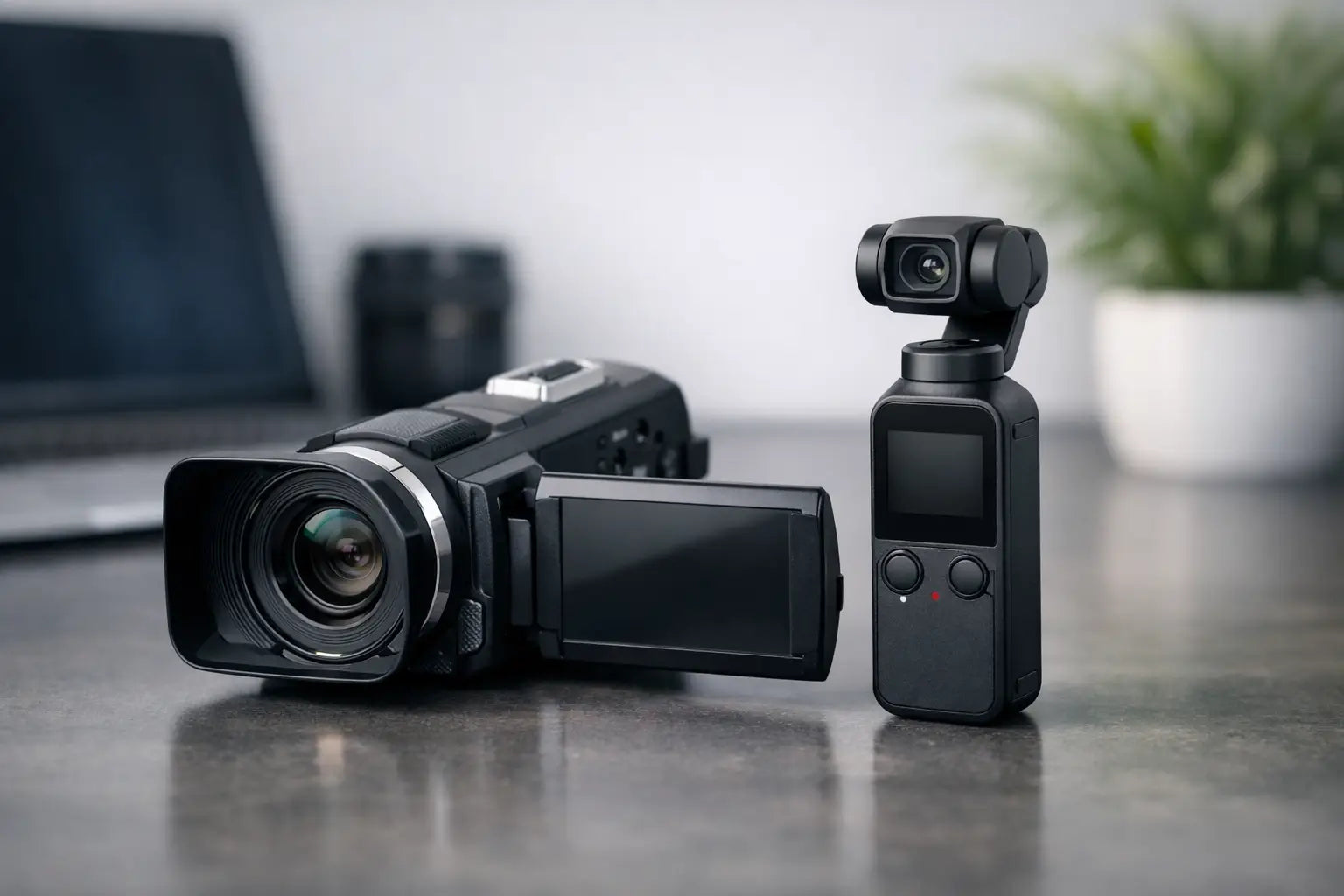
This one feels almost unfair. The DJI Osmo Pocket 3 is tiny, stabilized, and ridiculously convenient for creators who film while moving. If your content involves walking tours, travel days, behind-the-scenes footage, daily routines, or quick cinematic clips, this camera is a very fun tool.
Its gimbal stabilization gives footage a smoother, more polished look than many handheld cameras can manage on their own. It also slips into a pocket, which means there’s a good chance you’ll actually bring it with you. That alone makes it more useful than bigger gear that stays home on a shelf.
It’s not the best choice for every type of creator. If you need interchangeable lenses, rugged mounting options, or a highly modular setup, it has limits. But for grab-and-go video, it delivers a lot of wow without a lot of hassle.
Best action gear for creators who move fast
GoPro HERO12 Black - Best all-around action camera
If action content is your thing, GoPro is still the default answer for a reason. The HERO12 Black is tough, compact, mount-friendly, and packed with stabilization that makes chaotic footage look way more watchable.
For biking, hiking, water sports, gym clips, helmet mounts, chest mounts, and first-person video, it’s one of the safest picks you can make. It also works surprisingly well as a secondary creator camera. You can use it for B-roll, timelapses, car shots, workout footage, or any angle where you don’t want to risk a bigger camera.
The compromise is image style. Action cams often have a more processed, ultra-wide look than dedicated vlog cameras. That can be perfect for movement, but less flattering for close-up face-to-camera shots. If your content is half conversation and half adventure, many creators end up pairing an action cam with a more traditional vlog camera.
DJI Osmo Action 4 - Best low-light action option
DJI has become a serious player in action cameras, and the Osmo Action 4 stands out when lighting gets less cooperative. If you shoot early mornings, late afternoons, indoor training content, or cloudy outdoor scenes, it can give you cleaner-looking footage than you might expect from such a small camera.
It also has a practical, creator-friendly design with a front screen, strong stabilization, and easy mounting. For creators who want a GoPro alternative without feeling like they’re settling, this one deserves attention.
Where it depends is ecosystem preference. Some creators are already deep into GoPro mounts and accessories. Others prefer DJI’s interface and color. At this level, the choice is often less about which one is bad - because neither is - and more about which one fits your workflow better.
Insta360 X3 or X4 - Best for creators who want impossible angles
If your content benefits from dramatic reframing, fake drone-style follow shots, or capturing everything around you at once, a 360 camera changes the game. Insta360 models are especially popular with action creators who want flexibility after the shoot.
You can record first and decide the angle later, which is a huge advantage when you’re moving fast and can’t keep adjusting your setup. That makes these cameras great for skiing, cycling, travel, and social content where unique perspective is half the point.
The learning curve is the catch. Editing 360 footage takes more effort than standard clips, and if you just want quick point-and-shoot simplicity, this may feel like extra homework. But for creators who want standout footage without hauling around a big production kit, it’s a creative cheat code.
Which camera should you actually buy?
If you’re a solo creator filming mostly face-to-camera content, the Sony ZV-1 is still one of the easiest recommendations. If you want a simple starter option, the Canon PowerShot V10 makes sense. If you want to grow into better lenses and a more polished setup, the Sony ZV-E10 is the better long-term move.
If your content is mobile and cinematic, the DJI Osmo Pocket 3 is ridiculously appealing. If you live in action-heavy territory, the GoPro HERO12 Black is still the all-around champ, while the DJI Osmo Action 4 is a very close rival with strong low-light appeal. And if you want content that feels instantly different in a crowded feed, Insta360 is where things get fun.
The smartest move is to buy for your real shooting habits, not your fantasy production company. If most of your content happens in your bedroom, car, gym, sidewalk, or on quick weekend outings, choose the camera that makes creating feel easy. That’s usually the one that helps you post more, stress less, and catch more of the moments worth sharing.

Laisser un commentaire
Ce site est protégé par hCaptcha, et la Politique de confidentialité et les Conditions de service de hCaptcha s’appliquent.