
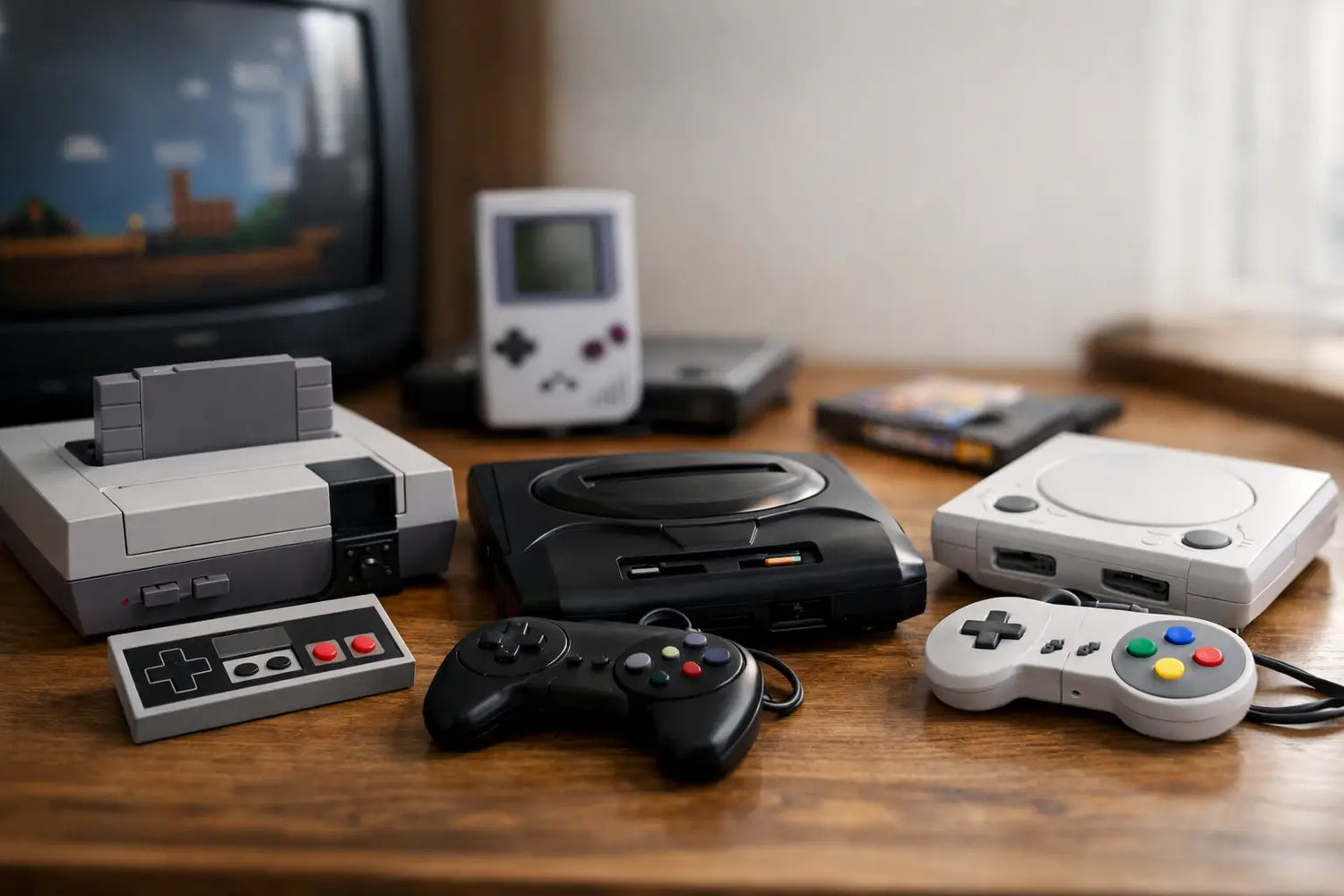
That first retro gaming purchase usually starts the same way - you see a tiny console, a handheld packed with old favorites, or a controller that promises instant nostalgia, and suddenly you’re ready to press start. A good retro gaming starter guide helps you skip the random impulse buys and build a setup you’ll actually enjoy using, whether you want couch co-op, arcade classics, or a portable hit of after-work nostalgia.
The good news is that getting into retro gaming is easier than it used to be. The less good news is that the category is packed with confusing options, mixed quality, and a lot of products that look amazing in photos but feel rough once they’re in your hands. If you’re new, the smartest move is not buying the most expensive setup. It’s buying the right kind of setup for how you actually play.
What counts as retro gaming now?
For most shoppers, retro gaming means playing older console and arcade-style games through one of three paths. You can go with original hardware, modern plug-and-play systems, or newer retro-style handhelds and consoles that come preloaded with classic games or support multiple formats.
Original hardware has the most authenticity. You get the real controller feel, the original design, and the little quirks longtime fans love. But it also comes with the most friction. Older systems can need adapters, maintenance, extra cables, and a little patience. That’s great if you enjoy collecting. It’s less great if you just want to play for 20 minutes after dinner.
Modern retro devices are usually the easiest entry point. They’re built for convenience, often work better with modern TVs, and cut down on setup hassle. For beginners, that trade-off makes a lot of sense. You lose a little authenticity, but you gain the thing most people actually want - fast fun.
A retro gaming starter guide begins with one question
Before you buy anything, ask yourself what you want your retro setup to do.
If you want familiar classics for casual play, a compact all-in-one system or retro handheld is usually the best fit. If you want multiplayer for friends and family, focus on a home setup with comfortable controllers and easy TV connection. If you want to collect and chase the original experience, then older hardware may be worth the extra effort.
This matters because retro gaming can get expensive fast when your purchases don’t match your habits. A collector setup for someone who only plays twice a month is overkill. A tiny handheld for someone who wants living room multiplayer is just the wrong tool.
Pick your style of setup
The easiest option: plug-and-play consoles
This is the low-stress choice. Plug-and-play retro consoles are perfect for buyers who want quick setup, straightforward menus, and a compact device that doesn’t take over the whole entertainment center. They’re especially good for gift shoppers or anyone buying their first retro system.
The biggest win here is convenience. You connect it, grab a controller, and start playing. That simplicity is a huge part of the appeal. The main trade-off is that some budget models vary in game selection, controller quality, and menu polish. If a device looks like a steal, make sure it still delivers decent usability. Saving money feels great until the controls feel like mashed potatoes.
The most flexible option: retro handhelds
Retro handhelds are one of the fastest-growing parts of the category for a reason. They’re portable, fun, and easy to pick up for short sessions. If your gaming time happens on the couch, during travel, or between errands, this format fits real life nicely.
Handhelds can also be a smart budget move because you get a screen and controls in one device. No extra display required. Just keep expectations realistic. Smaller screens are great for solo play, but not ideal if your dream is sharing old-school games with a room full of friends.
The enthusiast option: original consoles
Original hardware is where nostalgia gets serious. This is for people who care about the exact controller shape, the original boot-up feel, and the charm of playing games the way they first appeared.
It can be incredibly satisfying, but it’s not the easiest place to start. You may need extra accessories, adapters for modern displays, storage space, and patience for older tech behavior. If that sounds fun, go for it. If that sounds like weekend homework, start with a modern retro system and upgrade later.
Don’t ignore the controller
A retro setup lives or dies on controller feel. Screens matter, menus matter, and game libraries matter, but if the controls feel cheap, everything else loses some shine.
Look for a controller with decent button response, a comfortable grip, and enough cable length or wireless reliability for the way you play. This is especially important for platformers, fighting games, and arcade-style action. A bad controller can make a great game feel broken.
If you’re buying for multiplayer, plan for a second controller right away. A lot of classic gaming is social. The fastest way to turn nostalgia into a good night is to make sure nobody’s stuck watching from the side.
Think about your screen before checkout
Retro games were made for older displays, so modern screens can change how they look and feel. That doesn’t mean you need a complicated TV setup. It just means you should know what matters.
If you’re using a modern TV, choose a console or device designed to connect easily and display cleanly. Many beginner-friendly retro products solve this problem well. If you go with original hardware, display compatibility can become one of the biggest headaches. That’s fine if you expected it. Not so fine if you thought you were buying a quick weekend toy.
For handheld buyers, screen quality matters more than size alone. A bright, sharp display with decent viewing angles usually beats a larger screen with weak color and blur. Retro games often rely on bold visuals and fast readability, so clarity counts.
How much should you spend?
You do not need a huge budget to enjoy retro gaming. In fact, starting smaller is usually smarter.
A modest budget works best for first-time buyers because it gives you room to figure out what you actually like. Maybe you thought you wanted a giant living room setup, but end up loving a simple handheld. Maybe you buy for solo play and later realize party gaming is your thing. Starting with a practical setup keeps you flexible.
The sweet spot is usually a device that feels easy to use, includes the styles of games you care about, and doesn’t force extra purchases right away. Dirt-cheap options can be tempting, but build quality and interface design often drop hard at the bottom of the price ladder. Affordable is great. Frustrating isn’t.
Game selection matters more than big numbers
A device boasting hundreds or thousands of games sounds exciting, but the real question is whether you’ll want to play them. A tighter library of recognizable, fun titles is often a better buy than a massive list stuffed with filler.
Think in genres. Do you want side-scrolling platformers, arcade shooters, puzzle games, racing titles, or party-friendly classics? Buying around your favorite type of game is smarter than buying around the biggest number on the box.
This is also where shoppers can get distracted by nostalgia. You may remember loving one old franchise, but your current play style might be completely different. If you mostly want short, low-commitment sessions, arcade and puzzle games will probably get more use than long RPGs.
Watch for the small details that make a big difference
A good retro gaming product should feel simple in the best way. Menus should be readable. Save features should be easy to use. Buttons should respond cleanly. Charging or power setup should not feel like decoding ancient runes.
Portability, battery life, controller comfort, save states, and TV compatibility can matter more than flashy packaging. If you’re shopping for convenience and entertainment, the best product is the one you’ll keep reaching for, not the one with the fanciest promise.
That’s also why curated shopping matters. A store like Timo Market fits this category well because retro gaming buyers often want discovery without the chaos - something fun, giftable, and easy to add to daily life, not a research project that eats their whole weekend.
The best first setup is the one you’ll actually use
There’s no single perfect beginner setup. It depends on whether you want portability, authenticity, multiplayer, or low-cost fun. That’s the whole game here.
If you want the simplest route, start with a plug-and-play system. If you want gaming on the go, choose a retro handheld. If you love the idea of collecting and tweaking your setup over time, original hardware might be worth the extra work.
Retro gaming is supposed to feel fun, not fussy. Start with the setup that matches your routine, your budget, and your idea of a good time. If it makes you want to pick up the controller again tomorrow, you chose well.




Laisser un commentaire
Ce site est protégé par hCaptcha, et la Politique de confidentialité et les Conditions de service de hCaptcha s’appliquent.