
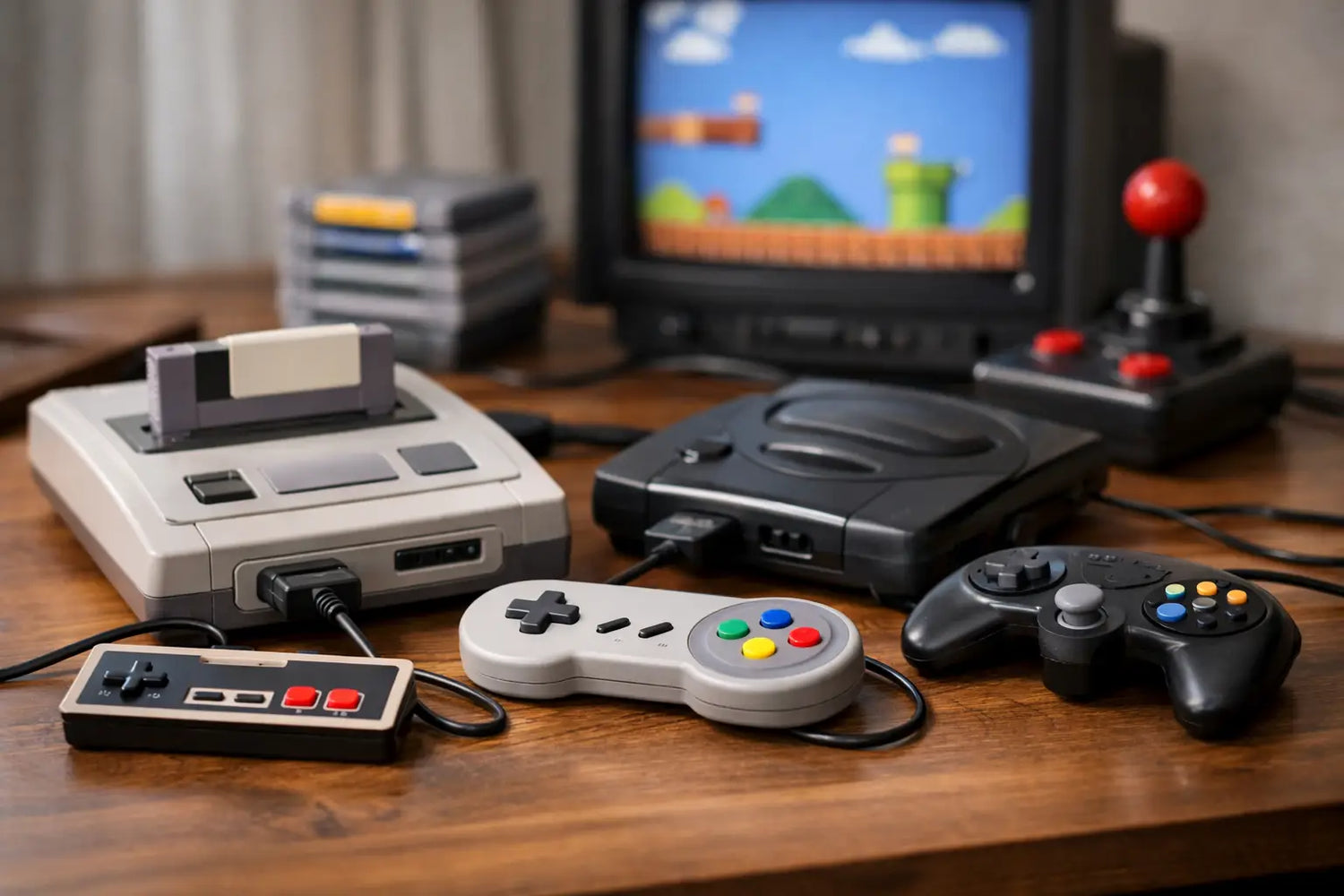
You can tell a lot about a person by the game they want to replay first. Some people go straight for Mario. Others want Contra, Street Fighter, Sonic, or a weird arcade title they barely understood as a kid but still think about. That is exactly why picking the best retro gaming console is not as simple as grabbing the first mini-looking box with bright packaging and calling it a day.
Retro gaming is supposed to feel easy, fun, and a little nostalgic. But once you start shopping, the choices get messy fast. Some consoles focus on plug-and-play convenience. Some are built for collectors who care about accuracy. Others pack in thousands of games and promise everything at once, which sounds amazing until the menus feel clunky and half the library is filler.
What makes the best retro gaming console?
The right answer depends on how you actually want to play. If your dream setup is sitting on the couch and jumping into a few classic games after work, convenience matters more than technical perfection. If you care about original controller layouts, accurate visuals, and system-specific game libraries, your standards will be different.
That is why the best retro gaming console is usually the one that matches your habits, not the one with the most dramatic marketing claims. A great retro console should feel fast to set up, simple to use, and satisfying the second gameplay starts. If it takes ten menu layers and a tiny bit of luck just to launch a game, the nostalgia wears off pretty quickly.
Game selection is the first thing to check, but not the only thing. A huge library looks great on a product page, but quality beats quantity every time. Fifty games you actually want to play is better than five thousand random titles you will never touch. Look for systems that include recognizable classics, smart category organization, and save-state support so you can stop and start without losing progress.
Controller feel matters too - maybe more than most shoppers expect. Retro games were designed around specific button spacing, D-pads, and response times. If the controller feels cheap, stiff, or awkward, even a great game can feel off. For platformers, fighters, and arcade games especially, this can make or break the whole experience.
The best retro gaming console depends on your player type
If you are shopping for casual fun, a plug-and-play console is usually the sweet spot. These systems are ideal for people who want a low-effort setup, a built-in library, and a quick way to turn a regular TV night into something way more entertaining. They are also great gifts because they are easy to understand right out of the box.
If you are buying for a nostalgia-heavy gamer, look for a console that leans into a specific era. Some players want 8-bit and 16-bit classics. Others want arcade-style action or early 3D titles. Narrowing the era helps avoid disappointment. Someone who grew up on Sega may not care much about a Nintendo-focused library, and vice versa.
If you want maximum variety for the money, multi-system retro consoles are appealing. These often support a wide range of classic titles in one device, which is excellent if your gaming taste jumps from side-scrollers to racing games to old-school puzzle titles. The trade-off is that all-in-one systems can feel less polished than console-specific options. You get more range, but sometimes less personality.
Then there is the collector-minded crowd. If that is you, visual design and authenticity probably matter. A retro console that looks sharp next to your TV, includes familiar controller styling, and delivers that original feel can be worth paying more for. Not everyone needs that level of detail, but for some gamers, that is the whole point.
Features worth paying for and features you can skip
HDMI output is close to non-negotiable for most people now. It keeps setup easy and works better with modern TVs. If a console makes connecting harder than it needs to be, it is already creating friction before the fun starts.
Save states are another feature that sounds small until you use them. A lot of classic games were not exactly forgiving. Being able to pause your progress without repeating the same brutal level ten times is a quality-of-life upgrade your younger self probably would have begged for.
Wireless controllers are nice if you play from the couch and want a cleaner setup. Still, there is a trade-off. Some players prefer wired controllers because they feel more responsive and never need charging. If you are mostly playing platformers or arcade action, low input delay may matter more than a cable-free room.
Menu design is easy to overlook when you shop, but it affects every session. A good retro console should make browsing feel quick and satisfying. Clean categories, box art, favorites lists, and search functions are surprisingly useful, especially on systems with bigger libraries.
As for features you can skip, do not get too distracted by giant game-count claims alone. More is not always better. Also, if a console promises every system under the sun at a suspiciously low price, it is worth slowing down and checking what kind of experience you are really getting.
Who should buy a retro gaming console?
Honestly, more people than you might think. Retro consoles are not just for hardcore gamers or people who still remember cheat codes from 1998. They are great for casual players, couples looking for easy co-op games, parents introducing kids to gaming basics, and anyone who wants entertainment that does not require updates, battle passes, or a 90-gig download.
They also work really well as gift picks. A retro console hits that rare sweet spot where it feels personal without being too complicated. It is fun, familiar, and ready to use. That makes it a strong option for birthdays, holidays, dorm rooms, apartments, or anyone building a cozy entertainment setup on a budget.
And yes, they are a nice break from modern gaming overload. Not every gaming session needs online lobbies, voice chat, and ten currencies with names like crystals or premium shards. Sometimes you just want to press start and be in the game within ten seconds.
How to choose without overthinking it
Start with the games you care about most. Not theoretically. Not the ones that sound impressive in a product description. The actual games you know you want to play. If the console does not support that experience, move on.
Next, think about where you will use it. In a living room with friends? In a bedroom setup? As a travel-friendly device? Your space changes what matters. A compact console with wireless controllers may be perfect for a shared TV area, while a smaller all-in-one handheld style option might suit someone who wants flexibility.
Budget matters, but value matters more. A cheaper console that feels frustrating will end up collecting dust. A slightly better one with smoother menus, better controllers, and stronger game curation will usually deliver more actual enjoyment. That is the kind of upgrade you feel every time you play.
It also helps to be honest about your tolerance for tinkering. Some gamers love customizing settings and exploring deeper options. Others want a system that works right away. Neither approach is wrong, but mixing them up leads to regret. Buy for your real habits, not your imaginary weekend tech-project self.
Why retro gaming still works so well
A lot of classic games hold up because they were built around simple, satisfying mechanics. The goals are clear. The controls are immediate. The fun starts fast. That makes retro gaming one of the easiest ways to add a little entertainment to your day without turning it into a full commitment.
There is also something great about sharing these games. Retro titles are often easier to watch, easier to pass around, and easier to enjoy with someone sitting next to you. They create the kind of low-pressure fun that modern games do not always prioritize.
For shoppers who love finding products that feel exciting right away, retro consoles make a lot of sense. They are giftable, affordable compared to many modern systems, and packed with replay value. That is a strong combo, especially if you are after something fun that delivers more than a quick novelty hit.
If you are browsing for the best retro gaming console, keep it simple. Pick the system that fits your favorite era, your setup, and your style of play. The best one is not the loudest, the flashiest, or the one shouting about ten thousand games. It is the one that makes you smile the second the start screen appears. Timo Market gets that feeling - and honestly, that is the whole game.



Laisser un commentaire
Ce site est protégé par hCaptcha, et la Politique de confidentialité et les Conditions de service de hCaptcha s’appliquent.