
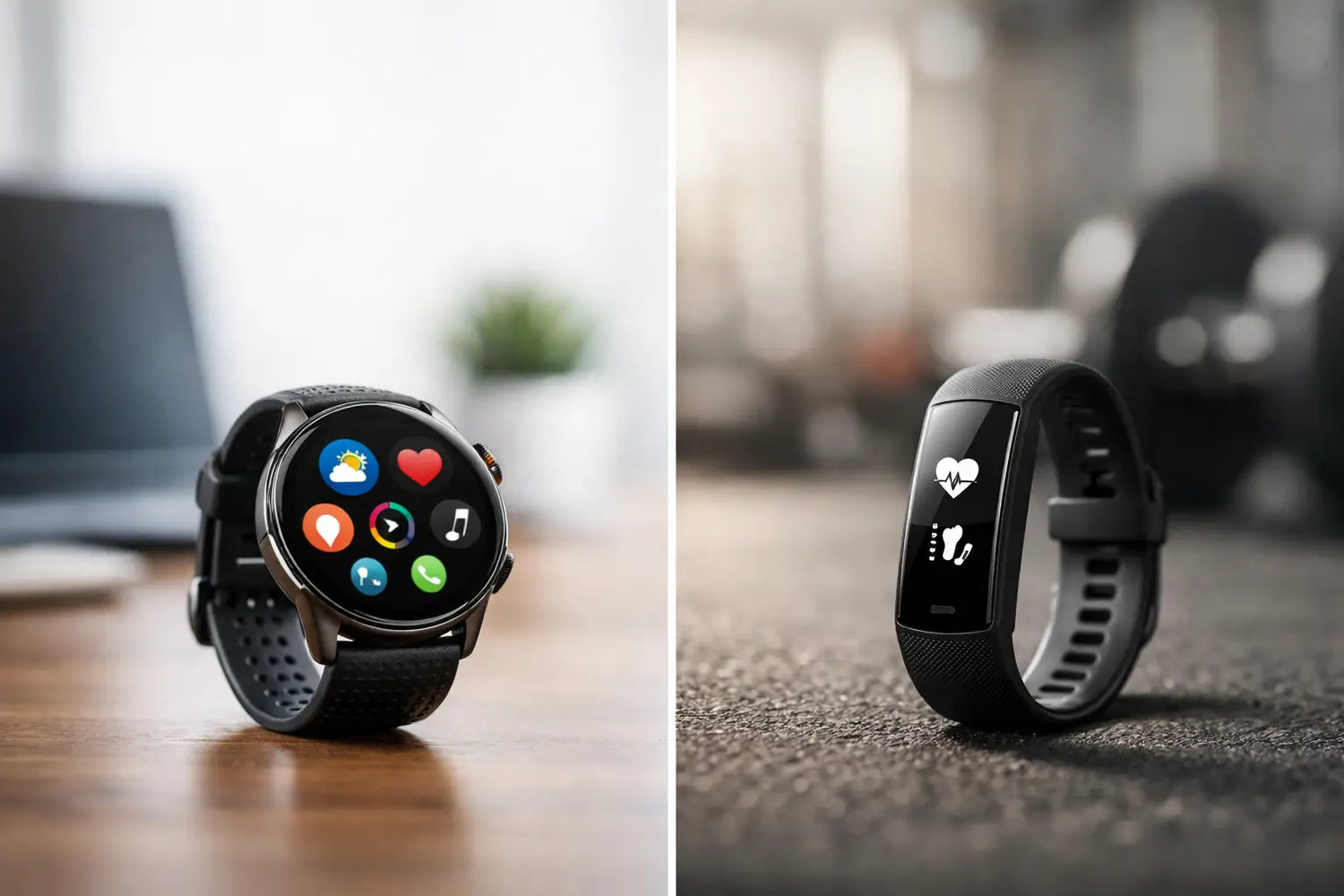
Your phone buzzes during a workout, your step count is questionable, and you want a little more motivation than a locked screen can provide. That is where the smartwatch versus fitness tracker decision gets real. Both can help you move more, monitor your routine, and make your day feel a bit more organized. But they are built for different kinds of people and different kinds of wrists.
A fitness tracker is usually the lightweight, no-fuss option for activity, sleep, and basic health stats. A smartwatch is more like a tiny extension of your phone, with apps, calls, music controls, alerts, and often a brighter, larger display. The right choice is not about buying the device with the longest feature list. It is about choosing the one you will actually wear after the new-gadget excitement wears off.
Smartwatch versus fitness tracker: the big difference
The easiest way to separate these devices is by asking what you want to do without pulling out your phone.
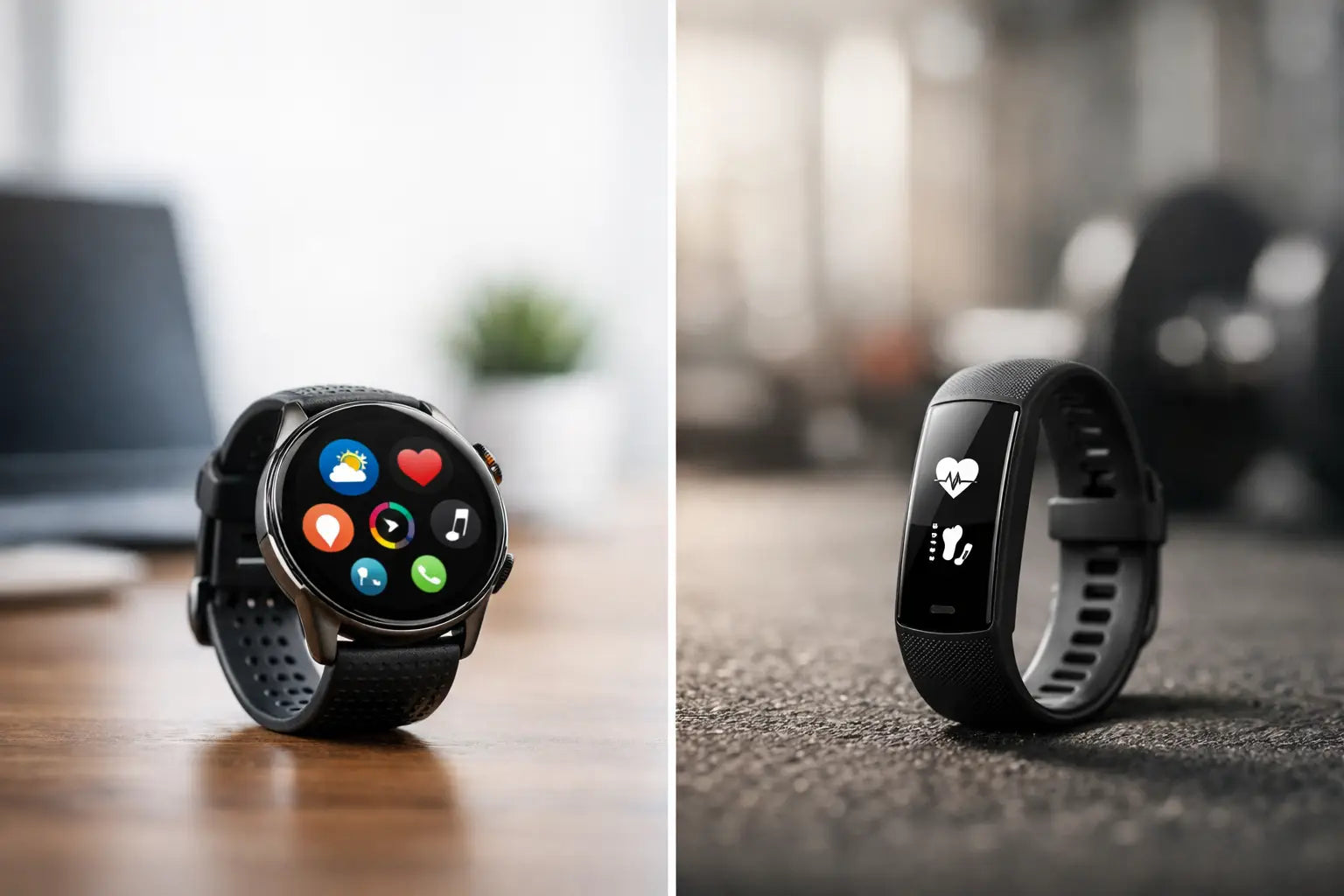
A smartwatch puts convenience first. Most models show notifications, let you accept or reject calls, control music, check calendars, set timers, and use a range of apps. Some offer GPS, voice assistants, contactless payments, and emergency features. It is a strong choice if your day moves fast and you like having useful controls on your wrist while commuting, working, walking the dog, or trying not to drop your phone at the gym.
A fitness tracker puts focus first. It typically concentrates on steps, heart rate, workouts, active minutes, sleep, and recovery. The screen is often smaller and simpler, and that is intentional. Fewer distractions can make it easier to stay focused on the goal: move, recover, repeat.
Neither approach automatically wins. If you want a wearable that can help you leave your phone in your pocket more often, a smartwatch has the edge. If you want health data without another screen demanding your attention, a fitness tracker can feel refreshingly simple.
Choose a smartwatch if convenience is the main goal
A smartwatch earns its place when the daily extras matter as much as your workout stats. Picture a busy morning: you are making coffee, checking a delivery update, starting a playlist, and heading out the door. Glancing at your wrist is faster than unlocking your phone six times before 9 a.m.
The larger screen also makes smartwatches more enjoyable for reading messages, seeing maps, viewing workout details, or customizing watch faces. For shoppers who like their tech to match their style, this can be a big deal. You can switch from a clean, professional face for work to a colorful activity dashboard for training without buying a whole new accessory.
Smartwatches are often better for people who want one device for several jobs. They can support walking, running, cycling, strength training, and casual wellness tracking while also handling the everyday phone tasks that interrupt your flow. If you regularly use navigation, music controls, reminders, or payment features, those extras can become less of a gimmick and more of a habit.
There is a trade-off: more features usually mean more charging. Many smartwatches need power every day or every couple of days, especially if you use GPS, make calls, or keep the display always on. If charging your phone is already a nightly battle, adding another device may not sound like a lifestyle upgrade.
Choose a fitness tracker if you want less noise
A fitness tracker is excellent for anyone who wants clear health feedback without turning their wrist into another inbox. It is often slimmer, lighter, and easier to sleep in. That matters because sleep data is only useful when you are comfortable enough to wear the device overnight.
Battery life is a major selling point. Many fitness trackers can last several days, and some last a week or more, depending on features and display settings. That means more continuous tracking and fewer moments where your device is sitting on a charger while you are out hitting your step goal.
Fitness trackers also tend to make goals feel approachable. A quick glance can show whether you are close to your movement target, how long you slept, or whether your heart rate climbed during a walk. For someone beginning a home workout routine, returning to exercise, or trying to build consistency, simple feedback can be more motivating than a screen packed with options.
The downside is that trackers are less flexible. Notifications may be limited, screens are smaller, and app choices are usually more restricted. If you expect to answer messages, use maps, or control many parts of your digital life from your wrist, a basic tracker may feel too minimal.
Think about the workouts you actually do
It is easy to shop for the imaginary version of yourself who runs before sunrise, hikes every weekend, and never misses leg day. Shop for your real routine instead.
For walking, gym sessions, yoga, home workouts, and everyday activity, either device can work well. Look for reliable heart-rate tracking, activity modes you recognize, and a comfortable band. The best wearable is the one that does not get tossed into a drawer because it pinches, slides around, or feels too bulky during push-ups.
For running, biking, hiking, or outdoor training, built-in GPS can be worth paying attention to. It lets you record routes and pace without carrying your phone, though it can use more battery. If outdoor sessions are occasional, connected GPS through your phone may be enough.
For strength training, do not expect magic from either category. Wearables can estimate calories and track workout duration, but they cannot always tell whether your squat form improved or whether you added five pounds to your deadlift. Use the data as a useful trend, not as a personal trainer with a tiny screen.
Health features are helpful, not a diagnosis
Many smartwatches and fitness trackers now offer heart-rate alerts, sleep tracking, stress estimates, blood oxygen readings, and cycle tracking. Those features can make your habits more visible. You may notice that late-night gaming, a stressful week, or skipping recovery days affects your sleep and resting heart rate more than you thought.
Still, consumer wearables are not medical devices unless a specific feature is cleared and used as directed. A weird reading is a reason to pay attention, retest, and talk to a qualified healthcare professional when needed, not a reason to spiral through search results at 1 a.m.
Accuracy also changes with fit, movement, skin contact, workout type, and the device itself. Wear the band snugly enough for the sensors to work, but not so tight that it becomes uncomfortable. Data is most valuable when you look at patterns over time rather than obsessing over one number after one workout.
Factor in phone compatibility and real cost
Before you fall for a display or a sale price, check compatibility. Some smartwatches work best with a particular phone ecosystem, while many fitness trackers support a wider range of Android and iPhone devices. Features can also vary depending on the phone you use, so make sure the things you care about most will work together.
Price is more than the number on the product page. Consider replacement bands, charging cables, optional subscriptions, and whether you will need to upgrade sooner because your needs change. A lower-priced tracker can be the better value if it covers your goals for years. A smartwatch can be worth the extra spend if it replaces several small daily frustrations.
Style deserves a vote, too. A sleek band may fit your workday and sleep routine better, while a larger watch face can make workout data easier to read. The best choice should feel like something you want to put on, not homework strapped to your wrist.
A quick way to make the call
Pick a smartwatch if you want notifications, apps, a bigger screen, music or call controls, and more phone-free convenience. Pick a fitness tracker if you care most about movement, sleep, comfort, longer battery life, and fewer distractions.
If you are still torn, start with the question that matters most: what would make you use it tomorrow? A watch that gets you out the door for a walk, helps you stay present during a workout, or makes one busy day easier is already doing its job. Choose the wearable that supports your routine, then let the progress add up.

Laisser un commentaire
Ce site est protégé par hCaptcha, et la Politique de confidentialité et les Conditions de service de hCaptcha s’appliquent.