
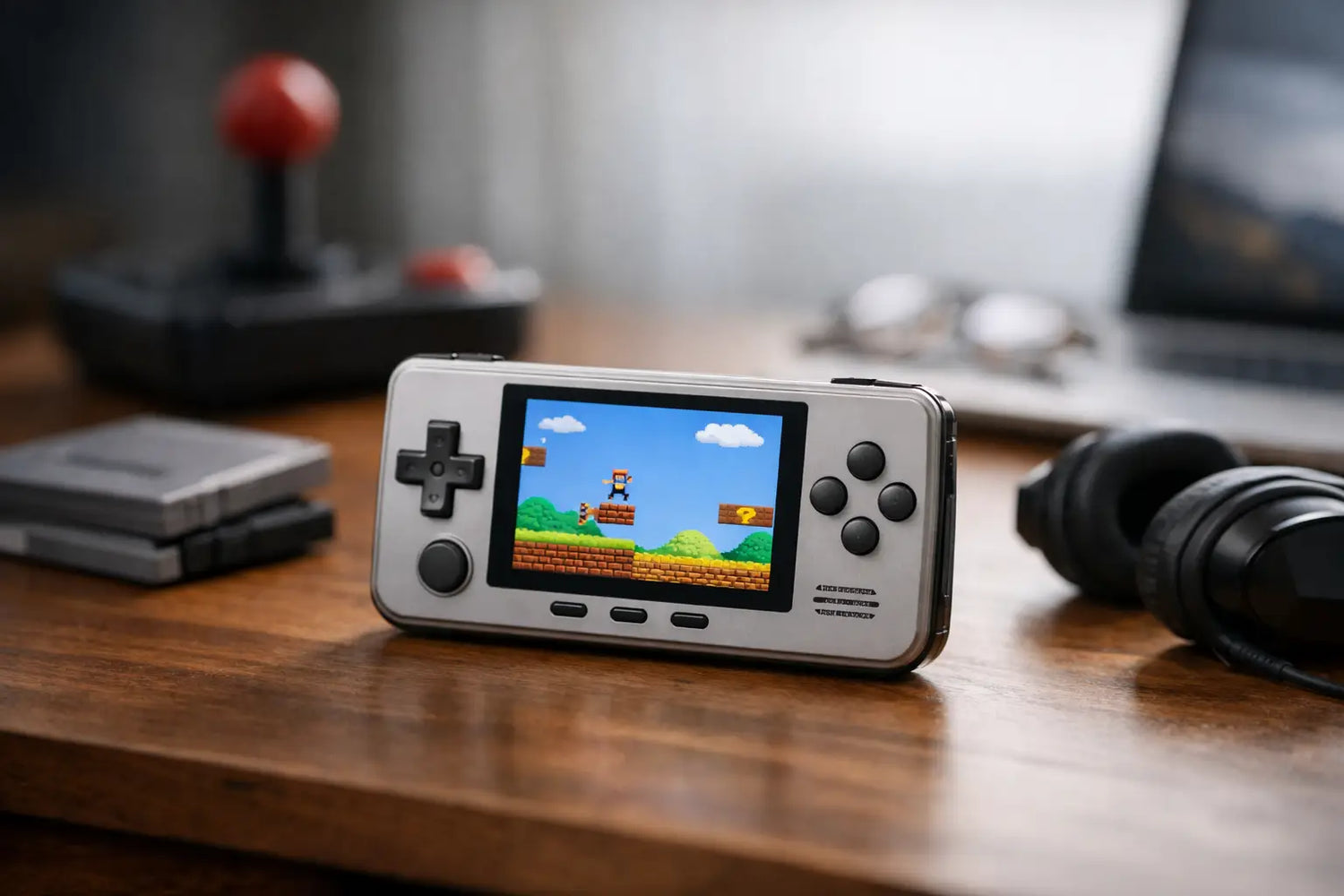
You know the feeling - you pick up a tiny gaming device “just for nostalgia,” and five minutes later you’re deep into pixel art, button mashing, and telling yourself this was absolutely a practical purchase. That’s the real reason a retro handheld console review matters right now. These little machines are fun, giftable, easy to carry, and surprisingly good at turning spare minutes into actual entertainment.
But not every retro handheld deserves a spot in your bag, on your nightstand, or in your cart. Some are instant favorites. Some look amazing in product photos and then disappoint the second you press the D-pad. If you’re shopping for one, the smart move is to focus less on hype and more on what actually changes the experience once it’s in your hands.
Retro handheld console review: what actually matters
The first thing most people notice is the look. That makes sense. Retro handhelds are built to hit you with old-school charm right away. Transparent shells, bright screens, familiar button layouts, and compact designs do a lot of heavy lifting. But design only gets the first click. Comfort decides whether you’ll keep playing after day one.
A good retro handheld should feel easy to hold for longer sessions. If the shoulder buttons are awkward, if the body is too cramped, or if the face buttons feel mushy, the nostalgia wears off fast. This is where cheaper devices often show their limits. They may look like a great deal, but the actual controls can feel just a little off, and with gaming, a little off is enough to get annoying.
Screen quality is the next big separator. On paper, many retro handhelds sound similar. In real life, one screen can make old games look sharp and vibrant while another makes them look dim, stretched, or weirdly washed out. A bright display with decent viewing angles matters more than many buyers expect, especially if you’re playing on the couch, in bed, or during travel.
Then there’s performance. This is where expectations need to be realistic. A budget retro handheld can be fantastic for classic 8-bit and 16-bit gaming, but once you expect flawless performance across every generation, the price usually climbs. That doesn’t mean cheaper options are bad. It just means the right pick depends on what you want to play.
Who should buy a retro handheld console?
If you want easy entertainment without needing a TV, a charging dock, or a long setup process, these devices make a lot of sense. They’re especially appealing for commuters, casual gamers, collectors, and anyone who misses simpler games that start fast and stay fun.
They also work well as gifts. A retro handheld has that rare mix of novelty and usefulness. It feels cool to unbox, easy to understand, and fun almost immediately. That matters if you’re shopping for someone who loves gaming but doesn’t necessarily want another giant console or expensive accessory.
There’s also a value angle here that’s hard to ignore. For the price of one big modern release, many shoppers can get a compact handheld that delivers hours of entertainment. That’s a pretty strong pitch if you want something fun without turning it into a major purchase.
The features that make or break the experience
Buttons come first, always. You can forgive average speakers. You can even live with basic menus. But if the controls feel cheap, every game feels worse. The best retro handhelds have responsive face buttons, a D-pad that doesn’t miss inputs, and shoulder buttons placed where your fingers can actually reach them without a mini hand workout.
Battery life matters more than spec sheets suggest. A retro handheld is supposed to be convenient. If you’re constantly charging it, that convenience disappears. Most buyers will be happy with a device that lasts through several play sessions without stress. If the battery drains fast or the charging setup feels finicky, it stops being the grab-and-go gadget it promised to be.
Build quality is another underrated factor. A lot of shoppers want something affordable, and that’s fair. But affordable should still feel solid. A handheld that creaks, rattles, or feels fragile can turn a fun purchase into a cautious one. You want the kind of device you can toss into a backpack and not treat like a museum artifact.
Software experience also counts. Menus should be simple. Game navigation should be easy. Save features should work without drama. This is one of those details buyers don’t always think about until they’re frustrated. A clean user experience can make a modest device feel polished, while clunky software can drag down even a good-looking handheld.
Where budget models shine - and where they don’t
Budget retro handhelds are often the sweet spot for casual buyers. If your goal is relaxed gaming, portable fun, and a little nostalgia hit after work, you probably don’t need the most premium device on the market. Lower-priced models can absolutely deliver a satisfying experience when expectations match the hardware.
Where they shine is accessibility. They’re easy to pick up, easier to justify, and often perfect for gift shopping. You’re getting entertainment, portability, and that instant retro appeal without spending like you’re building a full gaming setup.
Where they can disappoint is consistency. Build quality may vary. Screens may be decent rather than impressive. Controls may feel good enough, not great. That difference matters more for players who care about precision, longer sessions, or smoother performance across more demanding games.
So the question isn’t whether budget handhelds are worth it. It’s whether your expectations are aligned with what they’re built to do. For many shoppers, the answer is yes. For pickier gamers, it may be worth spending more once rather than buying twice.
Premium retro handhelds feel better - but not everyone needs one
Step up in price, and the improvements are usually obvious. Better materials, sharper screens, stronger performance, more refined controls, and cleaner software all start to show up. Premium models feel less like novelty gadgets and more like serious portable gaming devices.
That said, not every buyer needs premium. If you mostly want to play casually for short bursts, the extra cost may not translate into extra joy. This is where it depends on your habits. Someone who plays daily, travels often, or cares a lot about comfort and display quality will notice the upgrade. Someone who wants a fun impulse-friendly device for occasional use might not.
And yes, there’s a point where “retro” starts getting expensive enough to feel a little funny. Nostalgia is great. Nostalgia with a premium price tag needs to earn it.
What to look for before you buy
A practical retro handheld console review should help you avoid the usual buyer regret. Start with screen size and shape. Smaller devices are easier to carry, but they can cramp your hands and make long sessions less comfortable. Slightly larger models are often the better choice for actual playing, even if they lose a little pocketability.
Next, check the control layout. If shoulder buttons look cramped in photos, they probably are. If the analog sticks seem awkwardly placed, trust your eyes. A device can still be fun with a compact layout, but comfort is one of those things that gets more important the longer you use it.
Pay attention to battery expectations, charging method, and general build. USB-C charging is a nice quality-of-life win. A sturdy shell is worth more than flashy design touches. And if you’re shopping for value, a well-balanced midrange option usually beats the absolute cheapest pick.
It’s also smart to think about who the handheld is for. For a collector, design and nostalgia may come first. For a casual player, ease of use matters more. For a gift, the best choice is often the one that looks fun, feels simple, and doesn’t require a long learning curve.
Is a retro handheld still worth buying in 2026?
Yes - if you want low-friction fun.
That’s the real appeal. Retro handhelds aren’t trying to replace every modern gaming device. They’re winning because they do something different. They’re compact, charming, easy to pick up, and satisfying in a way that bigger, more complicated tech sometimes isn’t. You turn one on, press start, and you’re playing. No giant install. No endless updates. No commitment.
For shoppers who love finding affordable entertainment that feels both practical and exciting, this category still has a lot going for it. It fits the way people actually live now - quick breaks, portable fun, and products that feel good to own right away. That’s a big reason stores like Timo Market keep seeing interest in gadgets like these. They’re not just nostalgic. They’re convenient.
A good retro handheld is not about chasing specs for bragging rights. It’s about getting a device that feels fun every time you reach for it. If the controls are solid, the screen looks good, the battery holds up, and the price feels fair, that’s already a win.
The best one for you is the one that matches your play style, your budget, and your idea of fun. Buy for the experience, not just the throwback look, and you’ll probably end up with one of those rare gadgets that gets used a lot more than you expected.




Commenta
Questo sito è protetto da hCaptcha e applica le Norme sulla privacy e i Termini di servizio di hCaptcha.