
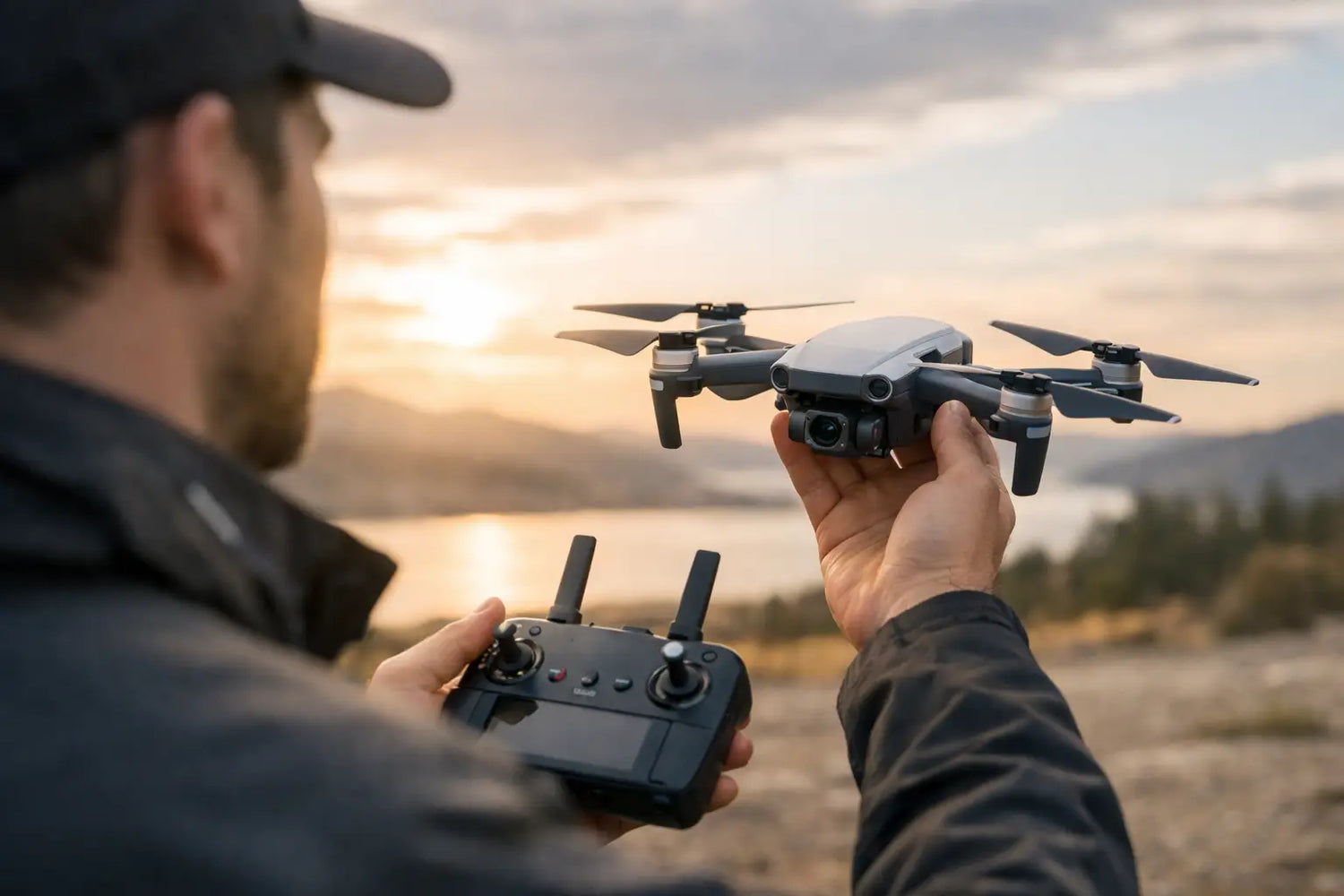
The fastest way to turn a new drone into an expensive lawn ornament is to launch before you know what every button does. These beginner drone flying tips are here to make your first flights feel less like a panic button montage and more like the fun upgrade you bought it for.
A beginner-friendly quadcopter can deliver seriously satisfying views, quick clips for your feed, and a whole new excuse to get outside. But the best first flight is not about going high or fast. It is about building control close to the ground, where small mistakes stay small.
Beginner Drone Flying Tips Before Takeoff
1. Read the quick-start guide, then check the app
Yes, reading setup instructions is less exciting than flying. It is also where you learn the things that prevent a bad first day: how to calibrate the drone, pair the controller, insert the battery correctly, and use the return-to-home feature.
Before leaving home, update the drone app, controller, and aircraft firmware if prompted. Then confirm your phone has enough battery and storage. A drone that is ready to fly but paired with a dying phone is a very modern kind of frustration.
2. Charge more than the drone battery
Charge the flight batteries, controller, and phone before every outing. If your model uses removable batteries, inspect them for swelling, cracks, or damaged contacts. Never fly with a battery that looks questionable just to squeeze in one more clip.
Battery life is usually shorter than it sounds on the box. Wind, cold weather, fast flying, and recording video all use more power. Plan to land with a comfortable reserve rather than waiting for the final low-battery warning to become dramatic.
3. Choose a wide, boring practice spot
Your first practice location should be open, clear, and a little boring. Think an empty field or large open area away from trees, power lines, buildings, cars, pets, and people. A scenic overlook can wait until you can reliably control height, direction, and landing.
Check the wind at ground level and higher up if possible. A light breeze can become a stronger push once the drone climbs. Small, lightweight drones are especially affected, so save gusty days for ground-based adventures.
4. Check the rules for where you fly
Before takeoff, make sure drone flying is allowed where you are. In the United States, rules can vary based on the drone’s weight, features, location, and whether you are flying recreationally or for work. Registration, Remote ID requirements, airspace restrictions, park rules, and local regulations may apply.
Keep clear of airports and restricted areas, respect privacy, and do not fly over crowds. Rules can change, so verify current requirements before each new flying location. Good footage is never worth creating a safety problem.
Build Control Before You Chase Cinematic Footage
5. Start with a low hover
Take off and hold the drone about 5 to 10 feet above the ground. Let it hover for 20 to 30 seconds while you watch how it responds. Does it drift? Is the wind moving it? Are the controls behaving as expected?
Practice tiny inputs only. Move forward a few feet, stop, move backward, stop, then slide left and right. Bring it back to where it started. This teaches your hands that smooth control beats aggressive stick movement every time.
6. Learn orientation the easy way
When the drone faces away from you, left and right controls feel intuitive. When it turns to face you, those directions reverse from your perspective. That is the moment many beginners suddenly feel like the controller has developed a personal grudge.
Practice orientation at low altitude and close range. Rotate the drone a quarter turn, then fly it gently left, right, forward, and back. Repeat at different angles until your brain catches up. If you get disoriented, stop moving sideways, raise altitude slightly if it is safe, and rotate the drone until you can identify its front.
7. Use normal or beginner mode first
Many drones offer multiple speed settings. Start in beginner, cine, or normal mode, depending on your model. These modes typically soften control inputs and limit speed, making it easier to make clean corrections.
Sport or high-speed mode can be fun later, but it requires more space and faster reactions. A quick drone can cover a surprising distance before you process that tree branch in its path. Get comfortable with slow precision first, then level up when your landings are consistently controlled.
8. Practice a simple flight pattern
A square pattern is one of the best drills for new pilots. Hover, fly forward a short distance, slide right, fly backward, slide left, then land near your original takeoff point. Keep the drone within easy sight throughout the drill.
This pattern builds throttle control, directional awareness, and braking skills without turning practice into homework. Repeat it a few times on separate batteries. You will notice your movements getting smoother surprisingly fast.
Better Flight Habits Make Better Videos
9. Keep the drone in sight and give it space
Watching the screen is tempting, especially when the live camera view looks amazing. Still, keep your drone within visual line of sight and look up regularly. The camera cannot always show branches, wires, birds, or obstacles off to the side.
Give every object more room than you think you need. Obstacle avoidance features can help on some models, but they are not magic. Thin wires, low light, rain, reflective surfaces, and fast movement can confuse sensors or make them less effective.
10. Film slower than you think
The easiest way to make aerial clips look better is to slow down. Instead of racing toward a subject, use one deliberate movement: a slow rise, gentle pullback, smooth sideways reveal, or gradual orbit with plenty of clearance.
Avoid trying to pan, tilt, climb, and fly sideways at the same time during your first sessions. Pick one motion and let the scene do the work. A clean five-second clip is more useful than 30 seconds of shaky, frantic footage.
For bright outdoor shooting, check your camera settings before launch. Make sure the lens is clean, the recording mode is selected, and there is enough storage space. A fingerprint on a tiny lens can make an otherwise great view look strangely foggy.
11. Land early, not heroically
When the battery reaches a low level, bring the drone back while you still have options. Wind can increase, a landing zone can become occupied, or the return trip can take longer than expected. Landing early is not wasting battery. It is good pilot judgment.
Choose a flat, clear landing area and approach it slowly. Lower the drone steadily, avoid kicking up dust or grass when possible, and wait for the propellers to stop before picking it up. If the drone starts behaving unexpectedly, do not chase it with frantic controls. Pause, stabilize, and use the safety features you learned during setup.
A Smart First-Flight Checklist
Before each flight, take 30 seconds to confirm the basics: batteries are charged and secured, propellers are undamaged, the controller and phone are ready, GPS or calibration status looks normal when applicable, the weather is suitable, and the area is clear. It sounds simple because it is. Simple routines prevent the majority of beginner mistakes.
If you are shopping for your first quadcopter, prioritize easy controls, dependable return-to-home functions, spare batteries, and replacement propellers over flashy claims alone. A drone that helps you practice confidently will be more fun than one packed with features you are not ready to use. Timo Market is all about finds that make everyday fun feel bigger, and a well-chosen beginner drone absolutely qualifies.
Your first goal is not a viral aerial reel. It is a calm landing after a controlled flight, followed by the confidence to send it up again tomorrow.


Commenta
Questo sito è protetto da hCaptcha e applica le Norme sulla privacy e i Termini di servizio di hCaptcha.