
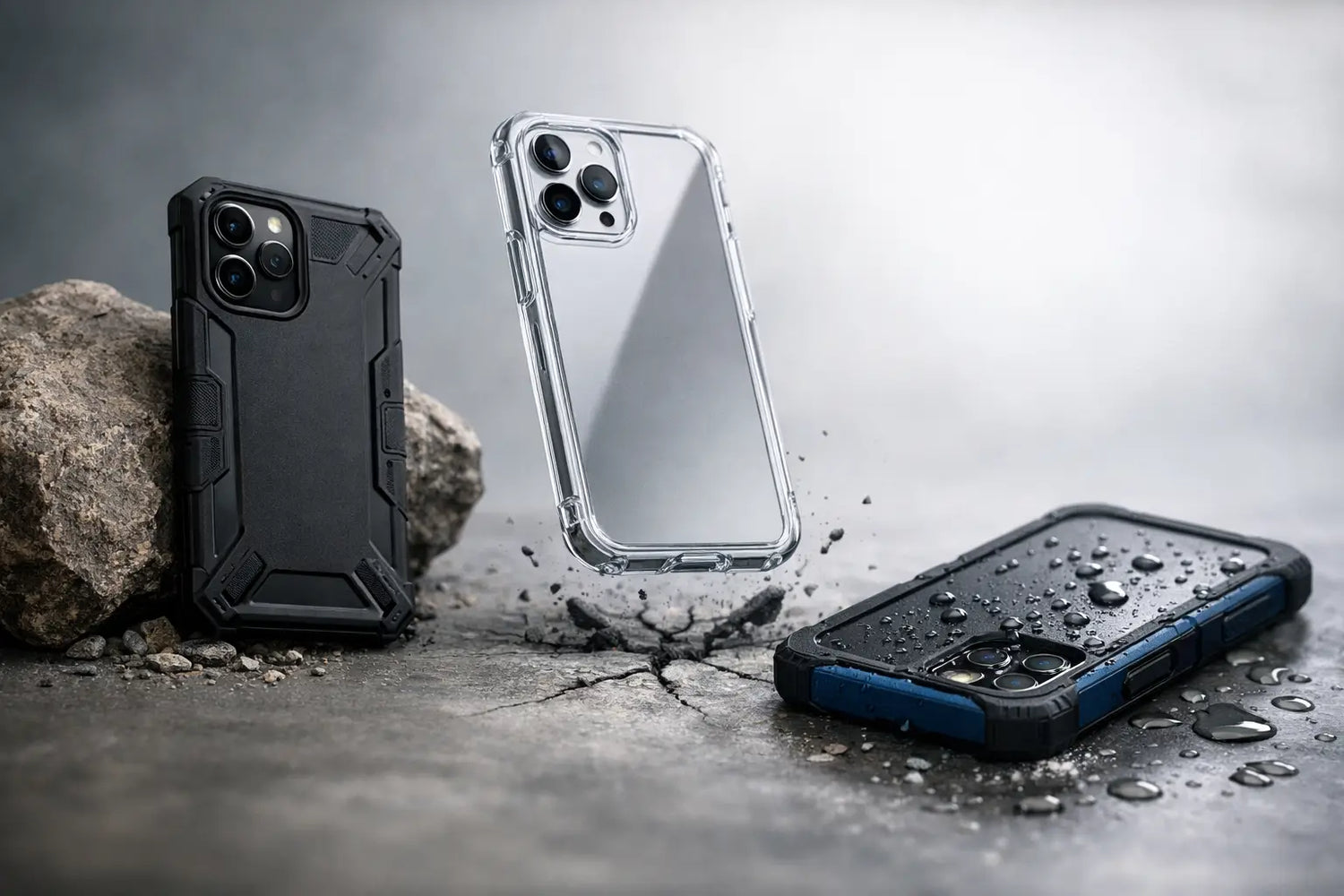
That heart-drop moment when your phone slips out of your hand is exactly why people keep asking what phone case protects best. And the honest answer is not “the thickest one” or “the most expensive one.” The best protection comes from the right mix of shock absorption, raised edges, grip, and a shape that matches how you actually use your phone every day.
If you mostly worry about cracked screens, your ideal case will look different from someone who drops their phone on concrete three times a week. If you want something slim enough to slide into a pocket, that changes the answer too. Good protection is not magic. It is smart design.
What phone case protects best for most people?
For most shoppers, a dual-layer case protects best. That means a softer inner layer, usually TPU, paired with a harder outer shell like polycarbonate. The soft layer helps absorb impact, while the hard shell spreads the force and helps prevent the phone body from taking the full hit.
This setup usually gives the best balance of drop protection, daily comfort, and reasonable bulk. It is the sweet spot for people who want real protection without making their phone feel like a brick.
A well-designed dual-layer case also tends to include raised lips around the screen and camera. Those little edges matter more than people think. On flat surfaces, they can be the difference between your display touching first or staying just above the ground.
The materials matter more than the marketing
Phone case packaging loves big claims. Military-grade. Heavy duty. Extreme protection. Some of that means something, and some of it is just loud text doing cardio.
What actually matters is material behavior during impact. Silicone and TPU are popular because they flex and absorb shock better than hard plastic alone. Polycarbonate is useful because it adds structure and helps resist cracks and scratches. Leather can look great, but by itself it usually does less for impact protection than synthetic shock-absorbing materials.
Hard plastic-only cases often look sleek, but they are not always the best at managing sudden drops. They can protect against scratches and small bumps, yet they usually transfer more force to the phone than a softer material would. If your main goal is survival after a drop, you generally want some kind of cushioned layer.
Rubberized finishes help too, not because they make the case indestructible, but because they improve grip. A phone that slips less gets dropped less. That counts as protection, even if it is not the flashy kind.
The safest case design is not always the bulkiest
It is tempting to assume bigger equals safer. Sometimes it does. But not always.
An ultra-thick rugged case can protect extremely well in harsh conditions, especially if it includes reinforced corners and layered construction. That is a smart pick for people who work outdoors, travel a lot, or regularly toss their phone into bags with keys, chargers, and whatever else is living in there.
But bulky cases have trade-offs. They can feel awkward in smaller hands, make wireless charging less reliable, and turn a sleek phone into something that barely fits in a pocket. For some people, that means they stop using the case altogether, which is obviously not ideal.
A slimmer case with strong corner protection and raised bezels can be the better choice if you want consistent daily use. The best phone case is the one you will actually keep on your phone, not the one that looks ready for a moon landing but lives in a drawer.
Why corners are the real danger zone
If you are comparing case options, pay close attention to the corners. Corners take a brutal amount of force during drops, and they are one of the most common impact points.
That is why air-cushioned corners, reinforced bumpers, and extra corner padding are such valuable features. A case that is average everywhere else but excellent at corner protection can outperform a prettier case with weak edge support.
This is one of those details shoppers skip because it is not as easy to spot in a product photo. But in real-world use, corner design can decide whether your phone bounces and survives or gets a chipped frame and shattered glass.
Screen and camera protection are part of the answer
When people ask what phone case protects best, they are usually thinking about the back and sides. Fair. But the most expensive damage often happens to the screen or camera module.
Look for a case with a raised front lip that sits slightly higher than the screen. The same goes for the camera ring around the back lenses. If those areas sit flush with the surface, the case is not doing enough.
That said, no case can fully replace a screen protector if screen damage is your biggest fear. A good case plus a tempered glass screen protector is still one of the smartest combos you can buy. It is not the most glamorous purchase in your cart, but it is one of the most practical.
Wallet, clear, silicone, and rugged cases - which is safest?
Each style has a different strength.
Rugged cases usually offer the highest drop protection. They are built for impact and often include layered materials, textured grip, and reinforced edges. If protection is your top priority and style comes second, rugged is hard to beat.
Silicone and TPU cases are great for everyday users who want grip and decent shock absorption without major bulk. A quality one can protect surprisingly well, especially for normal daily drops from hand or pocket height.
Clear cases are a mixed bag. Some are excellent if they use TPU bumpers and reinforced corners. Others are thin, stiff, and more focused on showing off the phone color than surviving pavement. Clear does not automatically mean weak, but it does mean you need to check the build more carefully.
Wallet cases can protect the screen when closed, which is a real advantage. But they can also add hinge wear, extra thickness, and a slightly awkward grip. Some people love them. Others find them clumsy enough to increase drop risk. That is the classic “it depends” category.
Fit is everything
A loose case is a bad case.
Even high-quality materials will not help much if the phone shifts inside the case during impact. Precise cutouts, snug button covers, and a secure fit around the corners all matter. If the case peels off too easily or leaves too much movement around the frame, protection drops fast.
This is one reason super-cheap cases can be hit or miss. Some are excellent bargains. Others look fine online and feel like a plastic snack wrapper once they arrive. If a case feels flimsy in the hand, it probably will not perform well when gravity gets involved.
Drop-test claims are useful, but do not worship them
Drop-test certifications can be helpful because they suggest the case survived specific impact scenarios. That is better than random marketing language with no proof behind it.
Still, real life is messy. A drop onto smooth wood is different from a drop onto rough concrete at the exact wrong angle. A case that passes one test is not invincible. Think of certifications as a good sign, not a force field.
The smarter move is combining test claims with common-sense design features like layered materials, strong corners, raised edges, and good grip.
So, what should you actually buy?
If you want the shortest possible answer to what phone case protects best, here it is: a dual-layer case with reinforced corners, raised screen and camera lips, and a grippy finish.
That setup covers the basics that matter most in everyday accidents. It protects against drops better than thin hard-shell cases, feels more manageable than extra-bulky heavy-duty options, and works for most people who want real protection without turning their phone into camping equipment.
If you are rough on your tech, go more rugged. If you care about slim pockets and clean looks, choose a high-quality TPU or hybrid case with proven corner protection. If you love the look of your phone and want a clear case, make sure it has bumper-style edges and not just a thin transparent shell pretending to be brave.
At Timo Market, that is the kind of product choice worth making carefully. A phone case is not just an accessory. It is one of those small upgrades that can save you from a very annoying, very expensive problem later.
The best case is the one that matches your real habits, not your ideal version of yourself. Buy for the drops you actually have, and your phone has a much better shot at making it through them.

Laisser un commentaire
Ce site est protégé par hCaptcha, et la Politique de confidentialité et les Conditions de service de hCaptcha s’appliquent.