
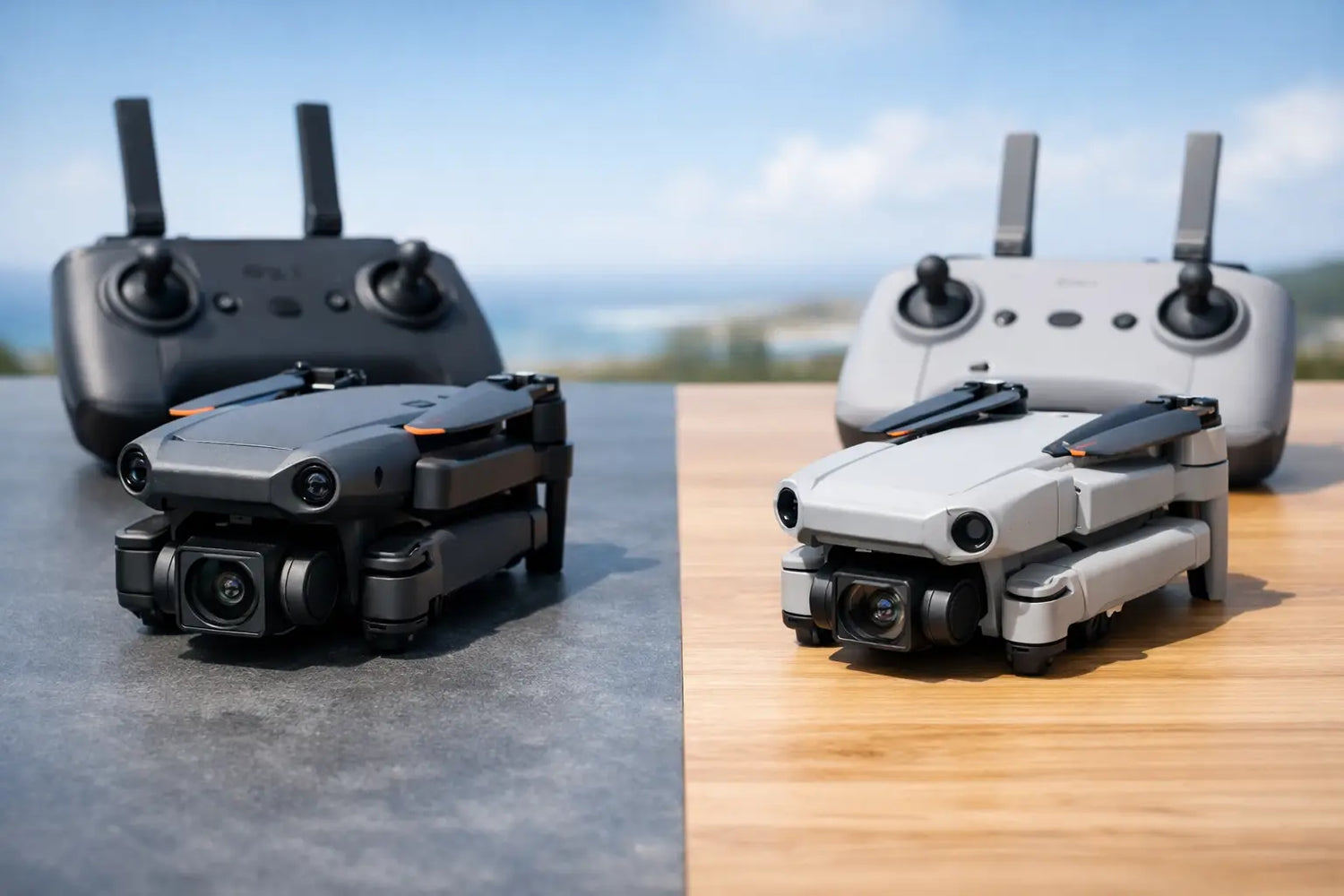
That moment when a drone actually follows you cleanly, lifts off fast, and gives you usable footage without a 30-minute setup is the whole game. If you're stuck on dji neo 2 vs. potensic atom 2 pro: which smart drone should you buy?, the real answer comes down to how much convenience you want, how much risk you can tolerate, and whether you care more about polished software or better value.
This is not one of those matchups where one drone destroys the other in every category. Both are aimed at people who want smart features without jumping straight into big, expensive aerial rigs. That means quick shots, easy control, compact size, and enough camera quality to make trips, bike rides, weekend hikes, and social clips look way better than phone footage alone.
DJI Neo 2 vs. Potensic Atom 2 Pro: which smart drone should you buy?
If your top priority is the easiest, most confidence-inspiring flying experience, DJI usually has the advantage. If your top priority is getting strong features for less money, Potensic gets very interesting very fast.
That split matters because most people shopping in this category are not professional pilots. They want a drone that feels fun on day one, not something that turns every flight into homework. Smart drones win when they remove friction - faster setup, stable hovering, reliable return-to-home behavior, and intelligent shooting modes that don’t feel gimmicky.
So the better buy depends on what kind of owner you are. Are you the person who wants to press a few buttons and get reliable results every time? Or are you happy to trade a bit of software polish for savings and surprisingly capable hardware?
What makes these two drones appealing
The DJI Neo 2, if it follows the same appeal people expect from DJI's compact lineup, is likely built around convenience first. DJI tends to be very good at making the intimidating parts of drone ownership feel manageable. The app experience, flight stabilization, safety systems, and intelligent shot modes are usually the reason people stay in the DJI ecosystem.
The Potensic Atom 2 Pro, by contrast, is attractive because it tends to chase the value-conscious buyer. Potensic has built a reputation by offering features that look a lot more expensive than their price tag suggests. For buyers who want GPS stability, decent image quality, practical flight modes, and a more budget-friendly entry point, that can be a very tempting combo.
This is why the comparison works so well. One brand usually sells reassurance. The other often sells value with ambition.
Camera quality: good footage vs. easy footage
For many buyers, camera quality is where the decision starts. But it helps to think beyond raw resolution. A drone can advertise big numbers and still give you footage that feels awkward because stabilization, color processing, or subject tracking falls apart.
DJI generally performs well here because the whole capture pipeline tends to feel more refined. Even when a DJI drone is not the absolute spec leader on paper, the final footage often looks cleaner and more reliable in real-world use. Exposure transitions are often smoother, stabilization tends to inspire more confidence, and the app makes it easier to get from flying to sharing without extra frustration.
Potensic can still be very competitive, especially if the Atom 2 Pro delivers strong sensor performance for the price. In good daylight, that may be enough for a lot of shoppers. If your goal is vacation clips, neighborhood flyovers, park footage, and social media posts, Potensic may already be in the more-than-good-enough zone.
Where the gap usually shows is in edge cases. Low light, windy conditions, fast-moving subjects, and tricky contrast can expose the difference between a mature camera system and a merely decent one. If you care about consistently polished footage with less trial and error, DJI is usually the safer bet.
Flight intelligence and tracking
This category matters more than people think. Smart drones are not just about staying in the air. They are about reducing the number of ways a flight can go sideways.
DJI has a strong reputation for flight assistance, stable hovering, predictable controls, and smart modes that actually feel useful. Subject tracking and automated shots are often where premium software earns its price. If you want a drone to follow a bike ride, capture yourself walking along a beach, or grab a quick orbit shot with minimal stress, DJI's ecosystem tends to feel more polished.
Potensic has improved a lot in this area, and for many casual buyers, the smart features may feel perfectly solid. But this is one of those places where small differences matter. A tracking mode that works 8 out of 10 times sounds fine until the two failures happen during the only shots you actually cared about.
So if autonomous features are the main reason you want a drone, lean DJI. If they are a bonus rather than the centerpiece, Potensic may still deliver enough value to win.
Portability and day-to-day use
The best drone is the one you actually bring with you. Compact, lightweight designs are a huge deal because they turn a drone from a planned event into a spontaneous add-on.
Both of these drones are likely targeting the buyer who wants easy transport, quick deployment, and beginner-friendly handling. That means portability may not be the deciding factor unless one is meaningfully easier to pack, launch, or control without extra accessories.
What often separates brands here is not just size, but the feeling of ownership. How fast does it connect? How intuitive is the app? How easy is it to update firmware, calibrate, and get back in the air? DJI tends to score points in the little moments that add up over time. Potensic can still be very appealing if the savings are significant enough to justify a slightly less premium day-to-day experience.
Battery life and range in real life
Every drone sounds heroic on the box. Real life is less dramatic. Wind, aggressive flying, repeated takeoffs, and camera use all eat into battery performance.
If the Potensic Atom 2 Pro offers competitive battery life on paper, that is great news for value shoppers. Longer sessions for less money is always attractive. But range and battery claims only matter if the connection stays stable and the aircraft remains dependable when conditions are less than perfect.
DJI usually earns trust here because the overall system tends to feel more proven. That matters if you are flying in wider open spaces, using return-to-home frequently, or stretching your sessions across multiple batteries. For nervous first-time buyers, reliability can be worth paying for.
Price and value: where Potensic fights back hard
This is the section where the Potensic Atom 2 Pro can flip the whole conversation. If it comes in clearly cheaper while still offering GPS stability, respectable camera output, smart flight modes, and enough battery life for casual use, it becomes a very rational buy.
Not everybody needs the most polished app or the most trusted software stack. A lot of people want a fun, capable drone that feels like an upgrade without eating their gadget budget for the month. If that's you, Potensic may offer the better thrill-per-dollar ratio.
DJI, on the other hand, often wins on total ownership confidence. You are not just paying for hardware. You are paying for a stronger reputation, usually better software refinement, and a product experience that tends to feel less experimental. That can be especially valuable for beginners who do not want surprises.
Who should buy the DJI Neo 2?
Buy the DJI Neo 2 if you want the easiest path to reliable results. It makes the most sense for beginners who are willing to spend more to avoid frustration, content creators who care about consistent footage, and buyers who see tracking, intelligent flight modes, and software polish as must-haves rather than nice extras.
It is also the stronger pick if you know you will actually use the drone often. Frequent use makes quality-of-life advantages feel bigger. Better control confidence, smoother app behavior, and more dependable automation can easily justify the higher price over time.
Who should buy the Potensic Atom 2 Pro?
Buy the Potensic Atom 2 Pro if you want strong value and you are comfortable with a few compromises. It fits shoppers who want solid aerial video, practical smart features, and a more affordable way into the hobby without stepping down to a toy-like experience.
It is especially appealing for casual creators, gift buyers, and tech shoppers who love finding products that punch above their price. That value-first mindset is exactly why drones like this get attention at stores like Timo Market - they feel exciting, useful, and easier to justify.
The better buy depends on what you hate more
Here is the simplest way to decide. If you hate wasted money more than you hate the occasional rough edge, the Potensic Atom 2 Pro is probably your move. If you hate technical friction more than you hate paying extra, the DJI Neo 2 is probably the one.
That may sound obvious, but it is the heart of this comparison. Most buyers are not choosing between good and bad. They are choosing between premium convenience and aggressive value.
If this is your first smart drone and you want the smoothest possible start, DJI is the safer play. If you already know your expectations are casual and your budget matters, Potensic looks like the smarter bargain.
The best drone is not the one with the loudest specs. It is the one that makes you want to charge the battery, head outside, and actually fly.




Laisser un commentaire
Ce site est protégé par hCaptcha, et la Politique de confidentialité et les Conditions de service de hCaptcha s’appliquent.