
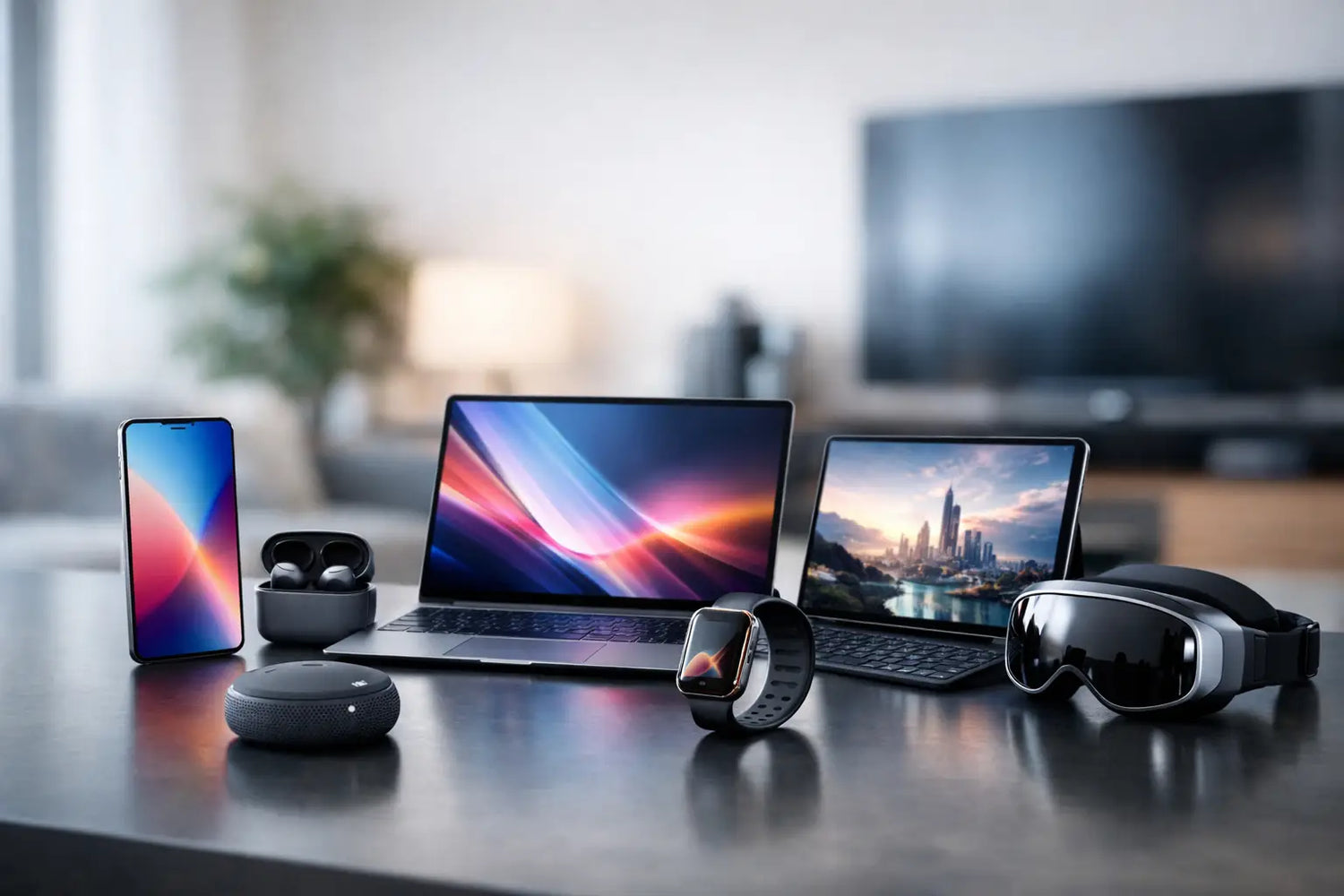
You can waste a lot of money chasing specs you will never feel in real life. A laptop with a monster processor sounds great until you realize you mostly answer emails, stream shows, and keep 27 browser tabs open like a true professional. That is exactly why the ultimate tech buying guide: best laptops, tablets, and smartwatches in 2026 should start with one question - what do you actually want your device to do every day?
In 2026, the best tech is not just faster. It is lighter, smarter about battery life, better at AI-assisted tasks, and way more specialized. Some devices are built for creators. Some are built for students. Some are built for people who want one gadget that just works and does not ask for a two-hour setup session and a spreadsheet. Fair.
The ultimate tech buying guide: best laptops, tablets, and smartwatches in 2026
The smart move this year is matching your budget to your habits, not to marketing hype. If you buy based on feature overload, you usually overpay. If you buy based on your actual routine, you get more value and fewer regrets.
For most shoppers, there are three things that matter more than anything else: performance that fits your daily use, battery life that does not bail on you halfway through the day, and a design you will still like six months from now. After that, the details change depending on whether you are shopping for a laptop, a tablet, or a smartwatch.
Best laptops in 2026: what matters before brand names
Laptop shopping still gets weirdly dramatic. You will see giant claims about desktop-level power, AI acceleration, ultra-bright displays, and all-day battery life. Some of that is real. Some of it is brochure theater.
If you need a laptop for school, work, browsing, streaming, and light editing, a mid-range model is usually the sweet spot. In 2026, efficient chips are more important than raw power for this crowd. A laptop with solid battery life, 16GB of RAM, and fast storage will feel better long-term than a flashy machine with an overpowered chip and weak battery.
For creators, gamers, and heavy multitaskers, the rules change. A dedicated graphics setup still matters for serious editing and gaming, even with better integrated graphics showing up across the market. But there is a trade-off: more power usually means more heat, more fan noise, and less battery life. If your laptop rarely leaves your desk, that is fine. If you travel often, it gets old fast.
Screen quality is one of the easiest places to overspend or underspend. If you watch movies, edit photos, or care about color, a brighter high-resolution display is worth it. If your laptop is mostly a productivity machine, you do not need the fanciest panel on the shelf. A solid display with good brightness and anti-glare treatment can be the better everyday choice.
Port selection still matters more than people admit. Super-thin designs look great until you need an adapter for everything. If you plug in external drives, monitors, SD cards, or accessories regularly, check the ports before you fall for the aesthetics. Minimalism is cool until your desk turns into adapter city.
Who should buy what
Students and casual users should look for portability, battery life, and enough memory to stay fast for years. Remote workers should prioritize webcam quality, keyboard comfort, and quiet performance. Gamers should focus on cooling, refresh rate, and graphics value, not just the biggest spec number. Creators should care about display accuracy, processing power, and storage speed.
The best laptop in 2026 is not one universal winner. It is the one that fits your workload without making you pay for someone else’s dream setup.
Best tablets in 2026: fun, useful, and finally more versatile
Tablets have grown up. They are no longer just couch screens for streaming and doomscrolling, although they are still excellent at both. In 2026, the best tablets are productivity tools, drawing surfaces, travel companions, reading devices, and family-friendly entertainment hubs.
The biggest choice is simple: are you replacing a laptop, or adding a second screen to your life? If you want a full laptop replacement, look for a tablet with strong multitasking software, keyboard support, and enough power for work apps. If you mainly want portability, content consumption, video calls, and casual gaming, you can save money and still get a great experience.
Size matters here more than spec sheets suggest. Smaller tablets are easier to hold, easier to travel with, and better for reading. Larger tablets are better for split-screen work, digital art, and movie watching. There is no perfect size, only the size that will not annoy you after a week.
Battery life is usually strong across the category, but accessories can change the value fast. A reasonably priced tablet can become expensive once you add a keyboard, stylus, and case. That does not mean skip them. It means price the whole setup before you commit.
Software matters just as much as hardware. Some tablets are better for creative apps, some are better for file management and productivity, and some are best if you already live inside a certain phone or laptop ecosystem. If you want everything to sync easily, buying within your existing setup can save you time and frustration.
What makes a tablet worth buying in 2026
A good tablet should feel instant. Apps should open quickly, scrolling should stay smooth, and the display should make streaming, reading, and gaming actually enjoyable. If it lags on basic tasks or the accessory ecosystem feels half-finished, it will end up in a drawer next to your old charging cables and that one mystery remote.
For families, durability and ease of use matter most. For students, note-taking and multitasking are huge. For creators, stylus performance and screen quality are everything. For travelers, thin design and battery life are the stars.
Best smartwatches in 2026: health, convenience, and fewer gimmicks
Smartwatches have gotten much better at doing useful things quietly. The best ones in 2026 are not trying to replace your phone completely. They are helping you check notifications faster, track workouts more accurately, monitor health trends, and stay connected without constantly pulling a screen from your pocket.
Health features are a major selling point, but this is where shoppers need a reality check. Advanced sleep tracking, heart monitoring, workout coaching, and recovery metrics are genuinely helpful if you will use them. If you mostly want quick notifications, timers, music control, and step tracking, you do not need the most expensive model.
Battery life is one of the biggest dividing lines. Some smartwatches do a lot but need frequent charging. Others last much longer but cut back on apps or flashy displays. There is no perfect answer here. If you hate charging another device every day, pick endurance over extra features. If you love a bright responsive screen and app flexibility, shorter battery life may be worth it.
Fit and comfort matter more than shoppers expect. A smartwatch can have every feature in the world, but if it feels bulky in bed, heavy in workouts, or awkward with daily outfits, you will stop wearing it. A lighter watch with solid basics often wins in real life.
How to pick the right smartwatch for your lifestyle
Fitness-focused users should prioritize workout accuracy, GPS performance, water resistance, and comfort. Busy professionals should look for smooth notifications, calendar help, call support, and good battery life. Casual users can keep it simple with a stylish watch that covers steps, sleep, and phone alerts without overcomplicating things.
And yes, phone compatibility still matters. Before you buy, make sure your smartwatch actually plays nicely with your phone. Tech romance falls apart quickly when basic features do not sync.
How to budget without buying junk
A smart budget does not mean buying the cheapest option. It means knowing where quality changes your experience and where it does not. Spend more on the features you will notice every day, like battery life, display quality, comfort, and speed on common tasks. Spend less on niche upgrades you will use twice and then forget about.
This is especially true if you are shopping for multiple devices at once. It often makes more sense to buy a strong mid-range laptop and a dependable smartwatch than to blow the whole budget on one premium device and settle for the rest. Balance wins.
If you are shopping with value in mind, stores like Timo Market appeal for a reason. You get that curated, exciting mix of everyday tech and lifestyle upgrades without the feeling that you need to camp out in review forums for three days first.
The best tech buying guide 2026 rule that saves the most money
Buy for the next three years, not for the next three weeks. Trendy features are fun, but long-term satisfaction usually comes from practical stuff: battery life, comfort, portability, compatibility, and performance that still feels snappy after the honeymoon phase ends.
The best laptop, tablet, or smartwatch in 2026 is the one that fits into your day so naturally you stop thinking about it. That is usually the clearest sign you bought well.


Leave a comment
This site is protected by hCaptcha and the hCaptcha Privacy Policy and Terms of Service apply.