
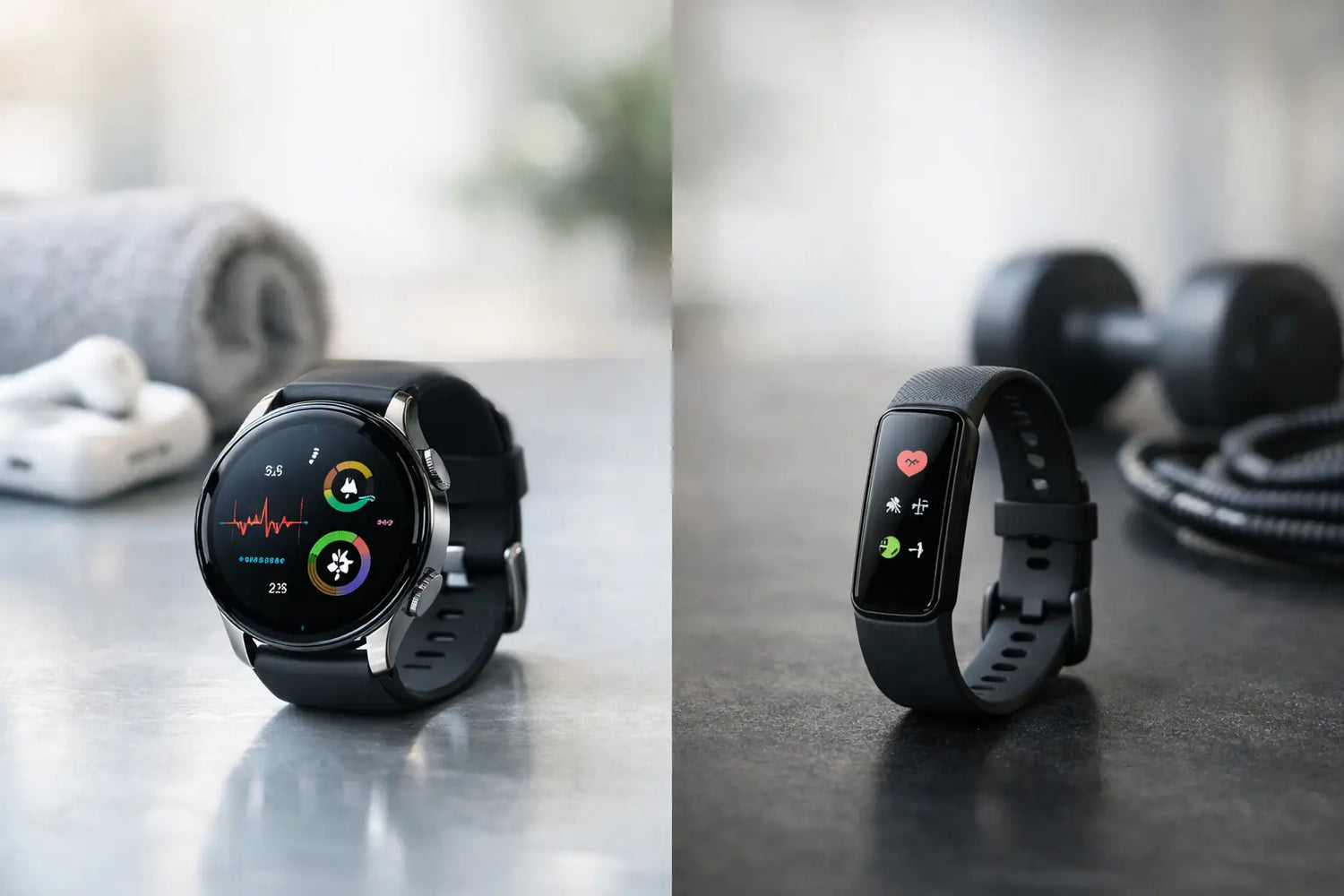
Your wrist can do more than tell time. It can nudge you to stand up after a marathon gaming session, show who is calling while your hands are full, track the walk you almost skipped, or help you stay focused on a new fitness goal. But when it comes to smartwatch vs fitness band, the right choice is not always the one with the longest feature list.
A smartwatch brings more screen, more apps, and more of that tiny-tech-on-your-wrist energy. A fitness band keeps things lighter, simpler, and usually kinder to your budget. Both can be great daily upgrades. The trick is choosing the one that actually matches how you move, work, train, and live.
Smartwatch vs Fitness Band: The Quick Difference
The biggest difference comes down to scope. A smartwatch is designed to be a mini companion for your phone. It typically handles notifications, calls, messages, timers, music controls, workout tracking, watch faces, and sometimes contactless payments or navigation. It is for people who want useful information available with a glance instead of another phone pickup.
A fitness band is built around activity and wellness tracking first. It usually covers steps, heart rate, sleep, workouts, calories, reminders, and basic notifications. Its display is smaller, its controls are simpler, and it skips many of the extra apps that can make a smartwatch feel like a tiny command center.
Think of it this way: a fitness band wants to help you move more. A smartwatch wants to help you move more while also keeping your day organized.
Choose a Smartwatch if You Want More Than Fitness Tracking
Smartwatches make sense when your day is already tied to your phone, but you do not want to pull it out every five minutes. A quick wrist glance can tell you whether a notification needs attention or can wait. That sounds small until you are carrying groceries, in the middle of a workout, commuting, cooking, or trying to stay off your phone at dinner.
The screen is a major advantage. Smartwatches generally offer bigger, brighter displays that are easier to read outdoors and more satisfying for checking stats, changing music, setting timers, or using a favorite watch face. If you like a device that feels personal, the ability to swap bands and customize the screen adds some extra fun too.
For workouts, a smartwatch can offer more detailed data and a wider variety of exercise modes. Runners may appreciate pace, distance, route tracking, and heart-rate zones. Gym regulars may want strength-training modes, interval timers, or on-screen controls that keep a phone out of the way. Some models also include built-in GPS, which is especially handy when you want to leave your phone at home for a walk, run, or bike ride.
There is a trade-off, of course. More features usually mean more charging. Many smartwatches need power every day or every couple of days, depending on screen settings, workout use, and GPS. If you are the kind of person who already forgets to charge your phone, adding another device to the nightly routine may get old fast.
Smartwatches are also often larger and pricier. That does not make them a bad value. It just means their value depends on whether you will really use those extra tools. Buying a feature-packed watch only to check steps once a day is a little like buying a gaming controller to use as a TV remote. It works, but it is not exactly the point.
A smartwatch is a strong fit for:
A smartwatch is worth considering if you want calls, message previews, music controls, a larger display, deeper workout data, customizable style, and an easy way to reduce random phone checks. It is especially useful for busy schedules, outdoor training, and anyone who enjoys having their tech feel more connected.
Choose a Fitness Band if You Want Simple, Comfortable Motivation
Fitness bands have one very underrated superpower: you can forget you are wearing one. They are usually slimmer, lighter, and less bulky than smartwatches, which makes a real difference during sleep, high-intensity workouts, and everyday wear.
That comfort matters because the best tracker is the one you keep on. If your goal is to understand sleep patterns, monitor daily steps, build a walking habit, or stay consistent with basic workouts, a fitness band gives you the essentials without constantly asking for attention.
Battery life is another big win. Many fitness bands can run for several days and sometimes much longer before needing a recharge. That means fewer interruptions in your tracking and less chance your device is sitting dead on a nightstand right when you finally decide to get serious about your routine.
Fitness bands are often the more budget-friendly choice, too. If you are starting a home workout setup, saving for new training gear, or simply want a useful gadget without going all-in, a band can deliver a lot for the price. You still get the satisfying little moments: closing activity goals, seeing your step count climb, and getting a reminder to move after hours at a desk.
The downside is that bands can feel limited if you want more phone-like features. Notifications may be shorter or harder to read. Controls are usually basic. You may not get built-in GPS, advanced app options, or the same level of customization. For some shoppers, that simplicity is exactly the appeal. For others, it starts to feel restrictive after a few weeks.
A fitness band is a strong fit for:
Choose a fitness band if you care most about steps, sleep, heart rate, workout basics, comfort, long battery life, and a more affordable entry point. It is a smart pick for beginners, minimalists, and anyone who wants motivation without another screen competing for attention.
Compare What Actually Changes Your Experience
When deciding between a smartwatch and fitness band, do not get distracted by a giant spec sheet. Start with the features that affect your real routine.
Battery life is often the deciding factor. A fitness band usually wins by a lot. If charging is your personal enemy, that extra endurance can be more valuable than fancy apps. Smartwatches require more frequent charging, but that trade-off supports richer displays, more notifications, and expanded functionality.
Comfort favors fitness bands for most people. Their low-profile design is better for sleeping and can feel less intrusive during exercise. Smartwatches can still be comfortable, especially with a soft adjustable band, but they tend to have more presence on the wrist.
Notifications and connectivity favor smartwatches. If you want to preview messages, manage calls, control music, set reminders, or keep a busy day moving without grabbing your phone, the larger display and broader controls are hard to beat. Fitness bands can still show alerts, but they are better for quick glances than active communication.
Health and workout tracking depends on your needs. Both categories can track everyday activity, sleep, and heart rate. Smartwatches often offer more sport modes, more detailed live metrics, and GPS options. Fitness bands are excellent for consistency and trend tracking, particularly if your focus is walking, home workouts, cycling, casual gym sessions, or simply being less glued to the couch.
Price usually favors fitness bands. A band can be an easy, low-pressure way to test whether wearable tracking motivates you. A smartwatch costs more because it is doing more, but it can replace several small daily habits, from checking timers to controlling music during workouts.
Check Compatibility Before You Fall for the Features
Before choosing any wearable, make sure it works well with your phone. Some watches and bands deliver their best experience within a specific phone ecosystem, while others are designed to work more broadly. Check that the companion app supports your device and that the features you care about, such as message replies, call alerts, health data syncing, or GPS, are available with your phone.
Also consider the app experience. Your wearable only shows part of the picture. The companion app is where you will review sleep trends, workout history, goals, and progress over time. A clean, easy-to-understand app can keep you motivated. A cluttered one can turn useful data into digital homework.
Do not treat heart-rate, sleep, or calorie figures as medical-grade answers. Wearables are best used for spotting patterns and staying engaged with healthy habits. If you have symptoms or a medical concern, talk with a qualified health professional instead of relying on a wrist reading.
The Best Choice Depends on Your Goal
If you want a stylish all-around gadget that helps you manage notifications, music, calls, workouts, and day-to-day tasks, go with a smartwatch. It is the better pick when convenience and connected features are part of the reason you are shopping.
If you want a lightweight tracker that quietly keeps you accountable, choose a fitness band. It covers the habits that matter most, costs less in many cases, and will not demand a charger every other night.
There is no prize for buying the most advanced wearable. The win is finding the one you will wear on the walk, during the workout, through the workday, and when you finally decide that a quick stretch break is better than one more episode. Pick the device that makes healthy momentum feel easy, then let those small daily wins add up.


Leave a comment
This site is protected by hCaptcha and the hCaptcha Privacy Policy and Terms of Service apply.